


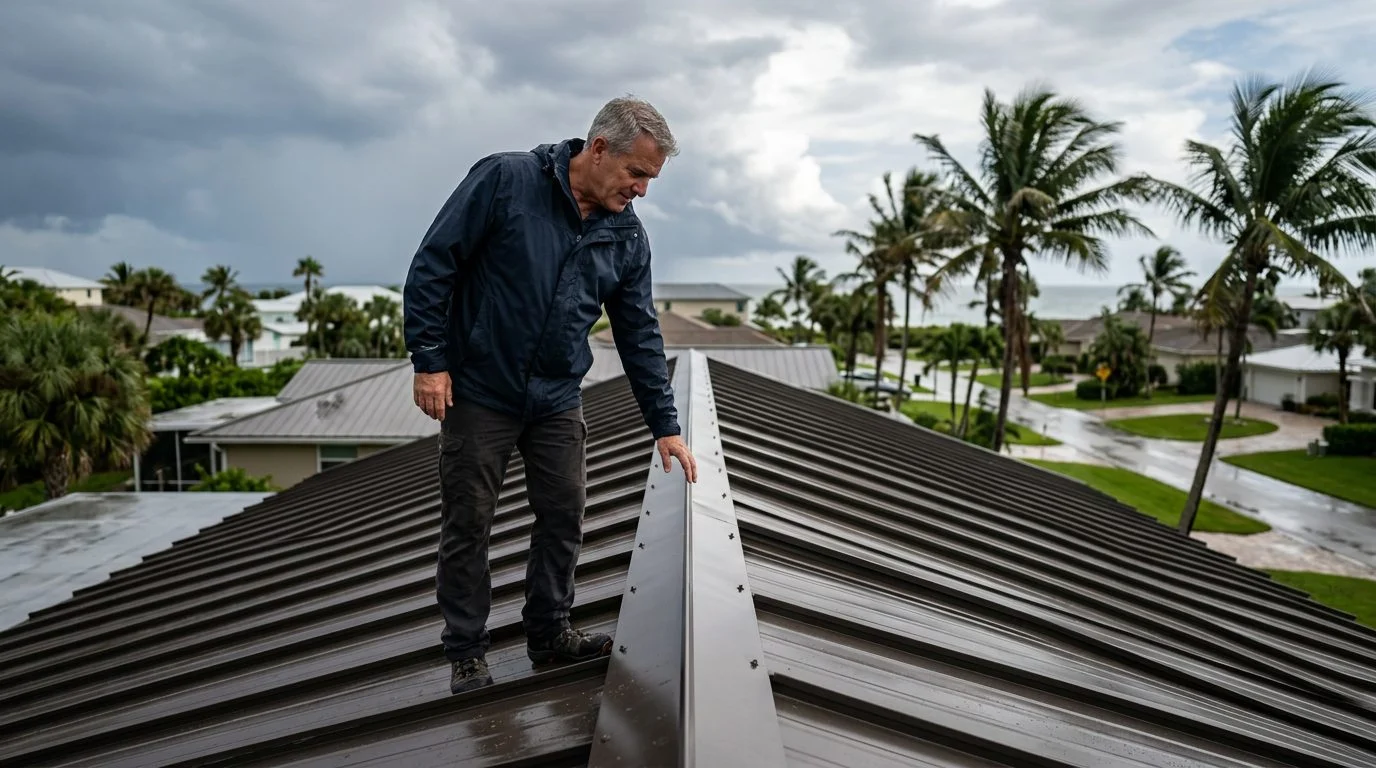
Metal Roofing · South Florida
Standing Seam Metal Roofing Installed for South Florida Homes
ASP Superhome installs interlocking standing seam metal roofs across Miami, Fort Lauderdale, West Palm Beach, Kendall, Naples, Fort Myers and Boca Raton.
By Jonathan Rodriguez · Published October 18, 2026
A standing seam metal roofing installer puts on long metal panels that lock together along raised seams. Rain noise inside your home depends mostly on the layers beneath those panels, not the panels alone. Here is what the installer does, what shapes the sound, and what affects cost for homes across South Florida.
What a Standing Seam Metal Roofing Installer Does
A standing seam metal roofing installer lays continuous metal panels and joins them with raised seams that interlock. Unlike panels that overlap and get screwed through the face, standing seam panels attach with hidden clips under the seams.
The work starts before any panel goes up. The installer checks the roof deck, the solid base under the old covering, and repairs soft or damaged spots. A water-resistant underlayment goes down next. Then the installer plans the panel layout, cuts panels to length, and sets them in place. Flashing at edges, valleys, and roof openings keeps water moving away from the house. The final steps are seaming and a close inspection.
The raised seam is the feature you notice from the ground. It also decides how well the roof sheds water. A seam that is not closed properly can let moisture in, so the seaming step matters as much as the panel itself. ASP Superhome’s metal roofing work includes standing seam systems, so we handle this full sequence for homeowners.
If heavy rain over your bedroom is what worries you, reach out and our team will talk through your roof and your noise concern. Talk it through with our team — the first consultation is free, confidential, and carries no obligation.
Will Rain Be Loud on a Standing Seam Metal Roof?
Rain sound inside the house is shaped mostly by what sits under the metal. The panels take the hit, but the layers below decide how much of that sound reaches your ceiling.
Several layers matter. Solid roof decking gives a firm, stable base with no gaps. Underlayment adds a cushion between the metal and the wood. Attic insulation soaks up sound moving downward. The attic space and the ceiling construction can add or block sound, too. Drywall thickness and insulation between ceiling joists also play a part.
Panel profile and gauge (metal thickness) change how sound travels through the roof. Thicker panels over solid decking behave differently than thin panels over open framing. Each home has its own mix of layers, so a site check gives the clearest answer for your roof.
If a bedroom sits under your roof, start with two questions. What is the deck made of, and how much insulation sits above the ceiling? Those answers say more about your noise than the metal alone does.
Concealed Fastener vs. Exposed Fastener Panels
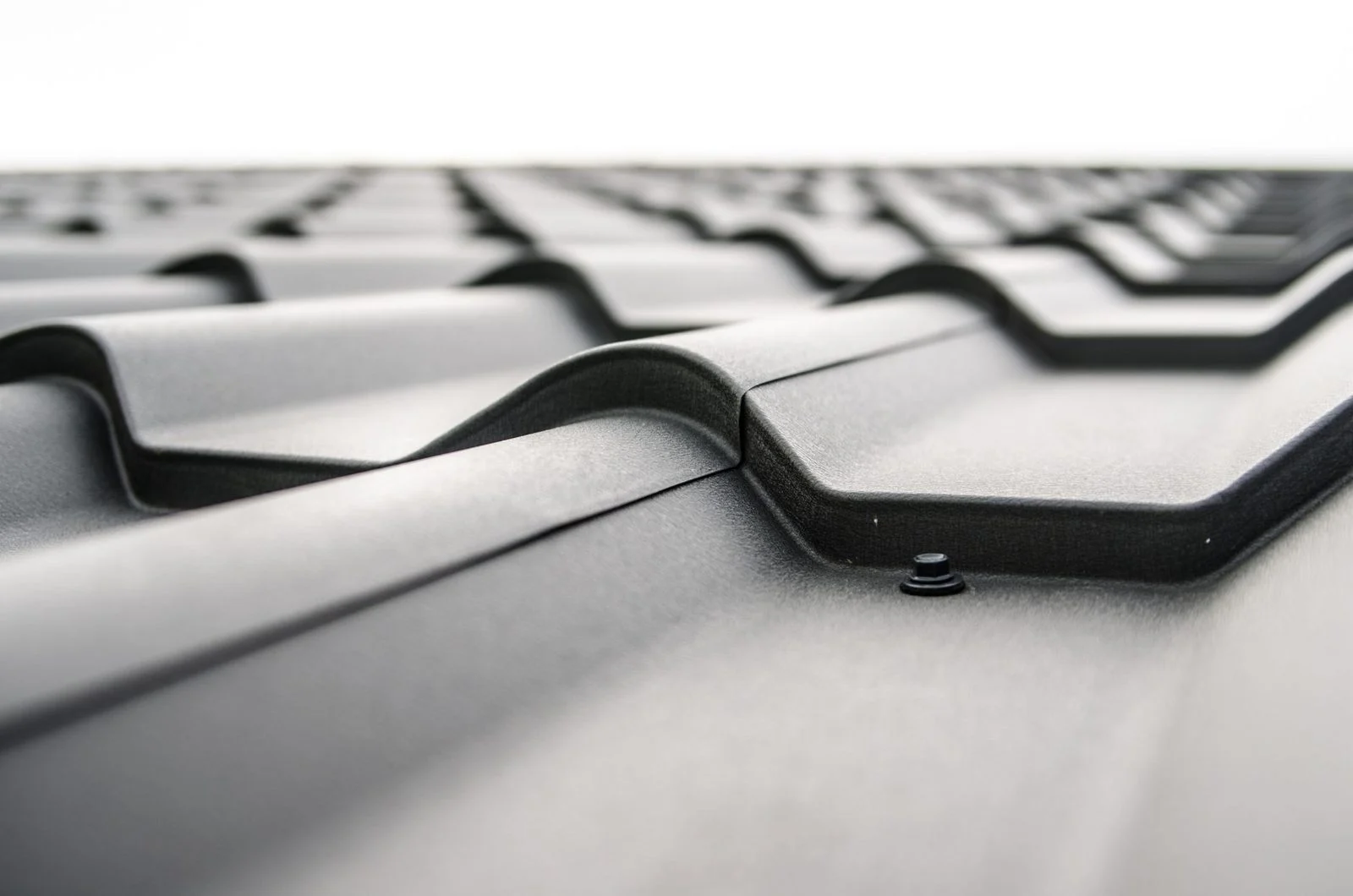
Standing seam panels use concealed clips. The clips sit under the seams, and the seams close over them. No screws pass through the top face of the panel.
Exposed-fastener panels work differently. Each sheet is screwed through its face, and every fastener relies on a sealing washer. Those washers can wear over time, so these roofs usually need periodic checks around the screw heads.
Fewer exposed fasteners means fewer spots where water can get in over time. That is a design trait, not a promise about how any one roof will perform. Seam style matters too. The 5-V crimp is a common style name for panels with V-shaped ribs. The right profile should match the roof’s pitch, appearance, and exposure, so ask your installer which profile suits your home.
Choosing Materials for South Florida’s Coastal Conditions
Aluminum is often chosen for homes near the water because it resists corrosion in salt-laden air. Steel brings different strength and cost traits. In coastal settings, steel typically needs protective coatings to hold up well.
Exposure varies across the areas we serve. Naples and Fort Myers face the Gulf, while Boca Raton and Fort Lauderdale face the Atlantic. Material choice should match each site, whether the home is in Miami, Kendall, West Palm Beach, or a Gulf-side city.
Florida sets the rules for roofs. The Florida Building Code, under Fla. Stat. § 553.73, governs how buildings are designed, repaired, and altered. Roofing is one of the product categories that must be approved through a statewide system under Fla. Stat. § 553.842.
How a Standing Seam Installation Is Carried Out
A standing seam metal roofing installer follows a clear order. The crew inspects the existing roof and decking, removes or prepares the old covering, lays underlayment, installs panels, closes the seams, adds trim and flashing, and cleans up.
Each stage affects noise, water shedding, and how long the roof lasts. Solid decking and underlayment set the base. Correct panel layout keeps the roof straight and even. Trim and flashing protect edges and openings.
Panels are cut to length so each run reaches from eave to ridge. The installer checks alignment before seaming, because a crooked panel is harder to correct once it’s closed. Flashing around chimneys, vents, and wall edges directs water away from openings.
Florida law also governs the paperwork. It is unlawful to repair or alter a building without first getting a permit from the enforcing agency, unless another law provides otherwise, under Fla. Stat. § 553.79. Our team can walk you through each step on your own roof before work begins.
Metal vs. Shingles: Cost Factors and Why Installation Is Professional Work
Standing seam generally costs more upfront than asphalt shingles. Compare the two over roof life, upkeep, and wind performance, not just the first invoice.
Several cost drivers shape the number. Roof size and pitch matter. Panel profile and metal type matter. Deck condition, underlayment, and the complexity of trim and flashing matter as well. A roof with many valleys, corners, and penetrations takes more labor than a simple, open plane.
Your quote turns on your roof’s specifics, so a site visit gives the most accurate figure. Costs also shift with the material you choose for your exposure.
Standing seam is a poor fit for a do-it-yourself project. It needs seaming equipment, precise panel layout, and careful flashing. A small error can show up later as a leak or a rattle. ASP Superhome handles the full installation, from the deck check to the final seam, so the work stays with one team.
Not sure what your next step is?
Talk it through with our team — the first consultation is free, confidential, and carries no obligation.

Talk It Through With Our Team
Picture heavy rain hitting the roof over your bedroom while you wonder how a new metal roof would sound. That worry is a fair one to bring to us, and it’s the right question to ask before you choose a material.
Will a standing seam roof be loud in a Florida storm?
Sound turns on the decking, underlayment, insulation, and ceiling below the panels. A site check shows what your home needs.
Do I need a permit to install a metal roof?
Florida law generally requires a permit before a building is repaired or altered, unless another law provides otherwise.
Your first consultation is free, confidential, and comes with no obligation. Share your roof details and your noise concern through our contact page, and our team will talk through your options with you.
Why Homeowners Choose ASP Superhome for Standing Seam Metal Roofing
Built for South Florida conditions
Our metal roofing work takes into account heat, humidity, sun exposure and the wind and rain that define the South Florida climate.
Clear, written estimates
You receive a straightforward quote that explains the panels, underlayment, fasteners and labor before any work begins.
Planned scheduling
Our team coordinates the project timeline with you so you know what to expect at each stage of the installation.
Direct communication
Questions about profile, color, finish or sequencing get clear answers from our team, not a runaround.
Check the Deck Before Panels Go On
Standing seam panels are only as sound as the roof structure beneath them. Ask that the decking, underlayment and flashing be inspected before installation so that hidden moisture or rot is not sealed in under a new roof.
What Shapes Your Standing Seam Project
Panel gauge and profile
Thickness and seam height affect how the roof feels underfoot, how it handles wind load and how it looks from the street.
Underlayment and insulation
The layers beneath the panels influence rain noise inside the home, heat transfer into the attic and overall comfort.
Roof pitch and layout
Complex roof shapes, valleys and penetrations change the amount of cutting, flashing and labor required.
Finish and color
Coatings designed for intense Florida sun help maintain the appearance of the metal over time.


