


Roofing | South Florida
Metal or Tile: Which Roof Holds Up Better in a Florida Hurricane?
A practical look at wind performance, installation, and what to check before you choose a roof for your home.
By Jonathan Rodriguez · Published October 30, 2026
The Short Answer: Metal or Tile for Florida Hurricanes?
Is a metal roof better than tile for Florida hurricanes? Not automatically. Both materials can be installed to hurricane standards, and the result depends on the specific product, how it is fastened, and how it is installed.
South Florida roofs face strong winds, wind-driven rain, and flying debris during storms. Those forces test the roof covering and every layer beneath it. Florida lawmakers have found that the building code works. The Legislature found the Florida Building Code effective in reducing property damage to buildings built under its requirements.
This page compares the two materials on wind performance, impact resistance, weight, lifespan, building codes, and cost. It also lists questions to ask before you choose. Each section starts with the plain answer, then explains the details.
If a recent storm has you worried about your roof, our team can help you sort through the options at a pace that works for you. Talk it through with our team — the first consultation is free, confidential, and carries no obligation.
How Metal and Tile Roofs Are Built Differently
Metal roofs use panels, usually steel or aluminum, fastened to the roof deck. Standing-seam and interlocking profiles lock neighboring panels together at their edges. Metal can also be formed into a barrel-tile look. A Miami-Dade County product approval shows one Florida-approved metal panel made in a barrel-tile profile.
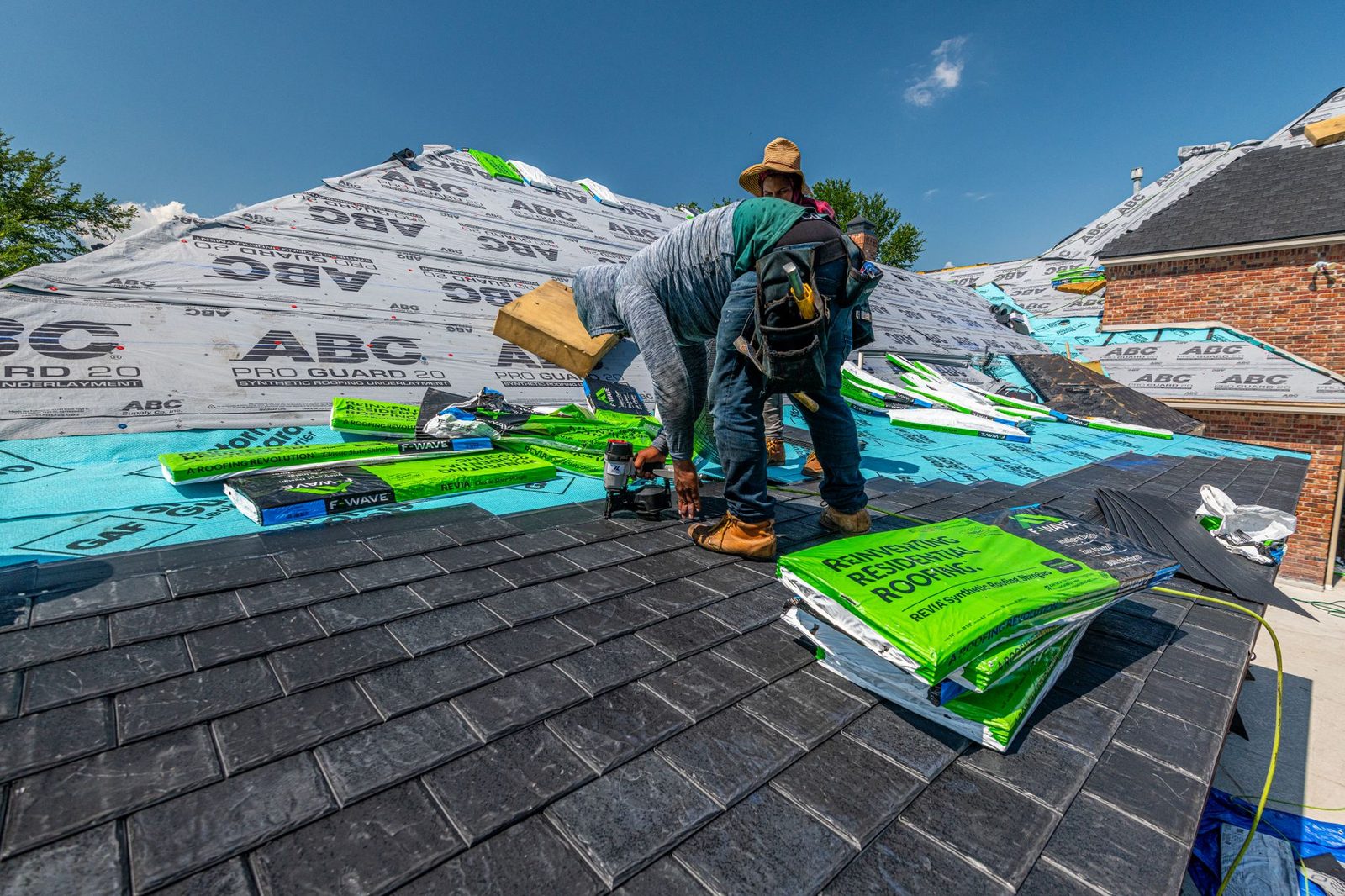
Tile roofs use concrete or clay tiles set on battens over an underlayment. The tile is only one part of the system. Battens, clips, and fasteners hold the tiles in place. The underlayment is the water-resistant layer beneath them. Edge metal finishes the eaves and rakes.
In both systems, the deck, underlayment, fasteners, and edge metal matter as much as the surface you see. A strong surface on a weak system can still fail in a storm.
How Each Material Handles High Winds
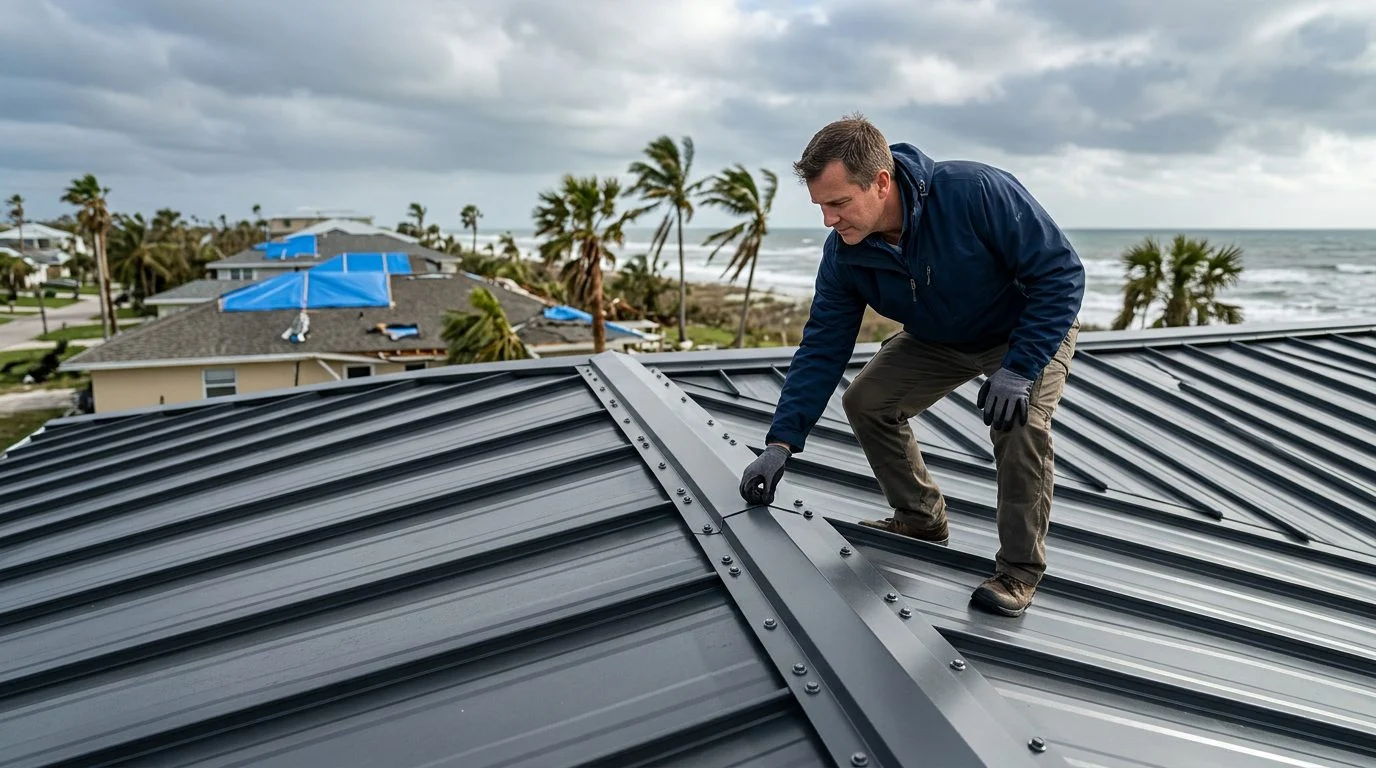
Metal panels can hold against uplift when they are properly fastened and interlocked. Panel profile and fastener spacing shape how well the roof resists wind pulling upward. Ask the installer to show the fastening pattern for the exact product.
Tile is more sensitive to how it is attached. Tiles can lift or slide if battens, clips, or fasteners are inadequate. Wind uplift at ridges, hips, and eaves is the most common concern for tile roofs.
Florida’s code now targets tile underlayment directly. The Florida Building Commission’s analysis of changes for Building lists a new section 1518.8.8 on tile underlayment, which addresses loads under ASCE 7. The same analysis clarifies that roofs must comply with all of Section 1504.
Impact Resistance: Debris, Hail, and Flying Objects
Tile is rigid. Concrete and clay tiles can crack or break when heavy debris strikes them. A broken tile can expose the underlayment below it.
Metal panels can dent or puncture under heavy impact. A dent is often cosmetic. A damaged panel or seam, however, can let water in.
The Insurance Institute for Business & Home Safety reported on Hurricane Ian. Its assessment of Southwest Florida found metal roofing systems held up well in winds below 130 mph. That finding covers winds below 130 mph only, so it does not show how every metal roof performs in stronger winds.
Wind-driven rain is a separate test. The underlayment, the seams, and the tile overlaps each help keep water out. If one layer fails, water can reach the deck. After any storm, look for lifted tiles, bent edge metal, and loose panels.
Weight, Structure, and Your Home
Tile is considerably heavier than metal. Before you switch materials, have the roof framing and structure evaluated. A heavier roof puts more load on the walls and framing below it.
The National Roofing Contractors Association describes clay and concrete tile as durable and notes their use in Florida.
Lighter metal can reduce the load on the structure. That can matter for older homes. It can also matter when a roof is being recovered rather than fully replaced.
Ask whether a structural evaluation is needed before any change in roof material. A written answer protects you from surprises later in the project.
Lifespan, Maintenance, and Warranty Considerations
Both metal and tile roofs can last a long time with regular care. The care items differ, though. Metal roofs need checks on fasteners, seams, and the finish. Coatings help resist corrosion, which matters in the salt air common near South Florida’s coast.
Tile roofs need attention to cracked or slipped tiles. The underlayment beneath the tiles also needs periodic checks. Replace damaged tiles promptly so water does not reach the deck.
Inspect either roof after major storms. Look at flashing, edge metal, and any spots where the surface has changed.
Warranties vary by manufacturer and installer. Read what is covered, for how long, and what could void coverage. A warranty that covers wind and water intrusion is worth a close look.
Not sure what your next step is?
Talk it through with our team — the first consultation is free, confidential, and carries no obligation.
Building Codes and Permits in South Florida
Florida’s building code includes High-Velocity Hurricane Zone (HVHZ) provisions. For Chapter 44, the Florida Building Commission’s residential analysis of changes reports no changes. Those rules shape roof requirements in the areas where they apply.
Roof replacement and recovering are treated differently. The 2026 code revises the rules on recovering versus replacement. Its section 1511.3 analysis allows the upper roof covering to be removed only when recovering, if the existing or repaired substrate is adequate.
Product approval matters too. Florida law says a product may not be marketed as hurricane or windstorm protection unless it is approved. Roofing is one of the categories that must be approved.
The installer’s familiarity with these requirements matters as much as the material you pick.
Cost Factors and Insurance Considerations
Cost depends on roof size, pitch, complexity, tear-off, underlayment, and material. Contact our team to receive an estimate that lists each item. An estimate that skips the underlayment or edge metal is hard to compare.
Insurance can also factor in. Citizens Property Insurance Corporation addresses underwriting for older roofs.
Florida law also requires insurers writing personal lines residential property insurance to tell policyholders, at the time of issuance and at each renewal, about windstorm premium discounts. The notice covers construction techniques that can reduce windstorm losses, under Fla. Stat. § 627.711.
Check with your insurer about how a material change would be treated. Ask for a detailed written estimate and any wind-mitigation documentation that applies to your home.
Questions to Ask Before You Decide
Start with the product. Ask which specific system is proposed and what documented hurricane-level approvals it has for South Florida.
Next, ask how the deck, underlayment, fasteners, and edge metal will be installed and inspected. Then ask what the warranty covers for wind and water intrusion. Finally, ask whether the proposal includes permits and a structural check.
Is a metal roof better than tile for Florida hurricanes?
Not automatically. Both can be installed to hurricane standards, and the specific system and installation make the difference.
Does a tile roof need a structural check before replacement?
Yes, the NRCA states that structural load capacity should be verified when replacing another roof covering with tile.
Understanding the 25% rule for roof work
If an existing roofing system or roof section was built, repaired, or replaced to the 2007 or later Florida Building Code and 25 percent or more of it is repaired, replaced, or recovered, only the repaired, replaced, or recovered portion must be constructed to the Florida Building Code in effect. Contact our team to confirm this in writing.
Talk With Our Team About Your Roof
A storm may have just loosened tiles or dented panels on your home. Our team can help you understand your roof’s condition and the options in front of you.
You can reach out through our contact page. Our first consultation is free, confidential, and carries no obligation to continue (consulta inicial gratuita, confidencial y sin compromiso).
For more on the material itself, see our metal roofing overview. We also serve homeowners in Kendall. Contact us to schedule a free, confidential first consultation with no obligation to continue.
What Actually Decides Hurricane Performance
Installation matters most
Fastening, underlayment, and flashing details often determine how a roof handles high winds more than the material alone.
Wind-rated system design
Both metal and tile can be installed to hurricane standards when the full roofing system is designed for your home's exposure.
Structure comes first
Before switching to tile, the structure should be evaluated for its load capacity, since tile is considerably heavier than many other coverings.
Compare complete systems
The right comparison is between full installed systems on your specific roof, not between the words 'metal' and 'tile'.
Don't Assume Either Material Is Automatically Safer
A poorly installed metal roof can fail as easily as a poorly installed tile roof. Ask how the entire system will be fastened and whether your existing structure can support the new covering.
Questions to Weigh Before You Decide
Metal roofing
Lightweight and available in many profiles. Ask about panel attachment, seam design, and how the system performs in high winds.
Tile roofing
A long-standing look for Florida homes. Ask about the underlayment, tile attachment method, and whether the framing can carry the added weight.
Roof replacement
Replacing one covering with another often requires a fresh look at the structure, decking, and edge details, not just the surface.
Roof repair
If your current roof has loose tiles, lifted panels, or damaged flashing, addressing those issues early keeps the whole system working as designed.


