


Metal Roofing | South Florida
Metal Roofing Cost in South Florida: What You Pay Per Square Foot
Learn how installers price metal roofs by the square foot, which factors move the number, and how to read a quote with confidence. ASP Superhome offers a free first consultation, confidential and with no obligation.
What Shapes Your Per-Square-Foot Price
Measured roof area
Installers measure the roof's surface area and multiply it by the quoted rate, so accurate measurements matter.
Impact-rated systems
Roofing products sold as wind or impact protection must be approved under Florida law, which can affect material choice and pricing.
Metal type and profile
Different metal panels, finishes, and profiles carry different material costs, so the rate can vary from one system to another.
Roof shape and access
Pitch, valleys, skylights, and tight access can change labor time and the overall cost of the job.
By Jonathan Rodriguez · Published October 28, 2026
A metal roofing cost is usually quoted per square foot of roof. That rate helps you compare quotes, but it is only a starting point. The final total depends on your roof’s size, shape, material, and the work underneath the panels. This guide shows how the number is built so you can check any quote you receive. For broader context on the material, see our pillar guide on metal roofing in South Florida.
Where the Per-Square-Foot Number Comes From
Cost per square foot measures roof area, not the size of the house. Quotes apply the rate to the roof surface that gets covered. Two homes with the same floor plan can have very different roof areas, depending on pitch, overhangs, and the number of roof sections.
Treat the rate as an average. Your total depends on the facts of your roof, including its condition, its layout, and anything that must be repaired before new metal goes on.
Lifespan matters too. A longer life does not mean the lowest upfront number, so read the full quote.
If a storm damaged your roof or it's nearing the end of its life, we can talk through its size and options with you. Talk it through with our team — the first consultation is free, confidential, and carries no obligation.
Measuring Your Roof: Square Feet, Roofing Squares, and Complexity
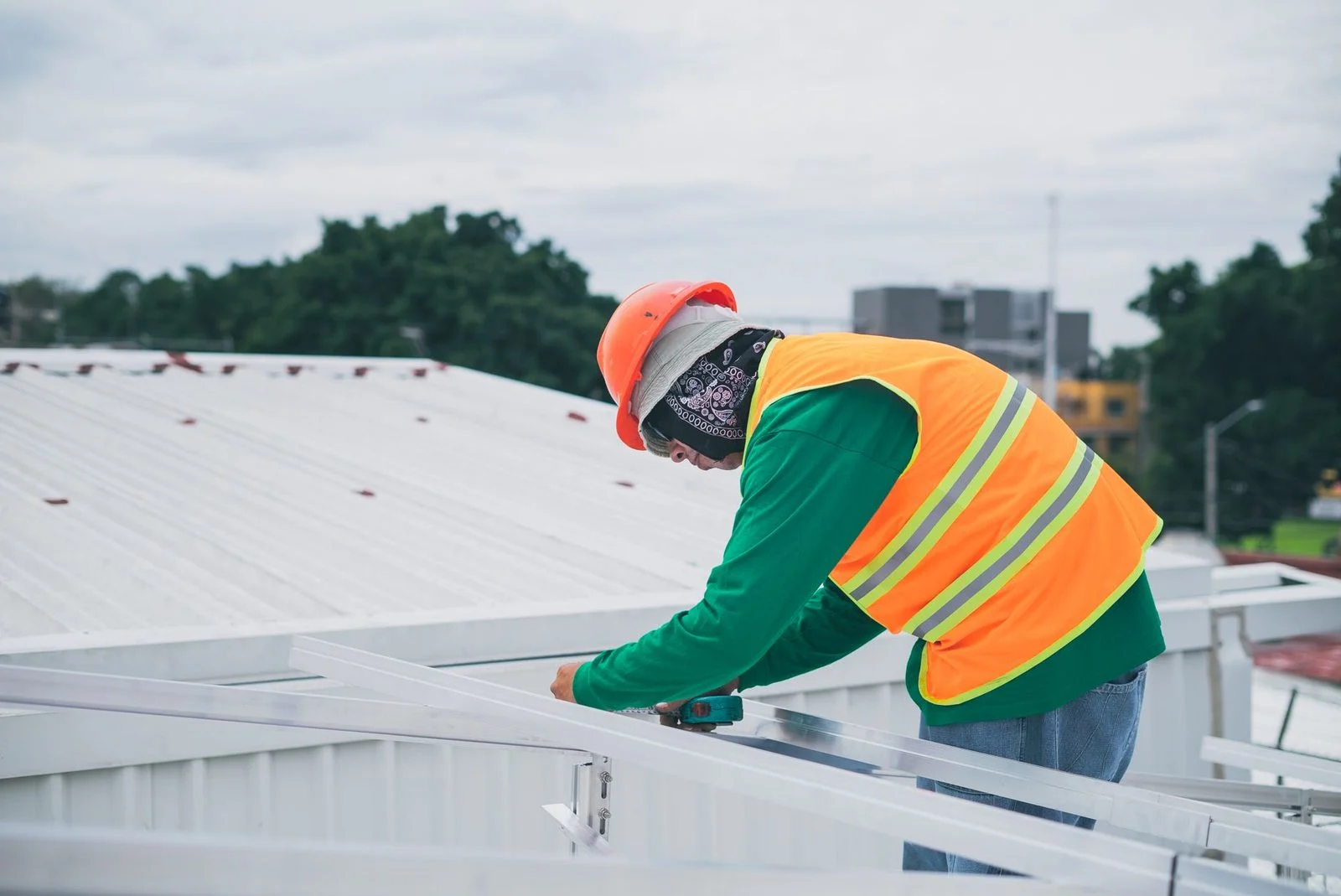
Quotes are often written in roofing squares. One roofing square equals 100 square feet of roof surface. Divide your roof area by 100 to get the square count.
Pitch and overhangs add surface beyond the footprint of the house. A steeper roof has more surface than a flat roof over the same floor space. Overhangs add more area at the edges.
Complexity adds cost. Multiple roof planes, valleys, dormers, skylights, and wall penetrations all mean more cutting, fitting, and waste. Each one takes crew time.
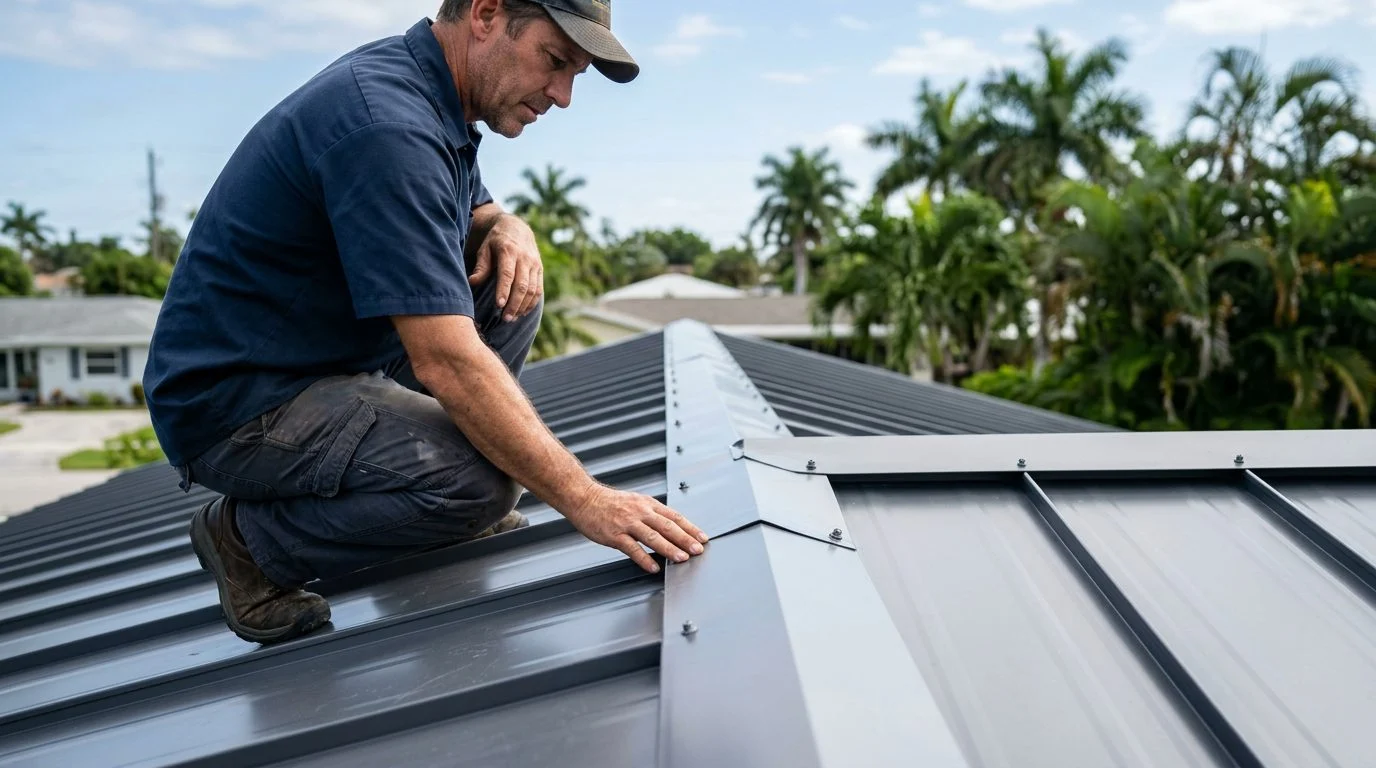
Trim, ridge caps, and edge metal are priced separately, usually by the linear foot. They are not part of the field area rate.
Here is a simple way to estimate. Measure the footprint, adjust for pitch and overhangs, divide by 100 to get squares, then multiply by the quoted rate. The result is a rough figure, not a bid. Check that each quote lists its square count and trim footage.
Metal Roofing Materials and How They Affect Price
Material and panel style both change the price of a metal roof. Steel and aluminum are the two common choices. Steel is heavier and comes in many gauges and coatings. Aluminum is lighter, which can make handling easier on some roofs.
Salt air can speed corrosion. Near the coast, such as in Naples, Fort Lauderdale, and Boca Raton, coating and metal choice matter more.
Standing seam panels lock together over concealed fasteners. They usually cost more because seaming takes extra work. Exposed-fastener panels use visible screws through the panel. They generally cost less, but the look and upkeep differ.
Gauge, which is metal thickness, also affects the total. Thicker gauge and more complex profiles generally raise material cost. Premium finishes add cost and change the appearance.
Labor, Tear-Off, and Installation Factors
A recover puts new metal over the existing roof. A tear-off removes the old roofing down to the deck. Tear-off adds labor, hauling, and disposal.
Roofing rules also shape the scope. A quote should follow those requirements.
Deck condition can change the scope. Rotted or damaged sheathing must be replaced before new panels go on. That adds materials and labor.
A complete quote also lists underlayment, flashing, and ventilation. These parts protect the roof where panels meet walls, vents, and valleys. They belong in the quote even though they are not panels.
Access, roof height, and number of stories affect crew time. A steep, high, or multi-story roof takes longer to work safely.
Florida Factors: Wind Ratings, Permits, and Coastal Exposure
Florida roofs must follow state product-approval and wind rules. Those rules shape both material and labor. Under Fla. Stat. § 553.8425, products or systems of construction must demonstrate compliance with the structural windload requirements of the Florida Building Code through one of the listed methods.
Local approval follows its own path. Under Fla. Stat. § 553.8425, a product must show compliance with the Florida Building Code’s structural windload rules. Local product approval for building products is covered on the Palm Beach County product approval page.
Under Fla. Stat. § 553.844, for site-built, single-family residential structures, a roof replacement must incorporate specified wind-resistance techniques. For a site-built, single-family home in the wind-borne debris region with an insured value (or, if uninsured, a just valuation) of $300,000 or more, a roof replacement must include roof-to-wall connection techniques, but those connections are not required unless evaluation and installation at gable ends or all corners can be completed for 15 percent of the cost of roof replacement.
Wind performance has evidence behind it. An IBHS Hurricane Ian roof study examined roof covering performance in Southwest Florida after Hurricane Ian.
Permits run through the local enforcement agency. Under Fla. Stat. § 553.79, these agencies must post their permit procedures online. Florida law limits inspection fees: Fla. Stat. § 553.79(1)(f) provides that they may not be based on the total cost of a project and may not exceed the actual inspection costs incurred by the local enforcement agency. Timing varies by city and county, so your schedule depends on where you live.
Metal Compared With Tile Roofing
Metal and tile roofs differ in weight, installation method, and upkeep. Cost depends on the house, not just the material.
Tile is generally heavier than metal. The home’s framing must carry that load. A structure’s capacity can affect which material is practical for a re-roof.
Each material has its own fastening and flashing details. Metal needs regular checks of fasteners, seams, and coatings. Tile needs checks for cracked or shifted pieces.
The cost gap between metal and tile depends on roof size, pitch, and structural needs. Neither material is better in every case. The right choice depends on the home, the budget, and local rules. Our tile roofing page covers that material in more detail.
Not sure what your next step is?
Talk it through with our team — the first consultation is free, confidential, and carries no obligation.

Talking Through Your Roof With Our Team
If a storm damaged your roof, or it is nearing the end of its life, you may be weighing costs you did not plan for. You may also be reading this for a parent, a tenant, or a property you manage.
Our team can talk through your roof’s size, material options, and Florida wind requirements. We can also prepare a quote for your property. The first consultation is free, confidential, and carries no obligation to continue (consulta inicial gratuita, confidencial y sin compromiso).
When you’re ready, request a free estimate with our team. Readers in Kendall and Fort Myers can also review our local pages for those areas.
How is metal roofing cost per square foot calculated?
Installers measure the roof’s surface area and multiply it by the quoted rate. Trim, ridge, and edge metal are added separately.
Do metal roofs in Florida have to meet wind rules?
Yes, roofing products sold as wind or impact protection must be approved under Florida law. Fla. Stat. § 553.842 sets the statewide approval system, and a product may also be approved under s. 553.8425.
Is metal roofing more expensive than tile?
It depends on roof size, pitch, and what your home’s structure can carry. Each material has different weight, installation, and upkeep needs.
Don't Judge a Quote by the Rate Alone
A low per-square-foot rate can leave out trim, ridge, edge metal, or underlayment. Ask for a line-item breakdown so you can see exactly what each price includes.
Cost Factors to Review With Your Estimate
Roof area
The total surface area is the base of the calculation. Confirm how it was measured and whether waste is included.
Panel profile and gauge
The style, thickness, and finish of the metal panels set much of the material cost.
Trim and accessories
Ridge caps, edge metal, flashing, and fasteners are usually priced separately from the main panels.
Labor and site conditions
Roof pitch, height, access, and the condition of the existing roof all affect installation time.
Get a Clear Per-Square-Foot Price for Your Roof. Your First Consultation Is Free, Confidential, and Without Obligation.
Related practice areas
- Metal Roofing in South Florida: Types, Costs & Benefits
- Metal Roofing in Kendall
- Metal Roofing in Fort Myers
- Florida Impact Windows Program: Grants and Next Steps


