


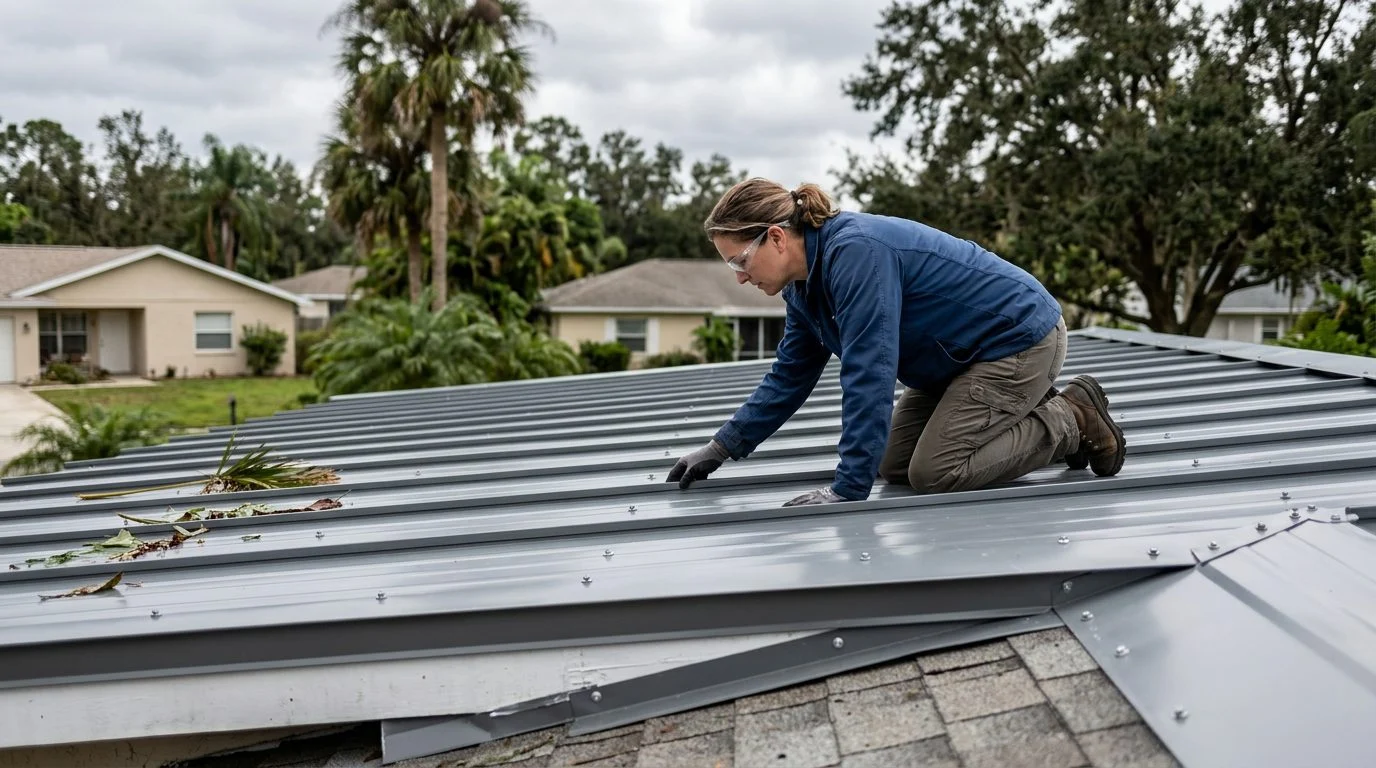
Roof Replacement & Roofing · South Florida
Can You Put a Metal Roof Over Shingles in Florida?
Sometimes. Whether it works depends on your existing shingles, your roof deck, and the specific metal roofing product. Here is how to tell what your roof needs.
By Jonathan Rodriguez · Published October 20, 2026
Yes, in some cases. Whether a new metal roof can go over existing roofing depends on the requirements of the Florida Building Code and on the condition of the existing roof. Whether it works on your house depends on the current roof, the exact metal product, and local permit rules.
The short answer: sometimes, and the existing roof decides
A metal roof can sometimes be installed directly over asphalt shingles. It is a conditional path, not a default. The same panel may be workable on one house and a poor choice on the house next door.
Three things decide it. The first is the condition of the shingles and the roof deck underneath. The second is whether the specific metal product is approved for that installation. The third is what the local building department requires. This page walks through each one, then covers cost, insurance, and when a full tear-off is the better route.
If your roof has storm wear or you are weighing a roof-over for a home you're responsible for, our team offers a free, confidential initial consultation with no obligation to continue. Talk it through with our team — the first consultation is free, confidential, and carries no obligation.
Why homeowners ask whether metal can go over shingles
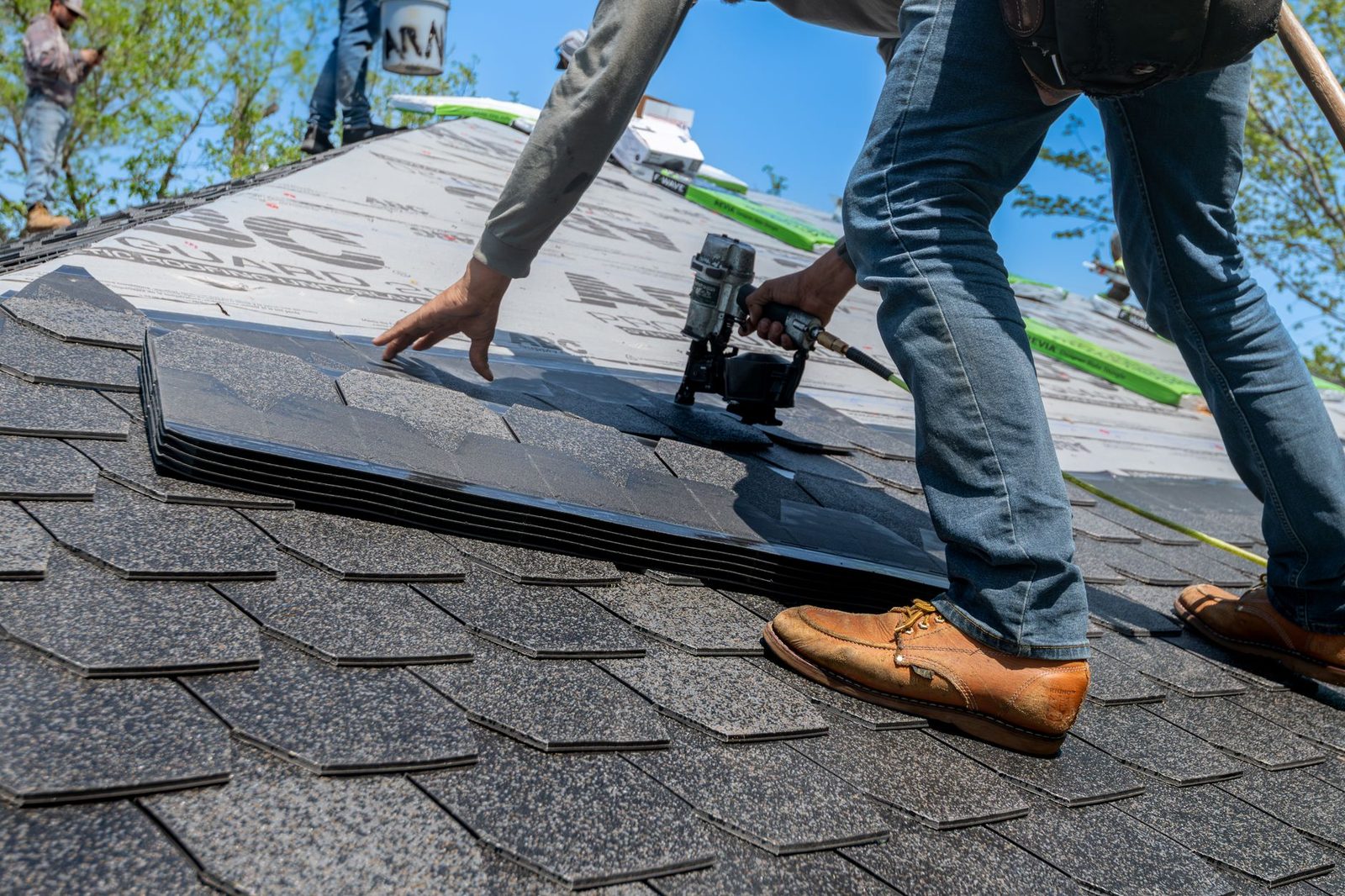
Most people ask this question after a problem shows up. A storm may have lifted or cracked shingles. The roof may be aging and due for replacement. A family member or property manager may be weighing options after an inspection.
The appeal is easy to see. A full tear-off means labor, hauling, and disposal. A roof-over seems to skip those steps, so it can look like a faster, cheaper fix.
The savings only count if the roof underneath can carry the new system. A low quote means little if the deck below is soft or wet. Start with the roof, not the price.
Florida rules: building code and product approvals
The Florida Building Code governs the repair and replacement of buildings, including roofs. Fla. Stat. § 553.73 sets that framework. Under Fla. Stat. § 553.79, unless otherwise provided by law, it is unlawful to repair or alter a building without first getting a permit from the enforcing agency or a person it has delegated to issue permits.
Roofing is one of the product categories that needs statewide approval. Fla. Stat. § 553.842 lists roofing among those categories. Under § 553.842(4), statewide approval precludes local jurisdictions from demanding additional testing, evaluation, or other evidence as a condition of using a product, so long as the product is used consistent with the conditions of its approval, although a building official may still deny a specific local application through a signed written report stating why it is inconsistent with that approval.
That last point matters most. An approval for a product installed one way does not automatically cover a different assembly. The installation method has to match the approval.
Local rules add detail. Roofing projects in South Florida may require permits, and our team can explain what applies to your specific project during your free initial consultation.
Conditions that decide whether a roof-over is workable
The condition of the existing roof is the first test. Look for loose, curled, or cracked shingles. Soft or damaged areas on the deck are a red flag. A roof-over covers these problems instead of fixing them.
The deck is the second test. A roof-over hides the decking. Ask whether it can be inspected, re-nailed, or repaired before the new panels go on. If it cannot, you may be covering problems you never see.
Moisture is the third test. Water trapped under new panels can slowly damage the deck over time. Nobody sees it happening until it is costly to fix.
Surface flaws matter too. Shingle lumps and nail heads can telegraph through metal panels and show in the finished roof. A roof-over can look fine on day one and still show bumps and ridges.
Finally, the number of existing layers and the structure of the roof must be confirmed by a professional inspection. Do not assume the answer from a product brochure.
Roof-over versus tear-off: the tradeoffs
A roof-over may reduce labor and disposal costs, depending on the project. It also leaves the old roof in place. Those two facts pull in opposite directions, so weigh them together.
Contact our team for a free initial consultation, which is confidential and carries no obligation, to discuss your roof.
The Insurance Institute for Business & Home Safety reviewed roofs in Southwest Florida after Hurricane Ian.
A tear-off is often the better route when the deck shows rot, when many shingles are damaged, or when moisture is present. Covering a damaged roof only delays the problem.
Insurance and wind mitigation considerations
Roofing changes can affect your wind mitigation inspection. That inspection can be tied to insurance credits. Florida requires insurers to accept a uniform mitigation verification form from authorized inspectors. An insurer may also verify that form independently, at its own expense.
Florida rules require residential rates to reflect discounts for construction techniques that have been shown to reduce windstorm loss. The rule on windstorm mitigation discounts sets that standard. Whether your roof change earns any discount depends on the roof assembly and your insurer’s rules.
Coverage also depends on your policy. The Florida Office of Insurance Regulation’s homeowners insurance guidance explains that coverage turns on the policy form and on covered or excluded perils.
Raise the roof plan with your insurer before work begins. Ask how the change will be documented.
Not sure what your next step is?
Talk it through with our team — the first consultation is free, confidential, and carries no obligation.
Are metal roofs better than shingles in Florida?
Neither material wins in every case. Metal and asphalt shingles each have strengths. The better fit depends on the house, the budget, and what you want from the roof.
Metal roofing panels are commonly finished at the factory. The Metal Construction Association notes that steel and aluminum panels are often factory coil coated, with a typical two-coat paint system. That finish is one reason metal panels hold their color over time.
Shingles cost less up front and are familiar to most contractors and inspectors. Metal costs more at the start but can offer strong wind performance and a long service life. Compare the full picture, including the roof’s condition, rather than the material alone.
Questions to ask before accepting a roof-over estimate
Bring these questions to your estimate with our team.
- Does the proposal name the Florida product approval for the exact product and installation method?
- How will the existing roof and deck be inspected before panels go on?
- How will moisture, shingle lumps, and nail heads be handled?
- Does the estimate explain how the work may affect your wind mitigation inspection?
- Does the price include the permit required under Florida law?
Frequently asked questions
Can metal roofing go directly over shingles?
Sometimes. It depends on the shingles, the deck, and whether the exact product is approved for that installation.
Do I need a permit?
Yes. Florida law generally requires a permit from the enforcing agency before a building is repaired or altered, unless otherwise provided by law.
Does a metal roof over shingles affect insurance?
It can affect your wind mitigation inspection. Ask your insurer how the change will be documented.
Talk through your roof with our team
If you are dealing with storm damage, an aging roof, or a family member’s question about a home you’re responsible for, you don’t have to sort it out alone. A roof-over depends on the shingles, the deck, and the approvals, and those are best confirmed on your actual roof.
Our team offers a free, confidential initial consultation with no obligation to continue. Reach out through our contact page and we can look at your roof and talk through your options.
What Determines Whether a Metal Roof Can Go Over Shingles
Shingle condition
Shingles that are flat, secure, and not waterlogged or deteriorating are more likely to support a new layer than damaged or curled ones.
Roof deck soundness
The decking underneath must be solid, dry, and able to hold the added weight and fasteners of a metal system.
Permits and code
Florida building requirements generally call for a permit before a roof is repaired or altered. Your project should be planned and documented accordingly.
Check Before You Commit
Installing metal over shingles is not a one-size-fits-all decision. Have the roof inspected first, confirm the product is approved for your installation, and confirm permit requirements before work begins.
Steps Before Installing a Metal Roof Over Shingles
1. Inspect the existing roof
Look at the shingles, underlayment, and decking to see whether they can support a new layer.
2. Confirm the product and method
Verify the metal system and fastening method are approved for installation over shingles.
3. Plan for permits
Coordinate with the enforcing building agency so the project is permitted before work starts.
4. Compare the full cost
Factor in tear-off, repairs to the deck, and long-term maintenance alongside the installation price.


