


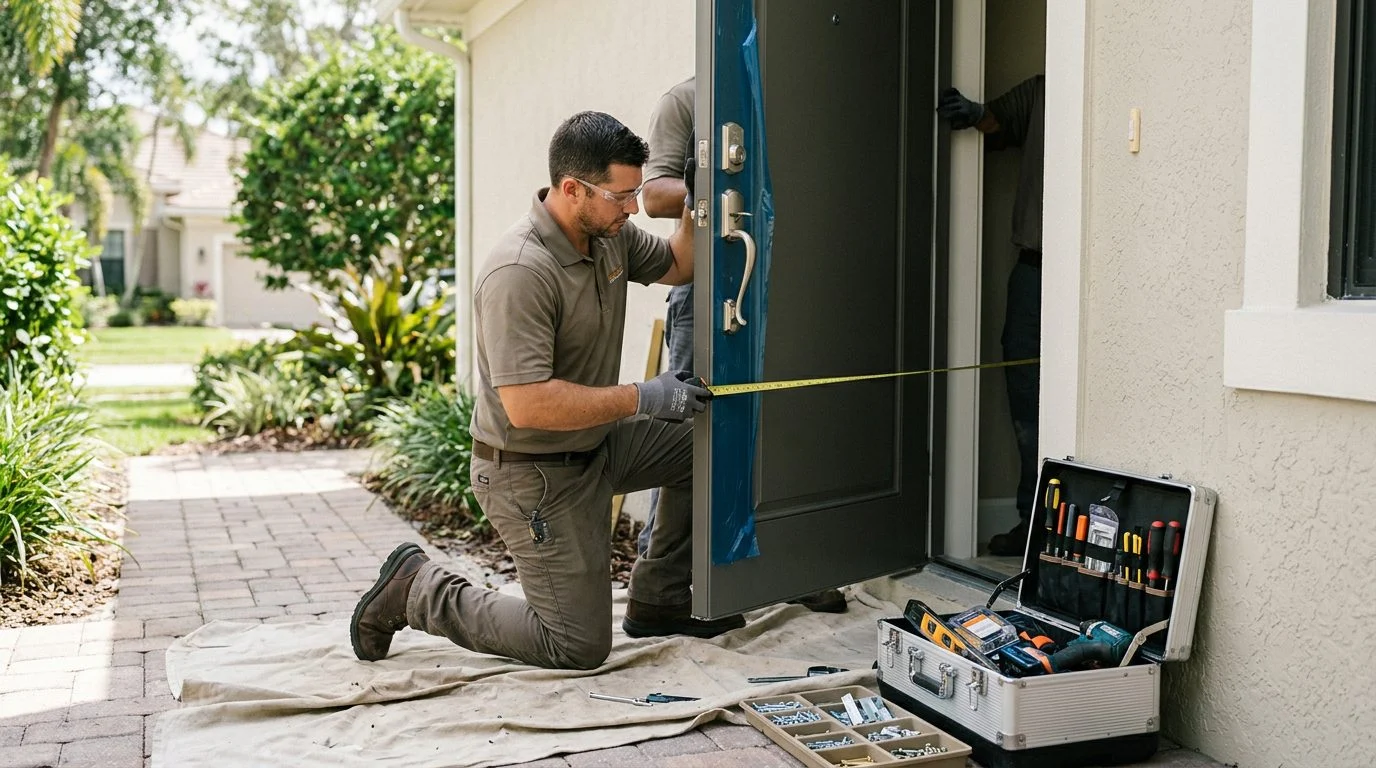
Impact Doors | South Florida
Keep Your Impact Door Hardware Working Through Every South Florida Season
Simple, regular care for locks, hinges, tracks and seals helps your impact doors keep operating smoothly in heat, humidity, salt air and storm season.
By Jonathan Rodriguez · Published October 24, 2026
Impact door hardware maintenance is mostly simple routine care. Wipe off salt, keep the track clear, lubricate moving parts, and check the seals every few months. Coastal South Florida makes this routine more important than it is inland. This guide covers what to check, what to clean, and when a door needs a professional look. It’s written for homeowners and family members who look after a home, including a parent’s house or a rental.
Why Coastal Florida Air Wears Down Impact Door Hardware Faster
Salt-laden humid air, blowing sand, and strong sun wear down impact door hardware faster than dry inland air does. Salt settles on metal and stays there. Humidity keeps that film damp, which speeds corrosion on locks, hinges, and screws. Sand works like sandpaper inside a sliding track. Sun dries rubber and vinyl seals until they crack or flatten.
Homes near the water feel this most. Homes a few blocks inland still see humidity and sun. How hard a door works against these forces depends on its location and which way it faces. A door on a windy side of the house often collects more salt and sand than one tucked under an overhang.
Exterior doors are one of the product categories the state approval system covers. Under Florida product approval law, a product may not be advertised, sold, offered, provided, distributed, or marketed as hurricane, windstorm, or impact protection from wind-borne debris unless it is approved under s. 553.842 or s. 553.8425, and anyone who markets a product that way without approval is subject to the Florida Deceptive and Unfair Trade Practices Act. Routine care helps the door keep working as it was built. It doesn’t replace a proper installation. For an overview of door options, read our impact door guide for South Florida.
If a door in your home is sticking, letting in drafts, or not locking after a storm, we can talk through that specific door with you. Talk it through with our team — the first consultation is free, confidential, and carries no obligation.
Inspecting and Caring for Locks, Handles, Hinges, and Multipoint Hardware
Start with a visual check, then test how the hardware moves. Look for corrosion, pitting, staining, loose screws, and stiffness. Spots of rust or white crust near the handle or lock are early warnings.
Next, open and close the door slowly. Listen for grinding or catching. For multipoint locks, work the handle and confirm each locking point engages. A door should latch fully every time.
To clean hardware, wipe it with a soft cloth and mild soap. Rinse with fresh water to remove salt residue. Dry it thoroughly, because water left in crevices keeps corrosion going.
Lubricate moving parts with a product made for that metal and finish. Follow your door manufacturer’s product guidance where it applies. Skip harsh abrasives and strong chemicals. They can strip the protective finish and leave the metal more exposed.
Cleaning and Clearing Impact Door Tracks
Clear loose debris first, then wipe the track. Grit left in place scratches the surface and makes the door drag.
Sliding tracks collect sand, leaves, grit, and salt crust. That buildup causes dragging and uneven gliding. Use a soft brush or a vacuum to lift loose debris. Then wipe the track with a damp cloth.
Check the weep holes or drainage channels too. Water that can’t drain pools in the track after rain. Standing water carries grit into the sliding path. Clear any blockage gently with a soft brush.
If the track is bent or cracked, or the door no longer rides straight, stop. Don’t force or adjust it yourself. That damage needs a closer look. If you’re weighing whether an older sliding door is due for replacement, read replacing sliding glass doors with impact doors.
Checking and Maintaining Seals and Weatherstripping
A worn seal shows cracking, hardening, flattening, or peeling. Gaps at corners, drafts, and whistling in wind are also signs.
Test on a dry day. Close the door in a dim room, then shine a flashlight slowly along the edges from outside. Light showing through means a gap. You can also slide a strip of paper into the seal at several spots. If it pulls out with little resistance, the seal is loose there.
Clean seals with mild soap and water. Avoid petroleum-based products, which can break down rubber. Many seals are replaceable parts. The right replacement depends on the door’s profile and how the seal fits, so measure before you buy.
Persistent water around a door is a reason to get an inspection promptly. Water can reach the wall and frame, where damage is harder to see.
A Seasonal Maintenance Routine for South Florida Homes
A short monthly check and a deeper quarterly check cover most needs. Add a full review before hurricane season and after every storm.
Monthly, wipe the hardware, clear the track, and confirm the door latches fully. This takes a few minutes per door.
Quarterly, inspect the seals, lubricate moving hardware, and look for new corrosion spots. Properties that take heavy salt spray may need more frequent rinsing.
Before hurricane season, look for loose hardware, debris in the tracks, displaced seals, and any change in how the door closes. Miami-Dade County advises that windows and doors can be secured with approved shutters or plywood boarding. See the Miami-Dade hurricane preparation guidance for those steps.
After a storm, repeat the same check and rinse salt off the hardware. Keep this short list somewhere handy, such as inside a closet door, so anyone caring for the home can follow it.
When to Ask ASP Superhome to Take a Closer Look
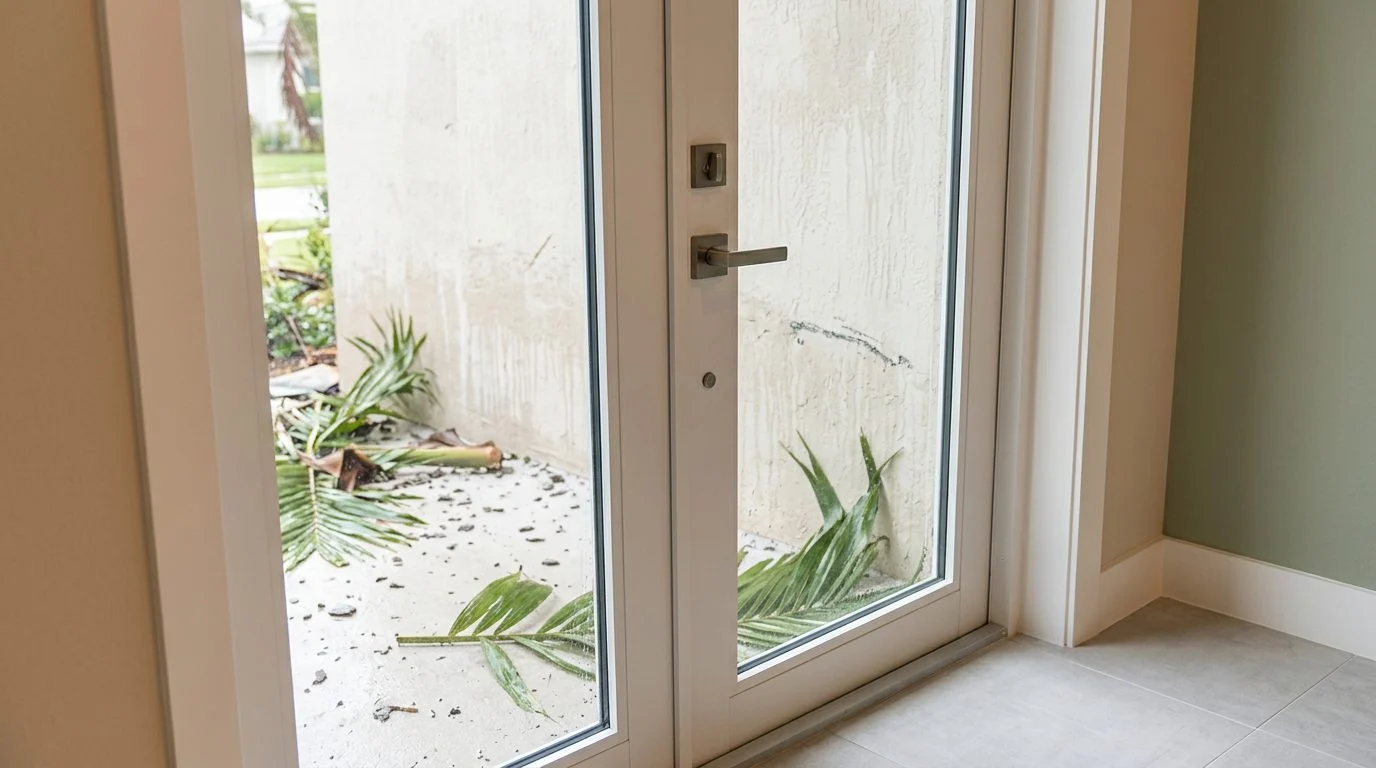
Get a professional look when a door won’t latch, its frame or track is damaged, water gets in, or hardware has clearly failed.
If you’re checking a door for a parent, a tenant, or a relative after a storm, you may not be ready to hire anyone. That’s normal. Start with the checks above and write down what you find.
Signs that need a professional look include a door that won’t latch, visible frame or track damage, water intrusion, and hardware that has failed or come loose.
Can I clean impact door hardware with soap and water?
Yes. Use mild soap, rinse with fresh water, and dry the hardware fully.
How often should I check impact door seals in South Florida?
Check them quarterly, and again before hurricane season and after storms.
Should I replace a worn seal myself?
Seals are often replaceable, but the right part depends on the door’s profile and fit. Measure carefully before you buy.
If a door in your home is sticking, letting in drafts, or not locking after a storm, ASP Superhome can talk through that specific door with you. ASP Superhome offers a free first consultation that is confidential and carries no obligation to continue. Contact ASP Superhome to start the conversation.
Why Hardware Maintenance Matters
Protection that depends on working parts
Impact doors only perform as well as the hardware that holds them closed. Locks, hinges and multipoint latches need to engage fully every time.
Early signs are easy to miss
Stiff operation, small rattles or a door that needs extra force to close often appear long before a larger problem develops.
Salt and humidity wear hardware faster
Coastal air accelerates corrosion and can dry out lubricants, so routine attention keeps moving parts in better condition.
Simple steps you can take
Most upkeep takes only a few minutes: a gentle cleaning, a quick visual check and a light lubrication of approved moving parts.
A Practical Maintenance Routine
Clean the hardware
Wipe locks, handles and tracks with mild soap and fresh water, then dry them completely to prevent residue and corrosion.
Inspect the seals
Look for cracks, flattening or gaps along the perimeter. Check quarterly, and again before hurricane season and after storms.
Lubricate moving parts
Apply a lubricant recommended for your door's hardware to hinges, latches and sliding components. Wipe off any excess.
Test after every storm
Confirm that each lock engages fully, the door closes flush and nothing feels loose. Note any change so it can be reviewed promptly.
A Note on Worn Seals and Loose Hardware
Do not force a sticking lock or push a door closed against resistance. Forcing hardware can bend components and cause further damage. If a seal is torn or a fastener is loose, have it looked at before the next storm.


