



Impact Doors | South Florida
Find the Right Impact Door Color for Your South Florida Home
White, bronze, charcoal, black, and woodgrain-look finishes each bring a different style to your home. Learn what's common in Florida and what to consider before you choose.
By Jonathan Rodriguez · Published October 26, 2026
Impact door color options in Florida include white, light neutrals, bronze, charcoal, black, and woodgrain-look finishes. Pick the color together with the impact rating, not after it. This guide covers each finish family, how the door material and design shape your choices, and what to confirm before you decide.
Why Color and Finish Matter on an Impact Door in South Florida
Color and finish matter because an impact door does two jobs. It protects the opening from wind-borne debris, and it becomes the face of your home. Decide the color alongside the impact rating, not after it.
Florida law ties the product to approval. Exterior doors are one of the product categories that process covers, under Fla. Stat. § 553.842.
The front entry often sets the first impression of a South Florida home. Its color has to work with stucco walls, tile or metal roofs, and the landscaping around it. A white door on cream stucco reads very differently from a black door on the same wall.
Many of these decisions involve more than one person. A parent may pick the door for an adult child. A landlord may approve a tenant’s request. A homeowner after storm damage may need to decide quickly. A simple color plan, with a photo and a physical sample, makes the choice easier to share.
Choosing a door color often falls to one person while the whole family lives with it, and our team can help you plan that choice. Talk it through with our team — the first consultation is free, confidential, and carries no obligation.
Common Impact Door Color Options in South Florida
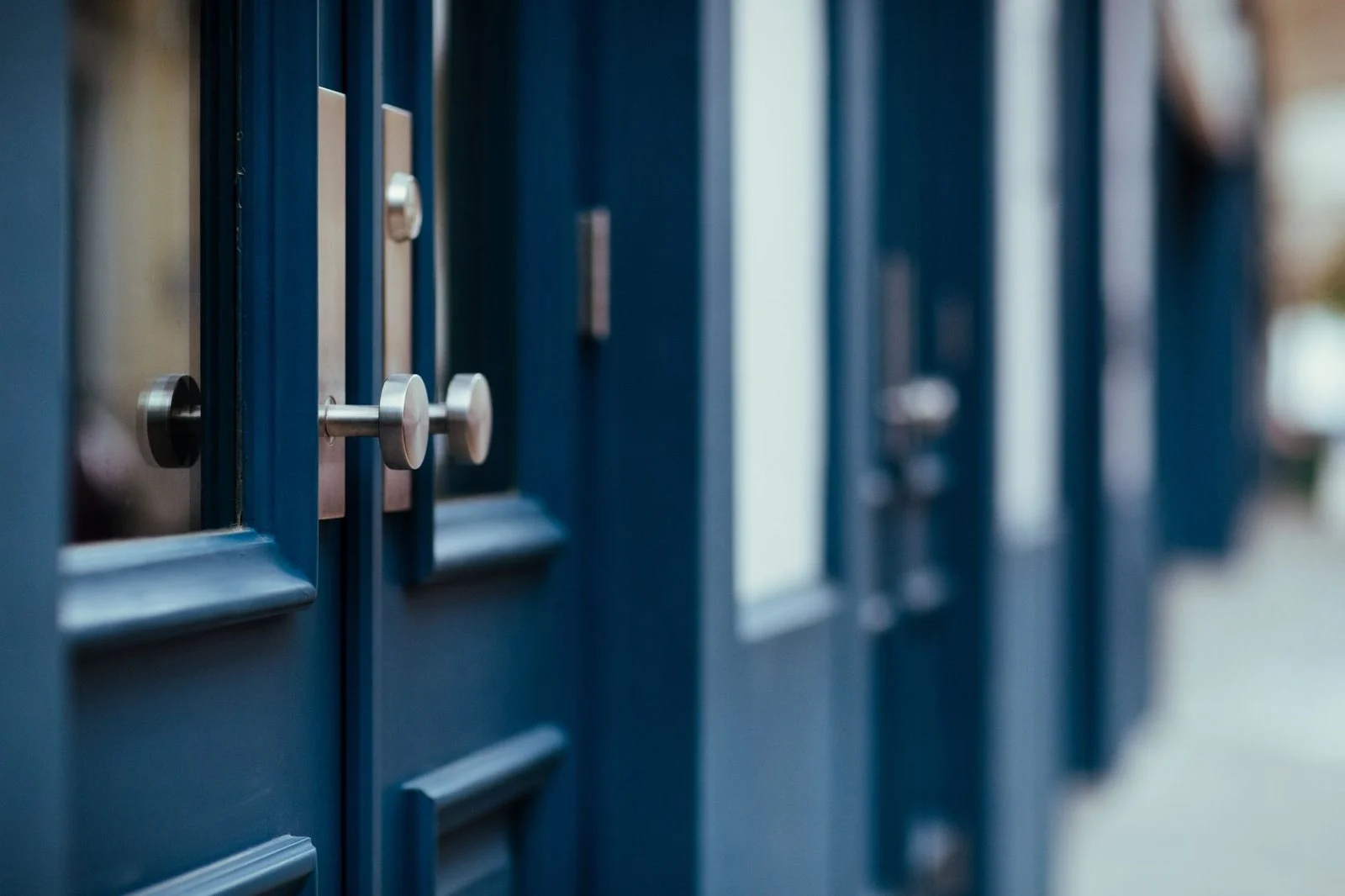
The most common impact door finishes are white, bronze, charcoal, and black. Each one changes how the entry looks from the street and how it fits the rest of the house.
White, off-white, and light neutrals. These finishes look clean and bright. They suit coastal homes and modern exteriors. They also make a small entry feel more open, and they pair well with light stucco.
Bronze, dark bronze, and charcoal. These warm or muted tones pair well with natural stone, tile, and green landscaping. They look settled and traditional. They also soften the look of a bold entry.
Black and deep dark finishes. Black is a popular choice for modern and minimalist entries. It gives a strong, graphic edge, especially on a flush surface with clean hardware.
The color list depends on the door material and the manufacturer’s finish system. Not every color comes in every model. Ask our team for the exact color list for the model you’re considering before you order.
Woodgrain and Wood-Look Finishes
Woodgrain-look impact doors copy the look of oak, walnut, or mahogany. They keep impact construction, so you get the warmth of wood in a door built for storms.
There are two main ways these finishes are made. A printed or textured wood-look surface shows the grain as a pattern and texture. A stained or painted finish is applied to the surface itself. Ask how the finish is applied, because the method changes how the surface looks over time.
Wood-look finishes can be paired with sidelights and transoms to match existing interior trim. Ask our team to show the sample next to your current trim in daylight. Seeing it in your own light makes the match easier to judge.
How Door Material Changes Your Finish Choices
The material you pick sets the range of colors and textures you can choose from. Fiberglass and steel are the two materials you will hear about most.
Fiberglass impact doors are often offered in a wide range of colors and wood-look textures. That range gives you more room to match an existing style. Ask which textures come in the color you want.
Steel impact doors are offered in paint finishes. The way the paint is applied affects how the surface looks over time. Ask about the finish process before you choose a color.
The trade-off is simple. A material with a wide color and texture range gives you more options. A material with a narrower finish list may still give you the clean look you want in one color. Compare the color list, texture options, and finish method for each material, then decide which trade-off suits your home.
Design Styles That Shape Your Color Choice
Your door style changes how much color you see, so choose the style and color together.
A single entry door in one color gives a clean, uniform look. It works well for a smaller entry with one main slab.
Double entry doors need two matching leaves. Matching the color across both leaves keeps the opening consistent. Even a slight difference shows across a wide opening.
French impact doors have glass panels. The frame color and the glass tint change the overall look. A dark frame sharpens the glass line, while a light frame keeps the entry airy.
Sliding glass and pivot doors often need their frame and track color to match nearby windows. Large openings also need a hurricane plan. The Pinellas County hurricane retrofit guidance says approved storm shutters, particularly permanent accordion shutters, are a hurricane-protection option for large openings such as sliding glass doors.
Modern minimalist designs use solid, flush surfaces. A flat black or charcoal surface shows a single color or finish very clearly, so the color choice carries more weight.
Glass, Sidelights, and Hardware: Matching the Finish
Glass, sidelights, and hardware all change how a door color reads, so plan them together. Treat the entry as one design, not separate parts.
Glass tint changes the color of the glass itself, so the frame and glass look different in daylight. Privacy glazing reduces how much you can see through the glass, while the frame color stays the same. Test both options with a sample in your own light.
Hardware finishes such as brushed nickel, matte black, and bronze are common. Match the hardware to the door color so the entry looks planned. Bronze hardware on a bronze door and black hardware on a black door are typical pairings.
Sidelights, transoms, and matching impact windows should be planned at the same time. A door that matches its sidelights and nearby windows reads as one system. Ask for one sample board that shows the door, glass, and hardware finish together.
Not sure what your next step is?
Talk it through with our team — the first consultation is free, confidential, and carries no obligation.
Sun Exposure, Heat, and Upkeep in the Florida Climate
Darker colors absorb more solar heat than lighter colors. A dark door in full sun can feel much hotter to the touch than a white one. Think about this before you choose a deep color.
Exposure direction matters too. A west-facing entry gets strong afternoon sun, so its finish works harder than a shaded north-facing door. Look at which way your entry faces before you decide.
South Florida homes sit close to salt air and humid weather. Rinse the door and frame on a regular schedule to remove salt residue and dirt. Inspect the finish each season for chips, scratches, or fading, and touch up small spots early.
Before you choose, ask about the finish warranty and the cleaning products the manufacturer recommends. Some cleaners can damage certain finishes, so use only the products the manufacturer lists. When you talk with our team, ask for the warranty in writing.
What to Confirm Before You Choose a Color
Confirm the impact rating, product approval, and permit needs before you lock in a color. Color is the last decision, not the first.
Ask for proof that the exact model you want carries the approval it needs under Florida’s product approval rules. The approval rule is covered in the Fla. Stat. § 553.842 section above.
Permits and calculations also matter. The City of Opa-locka permit guidance says installing or replacing exterior impact windows generally requires a permit, subject to the building official’s determination. Ask our team whether your door replacement needs a permit.
If your home is in a community with an association, check its rules. Florida law does not address homeowners’ association standards for storm-protection products in this section. Under § 553.842, the Florida Building Commission shall adopt rules to develop and implement a product evaluation and approval system that applies statewide to operate in coordination with the Florida Building Code. The section does not address homeowners’ association standards on color or style, so those are set by the association’s own rules, not by this statute.
Practical checks help too. View physical samples in natural light, confirm the finish is available for your chosen model, and review any color guidelines in writing. Requirements in Kendall, Naples, and Fort Myers can differ from one area to another, so confirm the local details for your address.
Talk Through Your Color Options With Our Team
Our team can help you choose impact door color options, samples, and finishes for your home. You can take this step even if you aren’t ready to order.
You may be handling this during a renovation, after storm damage, or for a family member who can’t be there. The choice can feel urgent or overwhelming. You don’t have to settle every detail in one visit.
Start with three questions. What color fits the house? What impact rating does the opening need? What does the association allow? Our team can walk through each one with you, using samples and your door style. Our impact doors overview covers the wider product range.
Our first consultation is free, confidential, and comes with no obligation to continue. When you’re ready, contact our team to talk through your options.
Frequently Asked Questions
What impact door color options are common in Florida?
White, bronze, charcoal, and black are the most common finishes. Availability depends on the door model and manufacturer.
Do impact doors come in wood-look finishes?
Woodgrain-look finishes are available on some impact doors. Confirm the option for your specific model.
Do I need HOA approval to change my front door color?
Check your association’s rules first.
Does my door color have to match the impact windows?
Matching them usually makes the entry look unified. Plan the door and windows together.
Is a black impact front door a good choice in South Florida?
Black suits modern entries. Darker colors absorb more solar heat, so think about sun exposure before you choose.
What to Consider When Choosing a Finish
Match your home's style
Think about your roof color, exterior trim, siding, and the overall look you want, from classic to modern.
Think about sun exposure
South Florida's strong sun can affect how a dark finish looks and feels over time. Discuss your door's orientation with our team.
Confirm model availability
Color and finish options depend on the door model and manufacturer, so the choices for your project may differ from others.
Coordinate with windows
Matching your door finish to your impact windows helps create a cohesive, finished look across the home.
Confirm Before You Order
Not every finish is offered on every impact door model. Ask about the exact color and woodgrain-look options available for your specific door before making a final decision.
Common Impact Door Finishes
White
A clean, bright look that suits coastal, Mediterranean, and contemporary homes across South Florida.
Bronze
A warm, understated tone that pairs well with stucco, stone, and tropical landscaping.
Charcoal and Black
Bold, modern contrast that stands out against light walls and works well for a sleek exterior.
Woodgrain-Look
A natural wood appearance on some impact door models, offering warmth without the upkeep of real wood.


