


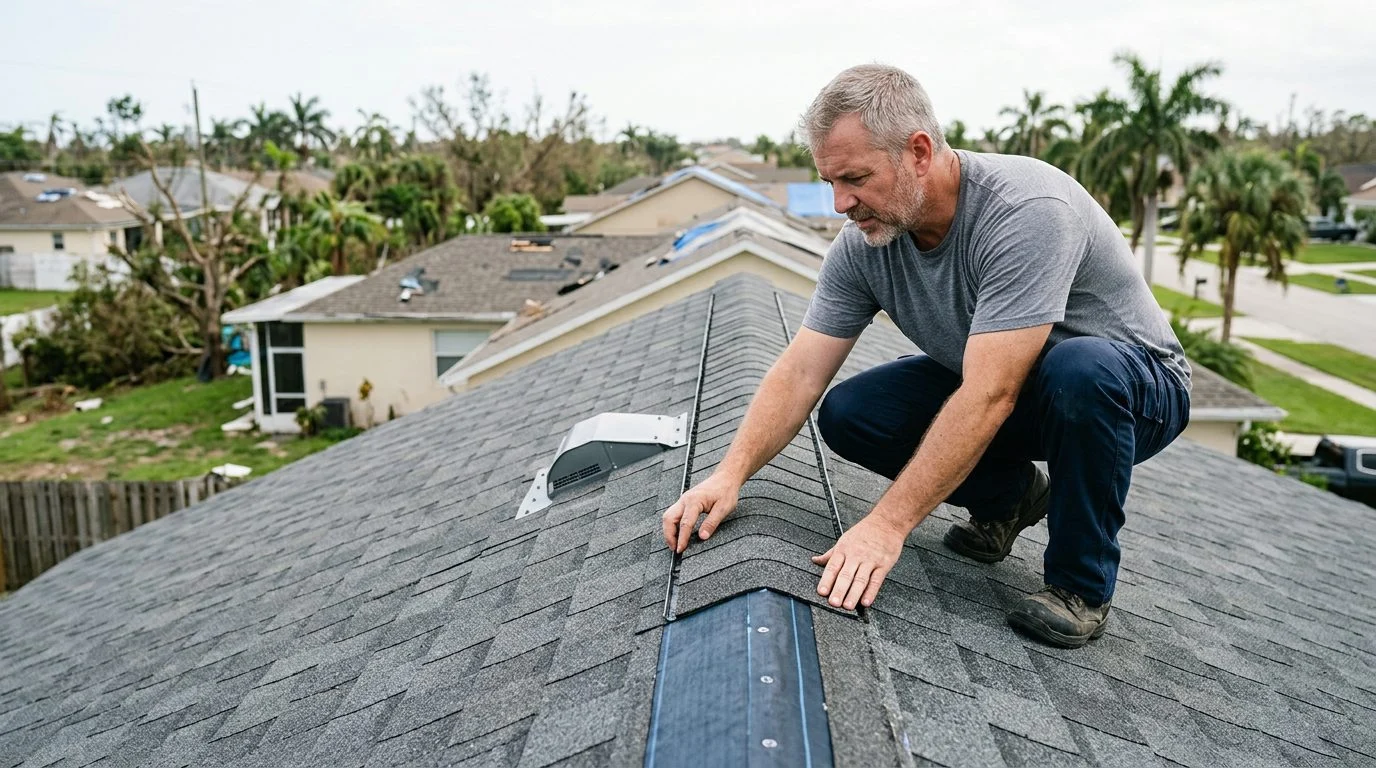
Roof Replacement · West Palm Beach
Is It Time to Replace Your Roof in West Palm Beach?
Learn the warning signs, what drives replacement costs, and how local building codes come into play. Start with a free first consultation, confidential and with no obligation to continue.
Your first step
Free
First consultation
Confidential
Your information stays private
No obligation
No pressure to move forward
By Jonathan Rodriguez · Published October 14, 2026
A roof replacement in West Palm Beach makes sense when repairs no longer keep water out. It means removing the old roofing and installing a new system built to current Florida rules. Homeowners searching for roof replacement West Palm Beach options often face the same questions. This guide covers the warning signs, how South Florida weather wears roofs down, the metal and tile choices, what drives cost, and how permits and contracts work.
When Does a West Palm Beach Roof Need Replacement Instead of Repair?
A roof usually needs replacement when leaks keep coming back, the decking is soft, or repairs add up to nearly the cost of a new roof. One patch can fix one leak. A pattern of leaks points to a larger problem.
Watch for these signs:
- Water stains on ceilings that return after you patch them.
- Daylight showing through the roof deck when you look from the attic.
- Curled, cracked, or missing shingles, or loose and faded tile after a strong wind season.
- Granules piling up in gutters or downspouts.
- Soft spots or sagging when you walk the roof.
The most common mistake is patching the same spot again and again. Each patch hides the real cause, which is often damaged decking or failed underlayment below the surface. Ask for a hands-on inspection before you decide. Only an inspection can show whether the structure and roof layers still hold up.
If your West Palm Beach roof is leaking, storm-damaged, or past its prime, our team can walk it with you and put the scope in writing. Talk it through with our team — the first consultation is free, confidential, and carries no obligation.
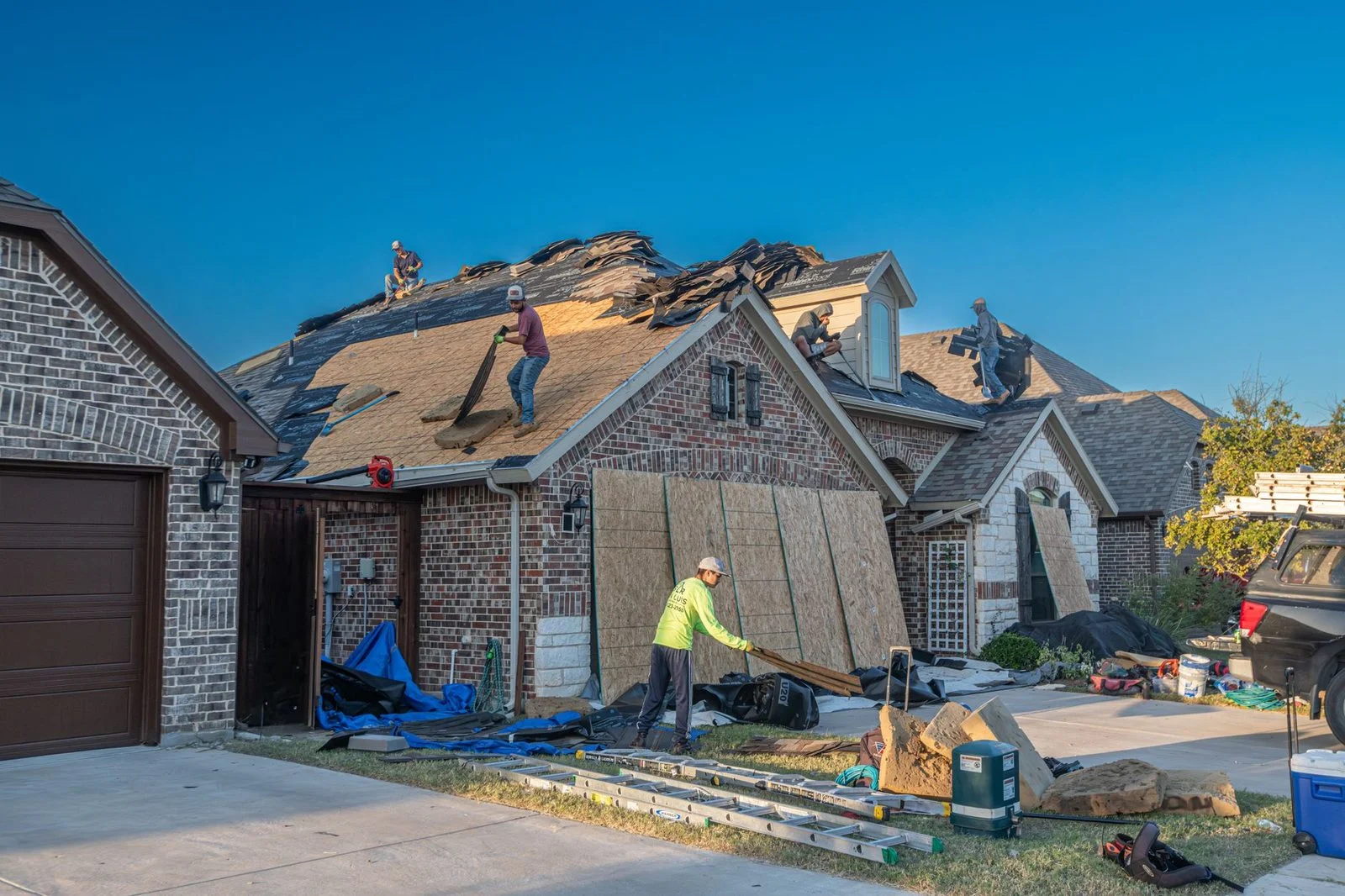
Why Do South Florida Roofs Wear Out Faster?
South Florida roofs age under constant sun, heat, humidity, and salt air. Storms add wind loads that test the edges most of all.
Heat and sunlight break down sealants and rubber components over time. Salt air speeds corrosion of metal fasteners and flashing, especially near the coast. Humidity keeps moisture in roof layers longer, which weakens wood decking.
Wind is the bigger threat during hurricane season. Uplift pulls hardest at roof edges, ridges, and the points where the roof meets the walls. A roof can look fine from the ground and still have loose edges or fasteners.
Afternoon thunderstorms bring heavy rain. That rain finds weak flashing around vents, chimneys, and skylights, and those spots often leak first.
Age alone does not tell the whole story. A well-installed, well-kept roof can last longer than its age suggests. A neglected roof can fail early. Condition matters more than the calendar.
Is Metal or Tile Better for a West Palm Beach Home?
Neither material is better for every home. Metal and tile both suit South Florida, and the right choice depends on the structure, the roof style, and how wind loads reach it.
Metal roofing is lighter and uses interlocking panels or profiles. It fits many pitched roofs and some low-slope designs. In its assessment of Southwest Florida roof coverings after Hurricane Ian, the Insurance Institute for Business & Home Safety found that IBHS Hurricane Ian roof study showed metal roofing systems held up well in winds below 130 mph. That finding comes from one storm and one assessment, so it is not a promise for every roof.
Tile roofing has a traditional look that suits many Florida neighborhoods. Tile is heavy. Before you choose it, confirm the existing structure can carry the added weight. A structural check protects both the home and the new roof.
Whichever material you pick, ask about product approval. Florida law says a roofing product may not be advertised as hurricane or windstorm protection unless it is approved under the state’s approval system. See Fla. Stat. § 553.842 for those approval rules.
What Drives Roof Replacement Cost in Palm Beach County?
Cost depends on the size, pitch, and complexity of your roof. It also depends on the materials you choose and the condition of what lies beneath them.
Complex roofs cost more to replace. Valleys, dormers, multiple levels, and steep pitches all add labor and materials. A simple gable roof usually takes less work than a roof with many cuts and transitions.
Material choice matters too. Metal, tile, underlayment, and fasteners each carry different costs. Your contractor should list each item and explain why it is needed.
Tear-off often reveals more. Removing old layers exposes the decking. Damaged wood usually needs repair before the new roof goes on. Disposal of old materials is a separate cost in many estimates.
A phone figure is not a substitute for a measured, written estimate. A number given without seeing the roof can leave out tear-off, decking repair, or flashing. A higher written total is not automatically poor value. The scope may simply be larger or more complete. Read each line of the estimate to see what it includes.
How Does the 25% Rule Affect a Florida Roof Replacement?
Under Florida law, when 25 percent or more of an existing roof is repaired, replaced, or recovered, only that portion must meet the Florida Building Code in effect. The rule applies when the roof section was built, repaired, or replaced under the 2007 Florida Building Code or a later edition. It also requires the Florida Building Commission to adopt the exception by rule. A local government may not change that exception by ordinance.
Read the rule closely. It does not say every replacement forces a full-roof upgrade. It says the replaced portion must meet the code in effect. Ask your contractor which parts of your roof fall into that portion and which code items apply to them.
Wind rules can also apply. Under § 553.844, the Florida Building Code roof-to-wall mitigation requirement applies to site-built single-family homes in the wind-borne debris region when the insured value is $300,000 or more or, if the home is uninsured or no insured value is documented, when its just valuation for ad valorem tax purposes is $300,000 or more, and the cost of the required improvements is not required to exceed 15 percent of the cost of the roof replacement. Ask whether your home falls into this category before work starts. The answer changes the scope and the cost.
How Should You Plan a Roof Replacement From Start to Finish?
Plan the project in order: inspection, written estimate, permits, weather-timed installation, and final walkthrough. Each step protects you from surprises later.
Start with a documented inspection. Record the existing conditions with notes and photos. This record helps you and your contractor agree on what the job includes.
Next, get a written estimate that lists materials, underlayment, flashing, permits, and disposal. Confirm the material choice before work begins.
Permits are set by your local building department. Florida law requires each local enforcement agency to post its permit procedures on its website, as Fla. Stat. § 553.79 provides. If a contractor receives an initial payment above 10 percent of the contract price for residential work, Fla. Stat. § 489.126 requires that contractor to apply for the necessary permits within 30 days after that payment. Do not assume rules from other counties apply to your address.
Schedule the work around weather. Protect landscaping, pool areas, and interior rooms before tear-off starts. Cover openings and secure debris each day.
At the end, expect a final inspection, a full cleanup, and a review of warranty terms in writing.
Not sure what your next step is?
Talk it through with our team — the first consultation is free, confidential, and carries no obligation.
What Should You Check Before Signing a Roof Contract?
Before you sign, confirm the contract is in writing and includes the notices Florida law requires for roof work.
That language tells you to check coverage with your insurer before signing. If a roof contract lacks the required notice, you may void it within 10 days after signing. For a contract signed within 180 days of events that led to a state of emergency, you may cancel within 10 days after signing or by the official start date, whichever comes first.
Residential contracts must include a written statement about the Florida Homeowners’ Construction Recovery Fund, unless labor and materials total $2,500 or less. Florida law also says contracts with an unlicensed contractor cannot be enforced by that contractor, as Fla. Stat. § 489.128 states.
If storm damage is involved, act early. Fla. Stat. § 627.70132 sets notice deadlines for property insurance claims. Most claims need notice within 1 year after the date of loss. Supplemental claims need notice within 18 months. For hurricanes, the date of loss is the date the storm made landfall.
Frequently Asked Questions
How do I know if I need replacement or just repair?
Replacement is more likely when leaks keep returning, the decking is soft, or repairs cost close to a new roof. An inspection gives the clearest answer.
Does a partial roof replacement require the whole roof to be upgraded?
Under Fla. Stat. § 553.844, the exception applies only when 25% or more of the roof is repaired, replaced, or recovered, and only when that roof or section was built, repaired, or replaced under the 2007 Florida Building Code or a later edition.
Can I cancel a roof contract in Florida?
Sometimes. Florida law gives cancellation rights in certain cases, such as some contracts signed after a state of emergency. Read your contract carefully.
How long do I have to file a hurricane roof claim?
Most claims need notice within 1 year after the date of loss. Supplemental claims need notice within 18 months.
Get a Free Estimate for Your West Palm Beach Roof
If your roof is leaking, storm-damaged, or near the end of its service life, a measured, written estimate is the next step. ASP Superhome offers a free, confidential initial consultation, with no obligation to continue. Roof replacement, metal roofing, tile roofing, and roof repair are all part of that conversation.
If your West Palm Beach roof is leaking, storm-damaged, or past its prime, request your free estimate and our team can walk the roof with you and put the scope in writing.
Common signs your roof may need replacing
Leaks that keep coming back
When patches and repairs stop holding, the underlying roof system is often worn out.
Soft or sagging decking
Spongy spots or uneven areas on the roof can point to moisture that has reached the structure below the surface.
Repair bills that add up
If repeated repairs are approaching the cost of a new roof, replacement may be the more practical choice.
Visible age and wear
Cracked, curling, or missing tiles, or granules washing into gutters, are signs the roof is nearing the end of its service life.
How we approach roof replacement
Inspection first
We look at the condition of your roof and the decking beneath it before recommending a path forward.
Clear options
We explain the differences between repair and replacement, and between roofing materials, so you can compare them side by side.
Metal and tile roofing
We install both metal and tile roofing systems, and can discuss which suits your home and budget.
Straight answers
Our team walks you through costs, timing, and permit requirements in plain language.
Don't wait for a ceiling stain
Water can travel through a roof and into the structure before it shows up inside your home. An early inspection can clarify whether repair or replacement makes more sense.


