


Roof Repair | South Florida
Is It Normal for a Roof to Leak in Heavy Rain?
A roof should shed heavy rain. If water is getting in during a storm, something needs attention. Here's what usually causes it and what to do next.
Start with a free first consultation
Free
First consultation
Confidential
Your information stays private
No obligation
Continue only if you choose to
By Jonathan Rodriguez · Published November 8, 2026
No, a roof should not leak in heavy rain. Water that gets inside during a storm has found a path past the roof covering, the flashing, or a seal. The leak may stop when the rain does, but the gap is still there. This guide explains why heavy and wind-driven rain expose weak spots, where South Florida roofs usually leak, and what to do right now.
Short answer: a roof should not leak in heavy rain
A roof is built to shed water, even in a downpour. Rain should run off the slope, across the laps, and off the edges. When water finds its way indoors, something in that system has failed or moved.
Two patterns matter. The first is a leak that shows up only in storms. The second is a steady drip that appears after any rain. Both point to a breach. A storm-only leak is not a sign the roof is fine. It means the weak spot fails only under certain conditions. A leak that returns is a warning to act early. For the broader picture, read our roof repair guide for South Florida.
If a storm leak has you worried about your ceiling and where to start, our team offers a free, confidential first consultation with no obligation to continue. Talk it through with our team — the first consultation is free, confidential, and carries no obligation.
Why heavy rain exposes leaks that light rain misses
Heavy rain sends far more water across the roof in a short time. A small gap that handles a light drizzle may not handle that volume. Water builds up faster than it can drain, and it pushes against the spot where two surfaces meet.
Flat or low-slope areas feel this most. Water can pool there and back up toward laps, seams, and joints. Standing water keeps materials wet, and that moisture can work under edges that stay dry in light rain.
Flashing helps direct water away from vulnerable joints where a roof meets walls, chimneys, and vents. The 2026 Florida Building Code analysis says the flashing section was broadened to cover all roof types and shapes. Flashing is the metal or membrane strip that seals joints. When it is loose, cracked, or missing, heavy water finds the gap.
Wind-driven and horizontal rain: how water gets under the roof
Horizontal rain is rain pushed sideways by wind. Wind can drive water upward and past edges that normally shed it straight down. This is why a roof can stay dry in a steady rain and still leak in a storm with strong gusts.
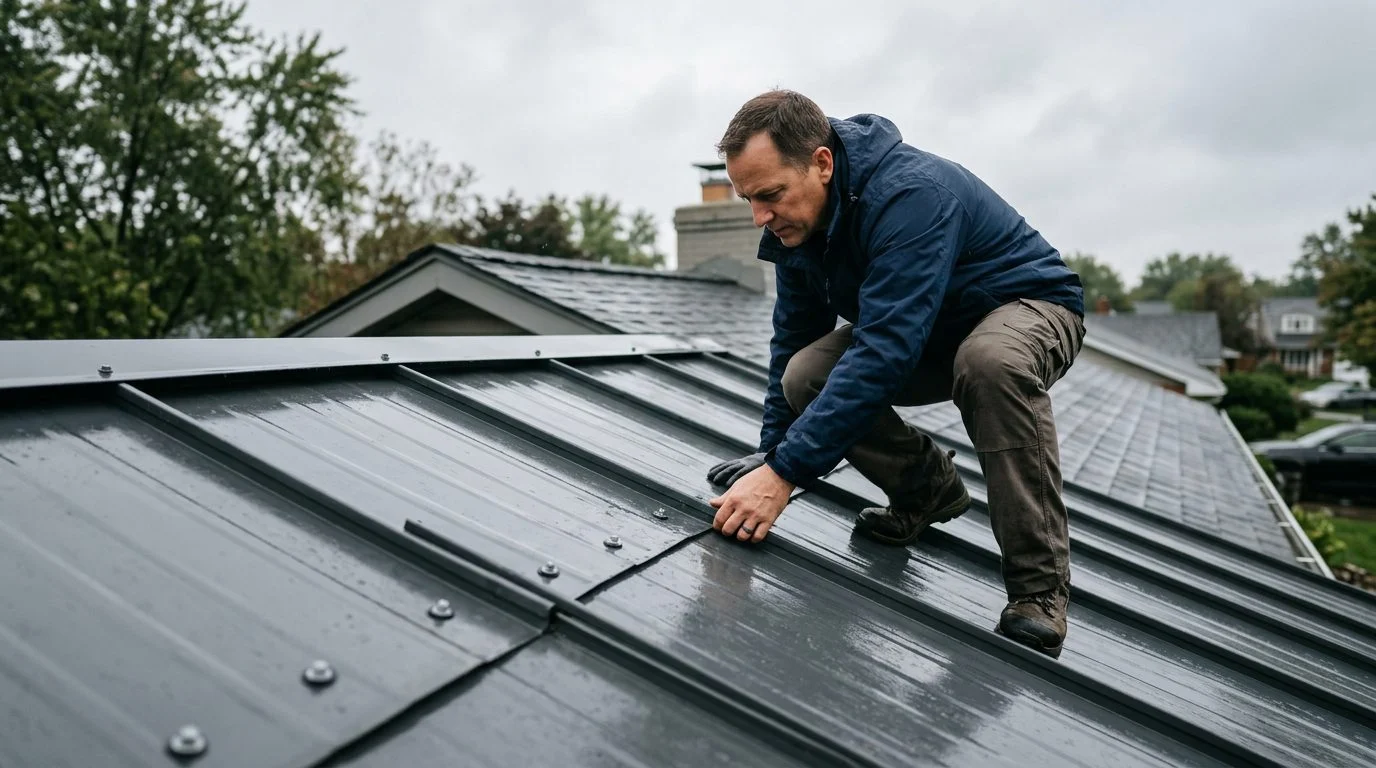
Three areas stand out. Lifted or damaged shingle edges let wind get under the material. Exposed fasteners, the nails or screws that hold shingles and panels, can lose their seal. Panel seams on metal roofs can open when wind pulls at the sheets. Water enters at any of these points and runs down to the decking.
Code sets wind rules for ridge areas too. The same 2026 Florida Building Code analysis says hip and ridge asphalt shingles must be wind-tested or secured with roof cement in addition to manufacturer fasteners. Hip and ridge shingles are the caps along a roof’s corners and peak. South Florida storms bring this kind of wind, so ridge and edge leaks deserve early attention.
Common leak sources that show up only in storms
Most storm leaks start at a handful of places. Knowing them helps you ask the right questions.
Flashing around chimneys, walls, and roof-to-wall transitions comes first. These joints move with the building and the wind. When sealant dries out or metal lifts, water finds a path.
Pipe vent boots come next. Each plumbing vent has a rubber collar that seals around the pipe. Over time, sun and age can crack or shrink that collar. It may hold in a light shower and fail in a hard downpour.
Chimneys and their caps are another source. Wind can push water in at the crown or the base. Skylights are a fourth. Sealant or flashing around a skylight can fail under heavy water flow, especially where water gathers at the upper edge.
On metal roofs, check the panel seams and fasteners closely. The 2026 Florida Building Code analysis says flashing on metal roof panels must follow the code chapter and the manufacturer’s installation instructions.
Why does my ridge vent leak during heavy rain?
A ridge vent runs along the peak of the roof. It lets hot air out of the attic. Its design lets air leave, but it also gives wind a way to push rain toward the opening.
Water usually enters at the ridge when the vent, its cap, or its fasteners are damaged. A vent that is poorly sealed or set on an uneven ridge is another cause. Wind drives rain into the gap, and the water runs along the underside of the roof deck.
Watch for signs near the peak. Look for water stains or damp insulation along the ridge line inside the attic. Notice whether drips appear only when wind comes from one direction. How the vent is installed and sealed is the key factor in whether it lets water in. The 2026 code also requires intake and exhaust vents for attic ventilation, so vent placement matters.
Why does my roof leak only sometimes? Tracing an intermittent leak
An intermittent leak usually comes from one weak point. That point fails only under a certain mix of rain, wind, and temperature. The roof may look fine on a sunny day, which is why these leaks are hard to find.
Water also travels. It runs along rafters, decking, and insulation before it drips. The stain on your ceiling can sit several feet from the spot where water got in. The mark you see is not always the entry point.
Tracing works best with a simple log. Write down the date, rain strength, and wind direction for each leak. Photograph attic staining with a dated picture. Mark where drips land on the ceiling, then compare those marks after several storms. Repeated patterns in wind direction can point toward the side of the roof where the breach sits.
Not sure what your next step is?
Talk it through with our team — the first consultation is free, confidential, and carries no obligation.
What to do when your roof leaks during rain
Start with safety. Do not climb onto a wet or storm-affected roof. Wet surfaces are slippery, and loose material can shift. Keep people and electrical items away from the leak. If water reaches a light fixture or outlet, shut off power to that circuit at the breaker before touching anything.
Next, protect the inside. Place buckets under drips. Move furniture, electronics, and valuables out of the path. Lay towels or plastic sheeting to limit damage to floors and walls. Empty containers as they fill so the ceiling does not sag.
Document the damage as you go. Take dated photos of the ceiling, walls, and wet materials. Write down when and where water appeared. Keep those notes with your receipts for supplies.
Remember that temporary measures are not a repair. A bucket or tarp slows the damage. It does not close the gap. The source still has to be found and corrected once it is safe to work.
Is roofing in the rain bad?
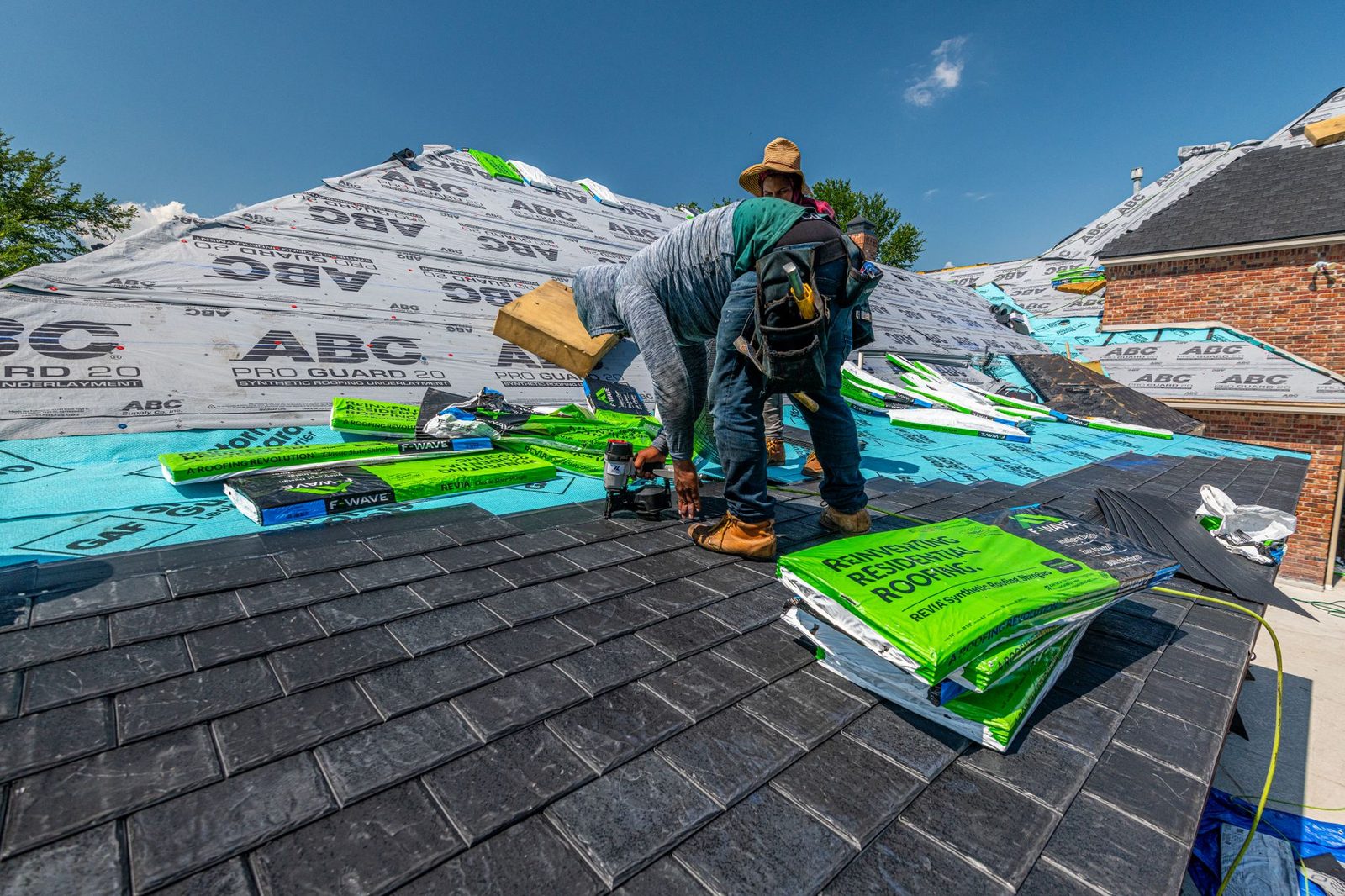
Roofing work in the rain is usually unsafe and often done poorly. Wet surfaces are slippery, which raises the risk of falls. Water on the roof also keeps sealants and adhesives from bonding properly.
That is why permanent repairs are usually planned for a dry day. A temporary fix during a storm can hold back water for a while. It should be treated as a stopgap, not the final correction.
Permits can shape the timing too. The City of Miami roofing permit page says the city requires permits for residential and commercial roof repair or replacement. Permit steps can affect when and how a repair gets done, so build that into your plan.
Protecting your roof and your documentation before repairs
Routine inspection helps catch problems early. Check the roof after major storms and before storm season. Look for loose flashing, cracked sealant, and damaged pipe vent collars. Small fixes cost less than water damage inside the home.
Timing also matters for insurance. Under Florida Statute 627.70132, a property claim is barred unless notice reaches the insurer within 1 year after the date of loss. A supplemental claim for additional damage from the same peril is barred unless notice is given within 18 months. For claims resulting from hurricanes, tornadoes, windstorms, severe rain, or other weather-related events, the date of loss is the date the hurricane made landfall or the event is verified by the National Oceanic and Atmospheric Administration (NOAA). Check your policy terms as well.
A leak that keeps coming back is a pattern, not a one-time event. Keep your photos and notes together so the pattern is easy to see.
Next step: talk through your roof’s leak with our team
You may be looking at a wet ceiling right now, or you may be researching this for a parent, a tenant, or a neighbor. Deciding who should look at the roof is stressful. You do not have to sort it out alone.
Is it normal for a roof to leak in heavy rain?
No. A roof should shed heavy rain. A leak during a storm means water has found a gap that needs checking.
Why does my roof leak only in heavy rain or wind?
Wind can push rain past shingle edges, flashing, and vents that normally shed water. The leak appears when those conditions meet.
How long do I have to report a storm leak to my insurer?
Under Florida Statute 627.70132, most property claims must be noticed within 1 year after the date of loss. Under Section 627.70132 of the Florida Statutes, a supplemental claim is barred unless notice of the supplemental claim was given to the insurer in accordance with the terms of the policy within 18 months after the date of loss.
If a leak has you worried about your ceiling and where to start, you can reach our team for a free, confidential first consultation with no obligation to continue. Use our contact page to request a quote or book a free estimate for your roof.
Why a leak often shows up only in storms
Wind-driven rain
Strong wind can push rain sideways under shingle edges, tile lips, and flashing that normally keep water out.
Water finds the weak spot
A small gap, cracked sealant, or lifted piece can stay hidden until heavy rain forces water through it.
Pooling and runoff
Clogged gutters and flat areas can back water up under roofing material, where it then seeps inward.
Don't wait for the next storm
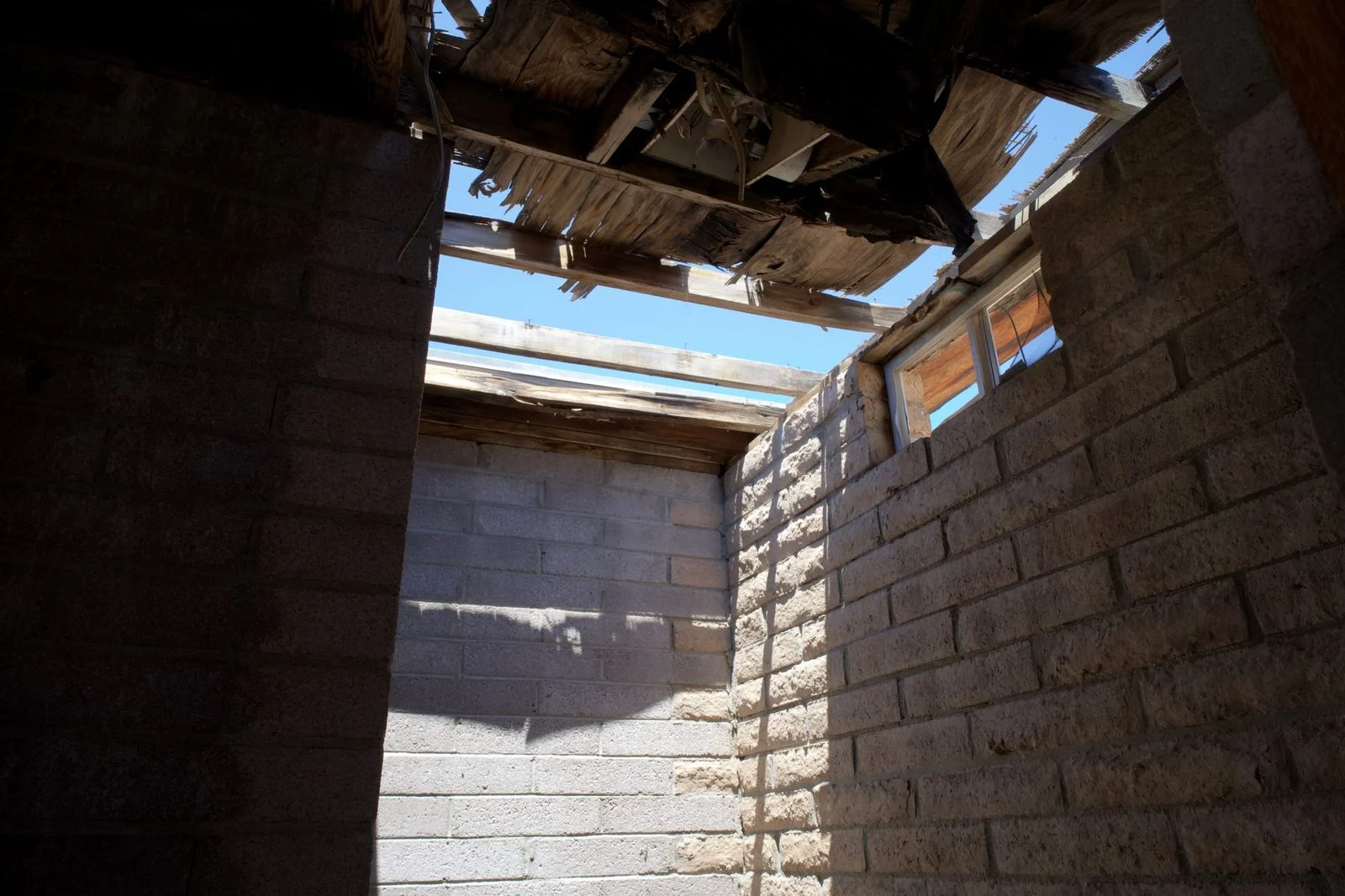
Water that gets past the roof can damage ceilings, insulation, drywall, and electrical wiring. Place a container under the drip, move valuables out of the way, and take photos of any staining. Then have the roof inspected.
Common roof problems behind storm leaks
Damaged or lifted shingles
Cracked, curled, or missing shingles let wind-blown rain reach the underlayment and the decking below.
Failing flashing
Metal flashing around chimneys, skylights, valleys, and wall joints can separate or corrode over time.
Cracked or displaced tile
Tile roofs can shift or crack, and the underlayment beneath them may not be enough to hold back heavy water.
Vents and penetrations
Pipe boots, vents, and fasteners can crack or loosen, creating openings that only show up when rain is driven hard.
Find out where your roof is letting water in
Related practice areas
- Can You Repair a Dented Metal Roof Panel?
- Can a Metal Roof Be Patched? South Florida Guide


