


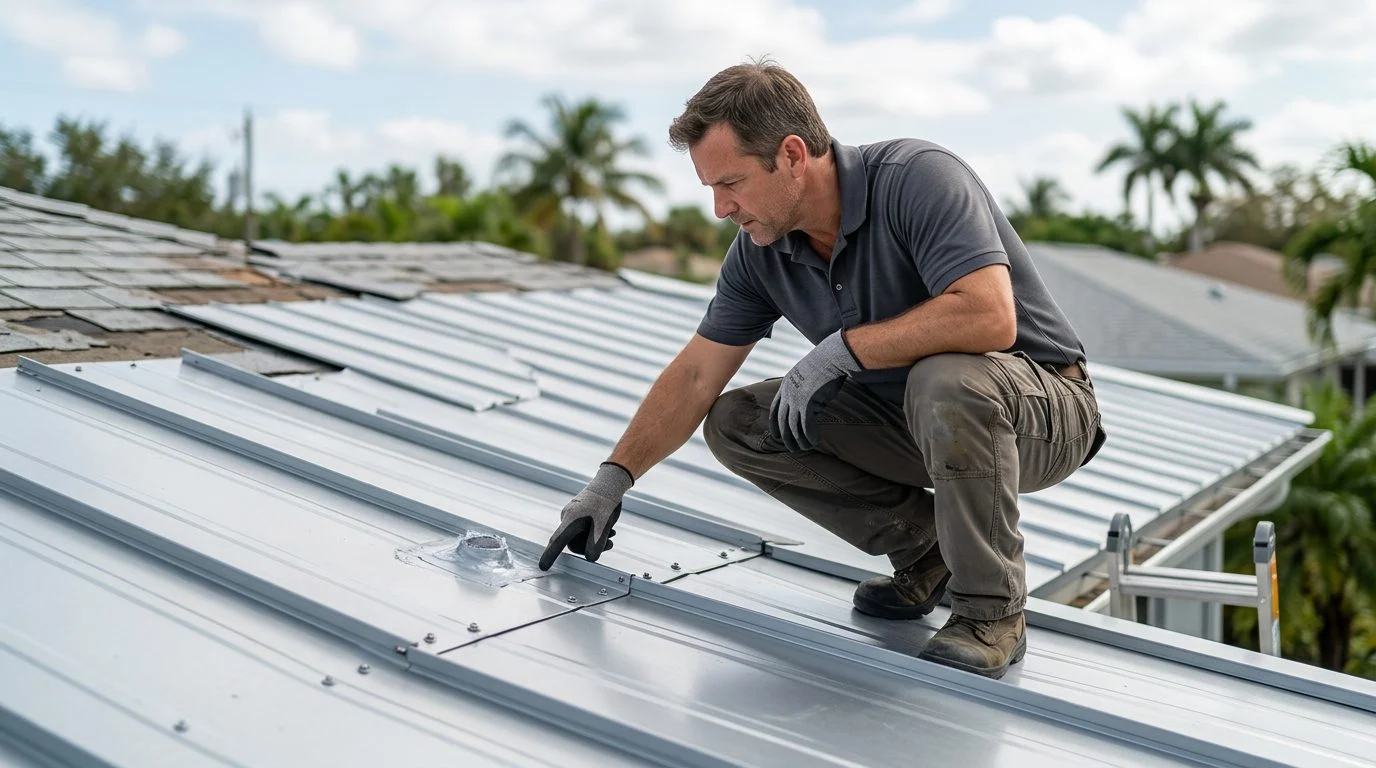
Metal Roof Repair | South Florida
Stop the Leak Before It Spreads
ASP Superhome repairs leaking metal roofs across Miami, Fort Lauderdale, West Palm Beach, Kendall, Naples, Fort Myers and Boca Raton. Start with a free first consultation, confidential and without obligation.
Start With Confidence
Free
First consultation
Confidential
Your information stays private
No Obligation
Decide whether to continue
By Jonathan Rodriguez · Published November 7, 2026
Leaking metal roof repair starts with one question: did the dent let water in? A dented panel can often be fixed, but a dent alone doesn’t always cause a leak. This guide explains where leaks start on metal roofs, what patching can and can’t do, and what a proper repair involves in South Florida.
Can a dented metal roof panel be repaired?
Usually, yes. A dented panel can often be repaired, but the right fix depends on what the dent did to the metal. A shallow dent with the finish still intact may need only a closer look. A dent that cracks the finish, punctures the metal, or pulls on a seam needs real work.
The dent itself is rarely the whole story. The real question is whether the dent opened a path for water. That path could be a broken coating, a small puncture, a bent seam, or a loose fastener near the dent.
Metal roofs are not fragile by default. The IBHS Hurricane Ian roof assessment documents roof-cover performance in Southwest Florida after the storm. Damage usually traces back to a specific weak point, which makes a careful inspection worthwhile.
The fix runs along a range. At one end, a technician seals one small opening. At the other end, one or more panels get replaced. Most repairs land somewhere in the middle, based on what the inspection actually finds.
Not sure what your next step is?
Talk it through with our team — the first consultation is free, confidential, and carries no obligation.
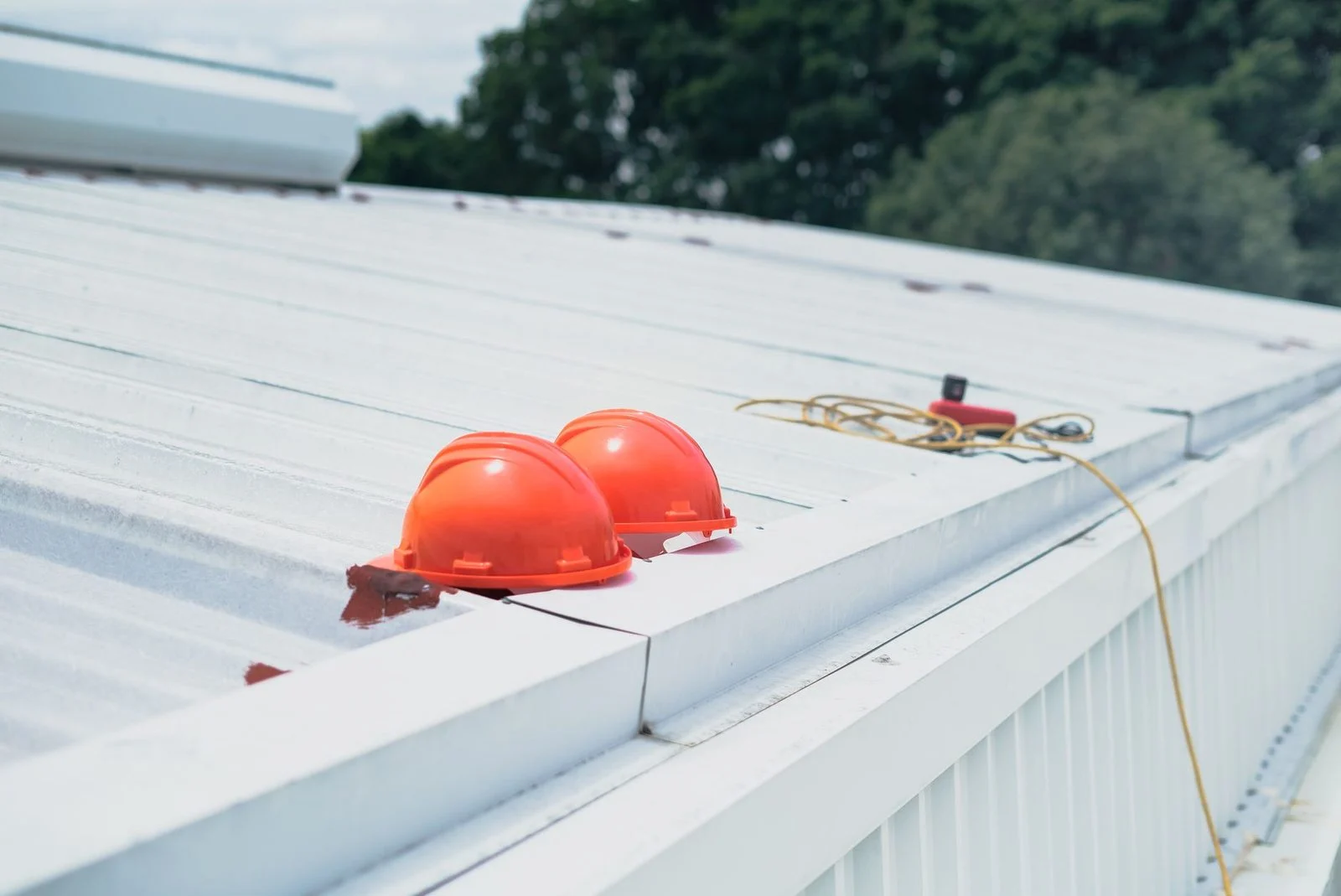
Why a dent can start a leak
A dent starts a leak when it breaks the protection on the metal. Most metal roof panels rely on an intact coating or finish to keep water off the metal underneath. When a dent cracks or scrapes that finish, bare metal is exposed.
Moisture then reaches the bare spot and sits there. Over time, corrosion can start at that damaged point. Corrosion can thin the metal and create an opening that wasn’t there before. For background on lightning protection and metal construction, see Metal Construction Association guidance.
A dent near a seam causes a different problem. It can bend the edge of a panel so it no longer lines up with the next one. That gap gives water a path in, even when the metal itself looks fine. This is why the stain on the ceiling may not sit directly under the spot that let the water in.
Common causes of leaks on metal roofs
Most leaks come from a few places: seams, fasteners, flashing, and punctures. Each one needs a different fix, so finding the right one matters.
Seams and overlaps are where panels join. Water can work its way through a gap or past a worn seal. Seams are often the first place a technician checks.
Exposed fasteners are the screws that go through the panel. Their washers can crack, shrink, or back out, especially after strong winds. A loose screw can let water reach the roof deck below.
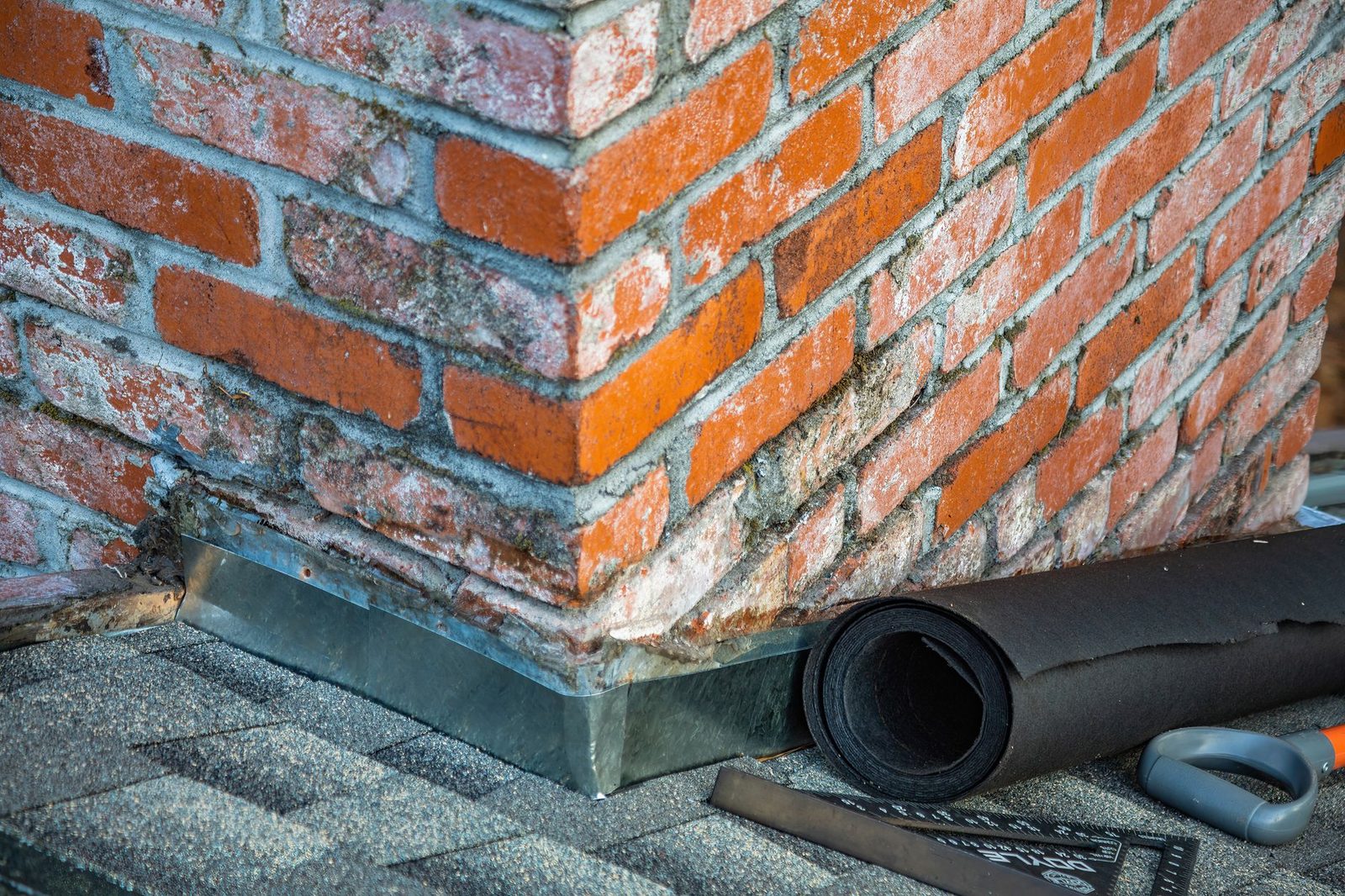
Flashing is the metal piece around chimneys, vents, skylights, and walls. Flashing can separate or crack over time. (Florida Building Commission analysis of changes)
Punctures come from debris, fallen branches, or tools dropped on the roof. Small holes are easy to miss from the ground. A ceiling drip is often the first sign of one.
Can a metal roof be patched?
Yes, small and clearly located openings can often be patched or sealed without replacing the panel. The key is finding the exact point first. A patch placed in the wrong spot won’t stop the water.
A patch fixes one spot. It does not restore the panel’s original strength or finish. The metal around the patch still matters. If the surrounding panel is thin, cracked, or corroded, the patch may not hold for long.
Patching works best when three things are true. The damaged area is located accurately. The metal around it is sound. The surface is clean and dry before any product goes on.
Panel replacement is often the more reliable choice in some cases. These include a cracked panel, a seam pulled out of shape, or coating loss across a wide area. Replacing the panel removes the damaged metal instead of covering it up.
Will Flex Seal or a general-purpose sealant work on a metal roof?
Spray-on rubber sealants are generally a temporary measure on metal roofs, not a lasting repair. They may slow a leak for a while, but they aren’t built for long-term weather exposure. Treat them as a stopgap at most.
Metal roof sealants are chosen for two things. They need to be compatible with the panel finish. They also need to flex as the metal expands and contracts with heat. A product that doesn’t flex can crack and open a new gap.
Polyurethane sealant is commonly used at seams and penetrations on metal roofs. It only performs well on clean, dry, and properly prepared surfaces. Applied over dirt, moisture, or loose coating, it can fail quickly.
Heavy sealant over a dent is a common mistake. It can trap moisture under the surface and hide the real entry point. The roof may look sealed while water keeps moving underneath. For a broader overview, see our South Florida roof repair guide.
What a metal roof leak repair typically includes
A proper leak repair starts with finding the entry point. Water often shows up inside the building far from where it actually gets in on the roof. Tracing that path takes patience and a systematic check.
The inspection covers the roof surface, seams, fasteners, flashing, and the area around the dent. It also includes the ceiling or wall where the drip appears. Working from inside and outside together narrows the search.
Repair options depend on the findings. They can include resealing a seam, replacing damaged fasteners, repairing or replacing flashing, or replacing affected panels. Each choice should match the damage that was found, not a guess.
Before work begins, ask for a written explanation of what was found and what is recommended. That written record shows whether the proposed work fits the problem. It also makes clear what is and isn’t included.
Permits matter too.
Not sure what your next step is?
Talk it through with our team — the first consultation is free, confidential, and carries no obligation.
Insurance and storm-damaged dented panels
Storm-related leaks run on a claim clock. Under Fla. Stat. § 627.70132, notice of a claim generally must be given within 1 year after the date of loss, in line with the policy terms. A supplemental claim generally has an 18-month window.
For hurricanes, the date of loss is the date the hurricane made landfall; for tornadoes, windstorms, severe rain, and other weather-related events, it is the date the event is verified by the National Oceanic and Atmospheric Administration. That same statute sets this rule, so the date matters when you act.
Start documenting early. Record the dates you first noticed the dent or the drip. Take clear photos. Keep notes and receipts for any temporary measures, such as tarping or sealing, that prevented more water from getting in.
Coverage depends on the policy wording and the cause of the damage. The policy’s terms determine what applies, so review them carefully. That is a separate question from the leak itself.
Next step: get a leak inspection
A dent that leaks needs a look from a professional, and the sooner the better. The entry point is what decides the repair, and it is not always easy to see from the ground.
Quick answers
Does a dent in a metal roof always cause a leak?
No. A dent leaks when it breaks the finish, punctures the metal, or disturbs a seam or fastener.
Can you replace one metal roof panel instead of the whole roof?
Sometimes. Whether one panel can be replaced depends on what the inspection finds.
Is Flex Seal a lasting fix for a metal roof leak?
Generally no. Spray-on rubber sealants are usually a temporary measure on metal roofing.
If you found this dent after a storm, or you look after a building for someone else, you may be weighing a lot at once. You don’t have to sort out the leak, the paperwork, and the timing alone. ASP Superhome can look at the dent in person, find the entry point, and explain the repair options. The first consultation is free, confidential, and comes with no obligation to continue (consulta inicial gratuita, confidencial y sin compromiso). Use the contact page to book your free estimate.
What Our Team Looks At on Your Metal Roof
Panel and Finish Condition
We check for scratches, dents, and broken coatings that let water reach bare metal.
Seams and Fasteners
Loose screws, worn sealant, and lifted seams are common sources of leaks in Florida weather.
Flashing and Penetrations
Vents, skylights, and wall transitions are inspected for gaps where water can enter.
Clear Written Options
You receive a clear explanation of the repair options so you can compare them at your own pace.
Be Careful With Quick Patches
A temporary sealant may slow a leak for a while, but it does not fix a damaged panel, a worn seam, or a loose fastener. Water can keep getting in underneath. Have the source identified before you rely on a patch.
How Your Metal Roof Repair Works
1. Reach Out
Contact ASP Superhome to describe the leak, where you see water, and when it appears.
2. Inspect
We examine the panels, seams, fasteners, and flashing to find the actual source of the leak.
3. Review Options
We explain whether a targeted repair, panel replacement, or broader roof work makes the most sense.
4. Decide
Choose the next step at your own pace. The first consultation carries no obligation to continue.
Stop Guessing Where the Water Is Coming From
Related practice areas
- Roof Repair in South Florida: Fast, Storm-Ready Fixes for Every Roof Type
- Roof Repair in Miami
- Roof Repair in Fort Lauderdale


