


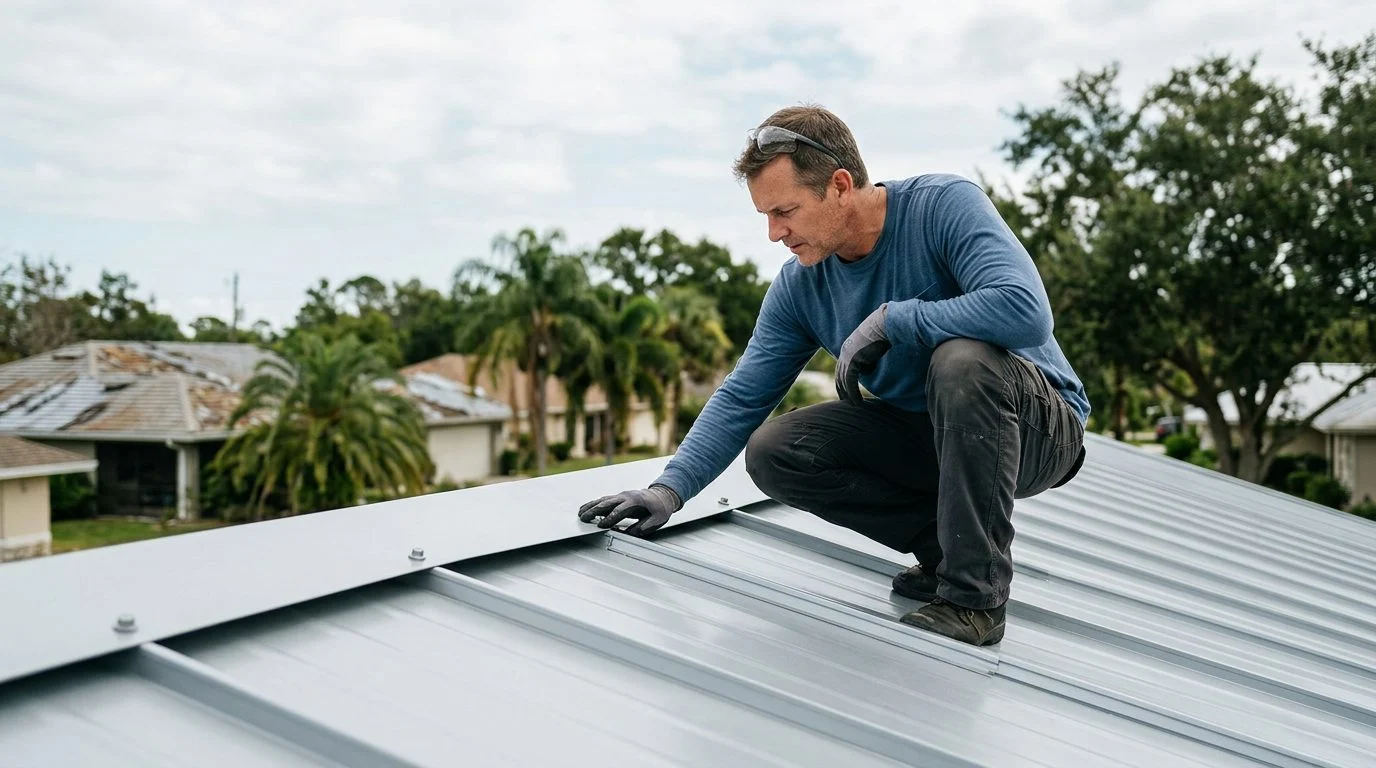
Roofing guide for South Florida homes
Choose the Roof Built for Florida Weather
Wind, heat, rain, and salt air all shape which roof lasts longest on your home.
Start with a free first consultation
Free
Initial consultation, confidential and with no obligation to continue
By Jonathan Rodriguez · Published October 23, 2026
The short answer: how metal and shingle roofs compare in Florida
Which is better for Florida, a metal roof or a shingle roof? For many South Florida homes, metal is the stronger fit for wind and heat. Shingles remain a common choice when upfront cost is the main concern.
If you’re researching this for a parent, a relative, or a home you help manage, you may be facing an aging roof, a leak, or storm damage you didn’t plan for. That’s a lot to handle at once.
This page compares the two roof types on wind, heat, weight, cost over time, upkeep, and code requirements. Each section points to the conditions of the home, not to a one-size answer. For broader background, read our metal roofing guide for South Florida.
Not sure what your next step is?
Talk it through with our team — the first consultation is free, confidential, and carries no obligation.
How each roof handles hurricane-force winds
Roof cover performance in Southwest Florida during Hurricane Ian is examined in the IBHS roof cover assessment. That’s one useful observation, not a promise for every roof.
The main threat is uplift. Wind gets under roof edges, corners, and ridges and lifts the covering. The fastening and the connection between the roof and the walls matter as much as the covering itself.
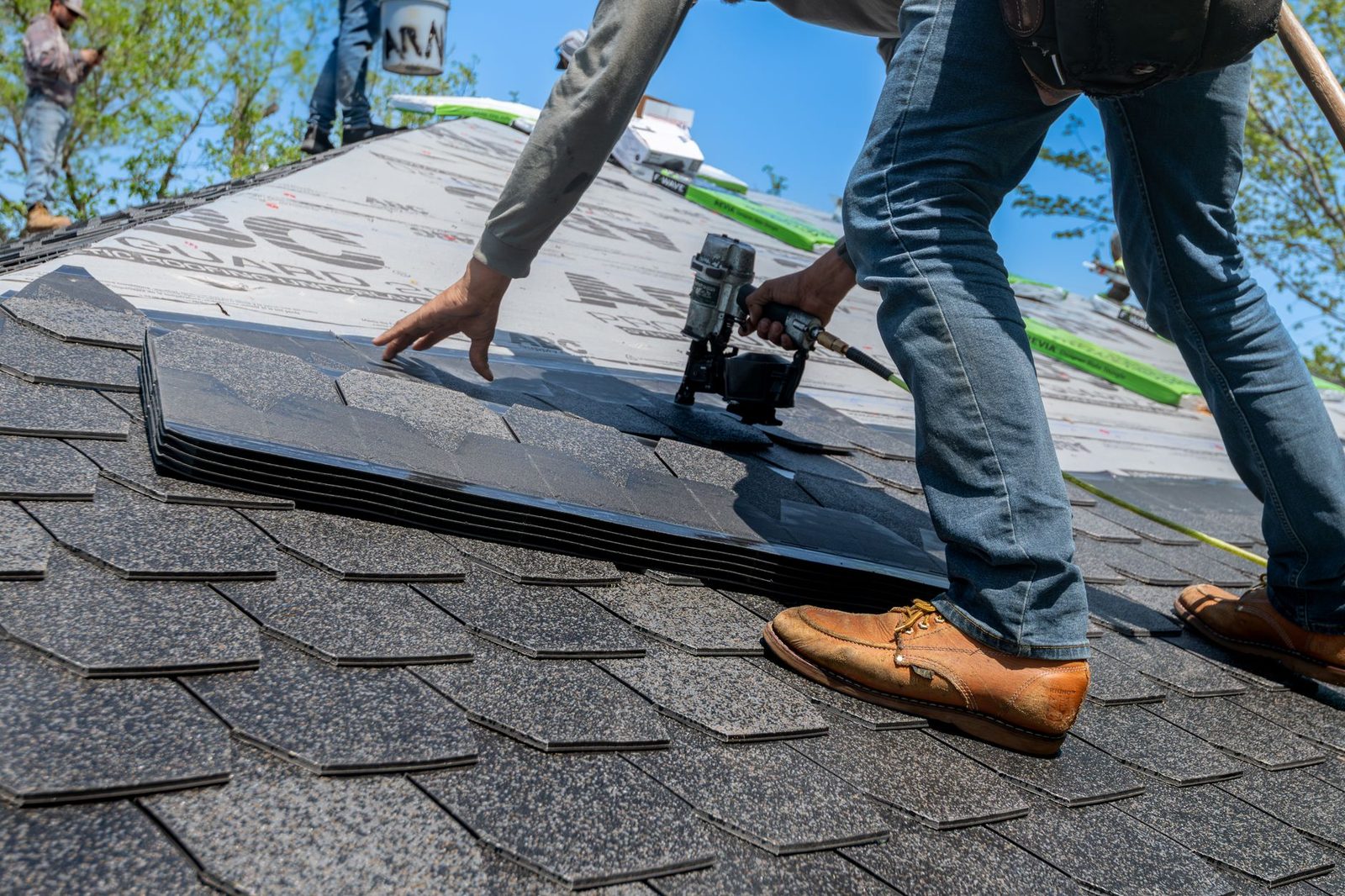
Standing-seam metal panels interlock and are fastened so the seams hold together. That design is often discussed for wind resistance. Asphalt shingles rely on nails and sealant strips, so their wind rating depends on the product and the installation.
Florida law also controls how wind products are sold. Fla. Stat. § 553.842 says a product may not be advertised, sold, offered, provided, distributed, or marketed as hurricane, windstorm, or impact protection from wind-borne debris unless it is approved under that section or § 553.8425, and anyone who does so without approval is subject to Florida’s Deceptive and Unfair Trade Practices Act. For how panel systems are fastened, see standing seam metal roofing installation.
Heat, sun, and energy use
Light-colored metal can reflect more solar heat than dark shingles. That can help keep the attic and living space cooler. The finish matters as much as the metal itself.
Metal panels usually arrive factory-coated. The Metal Construction Association guide says finished steel and aluminum panels are typically coated with factory coil coating and a two-coat paint system. Color and coating choices change how much heat the roof reflects.
Dark asphalt shingles absorb more solar heat. That heat can raise attic temperatures and push cooling use up. Attic insulation and ventilation change the result a lot, so a dark roof doesn’t always mean a hotter home.
Roof pitch, attic design, and the way the house faces also shape the energy effect. Judge the comparison by your own house, not by roof type alone.
Weight, structure, and installation considerations
Metal is usually lighter than tile, and the framing decides which covering is a safe fit. Before any roof goes on, someone should check the rafters, decking, and framing. The NRCA roofing materials guidance says clay and concrete tile are durable and used in Florida. It also says structural load capacity must be verified when replacing another covering with tile.
A replacement can also be a chance to upgrade underlayment, decking, and fastening. What you find under the old roof decides how much extra work that is.
Section 553.79(21)(a), Florida Statutes, limits which inspections may be required for certain one- or two-family residential permits.
Panel length, seam design, and trim affect both appearance and how well water sheds off the roof.
Upfront cost versus long-term ownership
Shingles usually cost less upfront, which is why many owners start there. Metal is generally expected to last longer than asphalt shingles, so the total picture changes over time.
Think through the full timeline. Count how many shingle replacements a home might need while you own it. Add repairs, coatings, and the eventual replacement. Then compare that total with the metal option’s longer service life.
The lowest price on paper isn’t always the lowest over the years. How long you plan to keep the home changes the answer.
Insurance can add to the math. Discounts, credits, or deductible reductions may be available for homes with features shown to lessen windstorm damage.
Maintenance, lifespan, and what Florida weather wears down
Both roof types need regular checks. Small problems found early are usually easier to fix than large ones.
Florida weather is hard on roofs. Strong sun, humidity, afternoon storms, and hurricane debris all add wear. Homes in Boca Raton, Naples, and Fort Myers also face salt air, which can speed corrosion on metal trim and fasteners.
Metal roofs need checks of fasteners, seams, and trim. Keep gutters and valleys clear so water can drain. A scratch that breaks through the paint can expose bare metal, so look at panels after hard storms.
Shingle roofs need watching for granule loss, curling, lifted tabs, and algae or moss in humid shade. Granules piling up in gutters can be an early sign of wear.
Repair needs depend on the damage pattern. A small leak caught early often means a smaller repair than one that has been spreading for months.
Not sure what your next step is?
Talk it through with our team — the first consultation is free, confidential, and carries no obligation.
Florida codes and what to confirm before choosing
Florida requires a permit for most roof work. The state’s building code also sets standards for roofing products and installation.
Fla. Stat. § 553.79 says that, unless otherwise provided by law, it is unlawful for any person, firm, corporation, or governmental entity to construct, erect, alter, modify, repair, or demolish any building without first getting a permit from the enforcing agency. The Florida Building Code statute says the code governs the design, construction, erection, alteration, modification, repair, and demolition of public and private buildings, structures, and facilities, except as otherwise provided in this section, such as nonresidential farm buildings on farms.
Products should carry the approval that fits your project. For a fuller explanation, read current roofing codes in Florida.
Choosing for your home, and a next step
Choose by wind exposure, roof age and condition, framing, budget, cooling costs, and how long you’ll own the home. Those points shape the metal-or-shingle choice more than any general rule.
Which is better for Florida, a metal roof or a shingle roof?
For many South Florida homes, metal is the stronger fit for wind and heat. Shingles can still suit a tighter budget when the home’s structure supports them.
Do shingle roofs get hotter than metal in Florida?
Dark shingles absorb more solar heat than light-colored metal. Attic insulation and ventilation also change how hot the home feels.
Do I need a permit to replace a roof in Florida?
Florida law generally requires a permit before a building is repaired or altered. Another law can provide otherwise.
If your roof is aging, leaking, or was damaged in a storm, and you want to talk through metal or shingle for your home, ASP Superhome offers a free first consultation. It’s confidential and carries no obligation to continue. Request your estimate to start that conversation.
What to weigh when choosing a Florida roof
Wind resistance
Florida storms test every roof edge, seam, and fastener. Compare how each material holds up to strong wind and how well your home's roof deck and attachments are secured.
Heat and energy
Dark surfaces absorb more solar heat. Light-colored metal panels reflect more sunlight, and attic insulation and ventilation affect how much heat reaches your living space.
Long-term maintenance
Think about how often the roof will need inspection, sealing, or repairs over the years, and how each option handles moisture, salt, and humidity.
Structure and budget
Roof weight, pitch, and existing framing can narrow your options. Initial cost matters, but so does the total cost of ownership over the life of the roof.
Check the structure before you commit
Material choice depends on what your home can support. Have the roof deck, framing, and underlayment inspected before you finalize a material, so the choice you make fits your home's actual condition.
Common questions homeowners ask
Can I replace my roof with a different material?
Switching materials is possible in many cases, but it depends on the existing structure, local requirements, and the scope of your project. Our team can review your home during a free consultation.
Should I repair or replace an older roof?
Repair can make sense for isolated damage on a sound roof. Replacement is often worth considering when damage is widespread or the roof is near the end of its service life.
Not sure which roof fits your home? Let's talk it through.
Related practice areas
- Residential Metal Roofing Versailles
- Metal Roofing Panels in Fort Myers: Gulf Coast Durability


