


Metal Roofing | South Florida
Choose the Right Metal Roof for Florida's Weather
A plain-language guide to gauge, profile, and approval, so you can compare metal roofing options with confidence before you decide.
By Jonathan Rodriguez · Published November 6, 2026
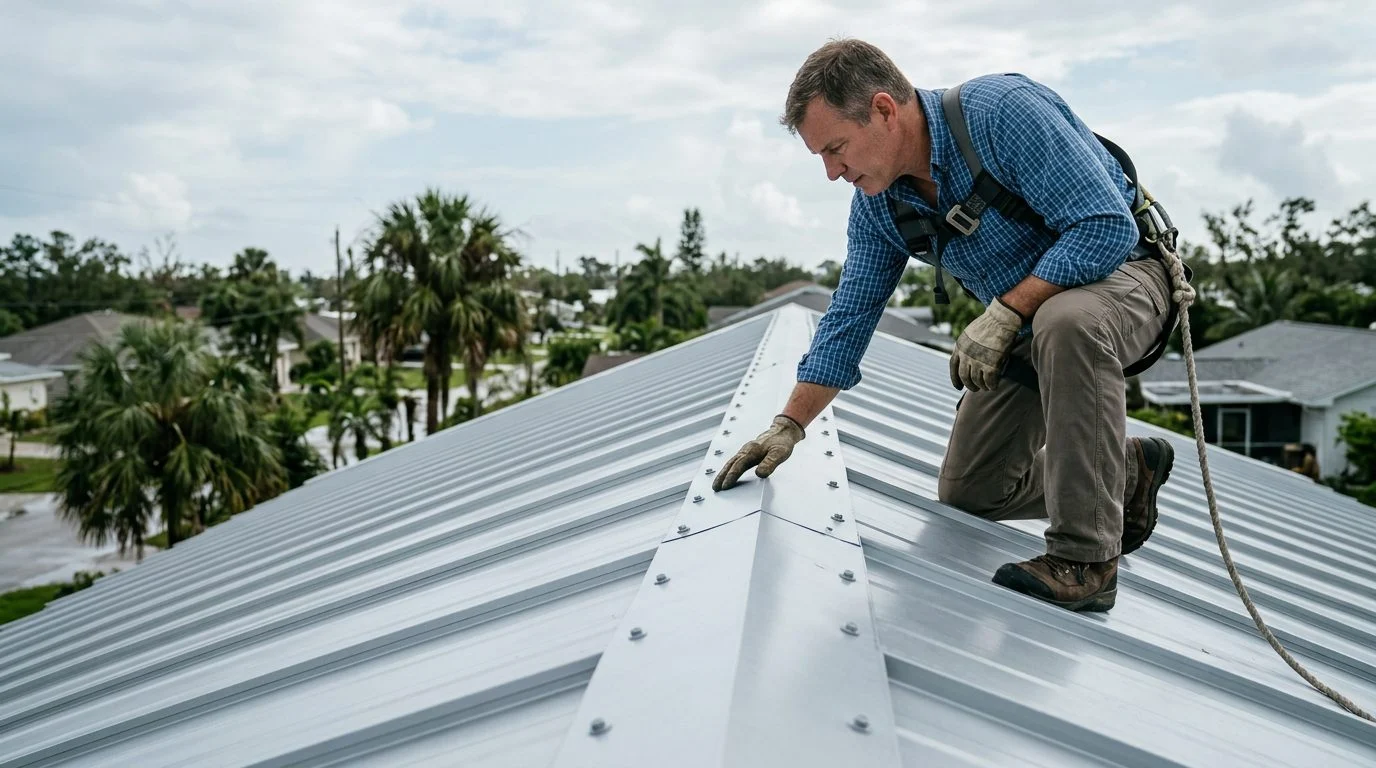
Florida approved metal roofing is a panel system that has passed the state’s approval process for a specific setup. For a roof that can handle a hurricane, the steel gauge, panel profile, and fastening all need to match that approved setup. This guide explains how those three pieces work together on South Florida homes, from Miami and Fort Lauderdale to Naples and Fort Myers.
Why Gauge Matters When a Hurricane Hits Your Roof
Gauge tells you how thick the steel is. A lower gauge number means thicker steel.
Hurricane winds don’t just push on a roof. They pull up on it. Wind can lift panels and work at the fasteners that hold them down. A thicker panel resists that pull better, but thickness only helps when the rest of the system is right.
Gauge is one factor among several. The panel profile, the deck under the metal, and the approval listing all count too. A roof can use heavy steel and still fail to match its approved setup. When our team writes a quote, we look at gauge alongside the full system.
If your roof needs repair or replacement before storm season, request a quote and we'll check your gauge and profile against an approved setup. Talk it through with our team — the first consultation is free, confidential, and carries no obligation.
What Florida Product Approval Covers for Metal Roofing
Florida Product Approval is the statewide system that approves products for use under the Florida Building Code. Roofing is one of the product categories that must go through that system. State law says a product can’t be marketed as hurricane or wind-borne debris protection unless it is approved. Fla. Stat. § 553.842 also says that marketing a product this way without approval is subject to the Florida Deceptive and Unfair Trade Practices Act.
Approval is tied to a specific setup. Under Fla. Stat. § 553.8425, an approved product is used in accordance with its approval and its limits of use. The listing says what the product can do and where it can go. Check the listing for your exact profile, gauge, and attachment method, not just the product name.
The building code also sets wind rules for roofs. The Insurance Institute for Business & Home Safety states that modern building codes require roof coverings in wind-design regions to resist applicable wind loads.
24 Gauge vs. Lighter Gauges: What the Thickness Difference Means
Thicker steel is stronger, but thicker doesn’t automatically mean approved for every roof. The approved listing sets the gauge for each profile and deck setup. A heavier panel that doesn’t match its listing isn’t covered by that listing.
Approvals also don’t last forever. Under Fla. Stat. § 553.8425, an approval stays valid until the product changes and its performance decreases. It also ends if the code changes to require more performance, or if the approval is suspended or revoked. Changes to the code do not void approvals for products already installed in existing buildings, if those products met code when installed.
Ask that your written scope name the gauge, the profile, and the deck type it matches. That way you can compare the scope to the approved listing.
Standing Seam, Snap Lock, 5V Crimp, and Multi Rib: How Profile Affects Hurricane Performance
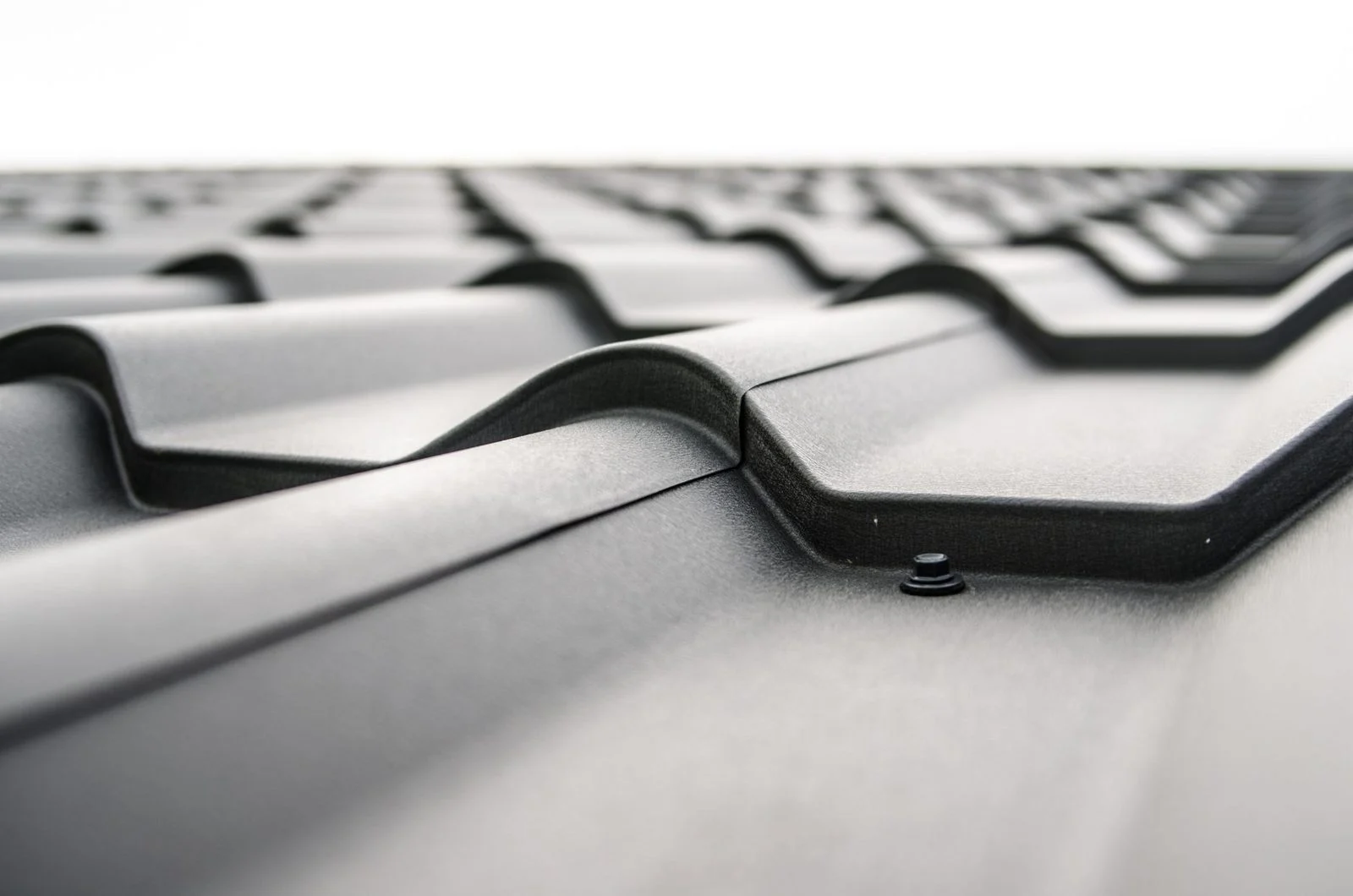
Panel profile decides how the panels lock together. It also decides how they hold at the edges, where wind uplift is strongest. Standing seam roofs use raised, interlocking seams to keep each panel secured.
Common profiles include snap lock, 5V crimp, and PBR. Snap lock panels lock at the seam with a clip system. Multi rib panels appear in Florida listings for several installation conditions, including over no deck, over OSB, over a deck with 1×4 strapping, and on walls.
Metal panels can also be made in a barrel-tile look. A Miami-Dade roof approval notice describes Florida-approved metal panels in a barrel-tile profile. That approval was evaluated under the Florida Building Code, including High Velocity Hurricane Zone provisions. The right profile depends on your roof structure and the approved setup for your home.
Deck, Fastening, and Installation Conditions That Affect Approval
The deck and fasteners must match the tested setup. If they don’t, the approval may not cover your roof. A panel approved over solid deck can have different requirements over OSB or wood strapping.
Fastener type, spacing, and placement are part of the tested setup. Flashing must also follow the manufacturer’s installation instructions. The 2026 residential code analysis notes a new rule for flashing on metal roof panels.
Coastal homes need extra attention to corrosion. The 2026 building code analysis says that Section 1711 sets corrosion rules for fasteners and metal connectors within 3000 feet of a saltwater coastline. It gives criteria for stainless steel, enhanced galvanizing, and standard galvanizing.
Partial repairs and replacements follow their own rules. The 2026 analysis also changed the recovering-versus-replacement rules for the upper roof covering.
Florida Metal Roofing Considerations for Your City
Coastal cities face more salt air. Corrosion and wind rules carry extra weight in Miami, Fort Lauderdale, Boca Raton, and Naples.
In Palm Beach County, the Palm Beach County product approval page states that metal roofing is a roofing product subject to Florida’s statewide product-approval system. Local approvals must follow those state requirements. That matters for West Palm Beach projects.
For Kendall and the rest of Miami-Dade, Miami-Dade product approval notices describe the approval procedures and submission requirements that affect roofing systems. That includes non-structural metal roofing systems.
For Fort Myers and Southwest Florida, the IBHS Hurricane Ian roof assessment found that metal roofing systems held up well in winds below 130 mph. That finding covers winds below 130 mph only. It is not a promise of how any one roof will perform.
Not sure what your next step is?
Talk it through with our team — the first consultation is free, confidential, and carries no obligation.
Request Your Metal Roof Quote
If your roof needs repair or replacement before storm season, you’re deciding which gauge and approved profile fit your home. Our team can check that against the approved setup for your roof. Our first consultation is free, confidential, and carries no obligation to continue. Request a metal roof quote and we’ll start with your roof.
Does a metal roof need Florida approval to be hurricane rated?
Yes. State law says a product can’t be marketed as hurricane or wind-borne debris protection unless it is approved.
Is a thicker metal panel always better in Florida?
Not always. The approved listing sets the gauge for each profile and deck setup.
How long does a Florida approval last?
It lasts until the product changes and loses performance, the code requires more performance, or the approval is suspended or revoked.
What to Look for in a Florida Metal Roof
Florida product approval
Confirm that the roofing system and its installation method match an approved listing for your building.
Gauge tied to the listing
The approved listing sets the panel gauge for each profile and deck setup, so a thicker panel is not automatically the right choice.
Profile suited to your roof
Standing seam, corrugated, and other profiles perform differently on different pitches, decks, and layouts.
Installation details matter
Fasteners, underlayment, and edge flashing all affect how the roof performs in high winds and heavy rain.
Check the Listing Before You Buy
Materials and gauges should be verified against the approved listing for your specific profile and deck setup. Do not rely on panel thickness alone.
Questions to Ask Before You Choose a Profile
What is my roof pitch?
Pitch affects drainage, panel selection, and how the roof handles wind and rain.
What is my deck type?
Plywood, OSB, and existing decking each call for different fastening and underlayment details.
Is the system approved for my area?
Ask whether the complete roof assembly, not just the panel, matches an approved listing.
How will it be installed?
Proper fastening, flashing, and sealing are as important as gauge and profile.


