


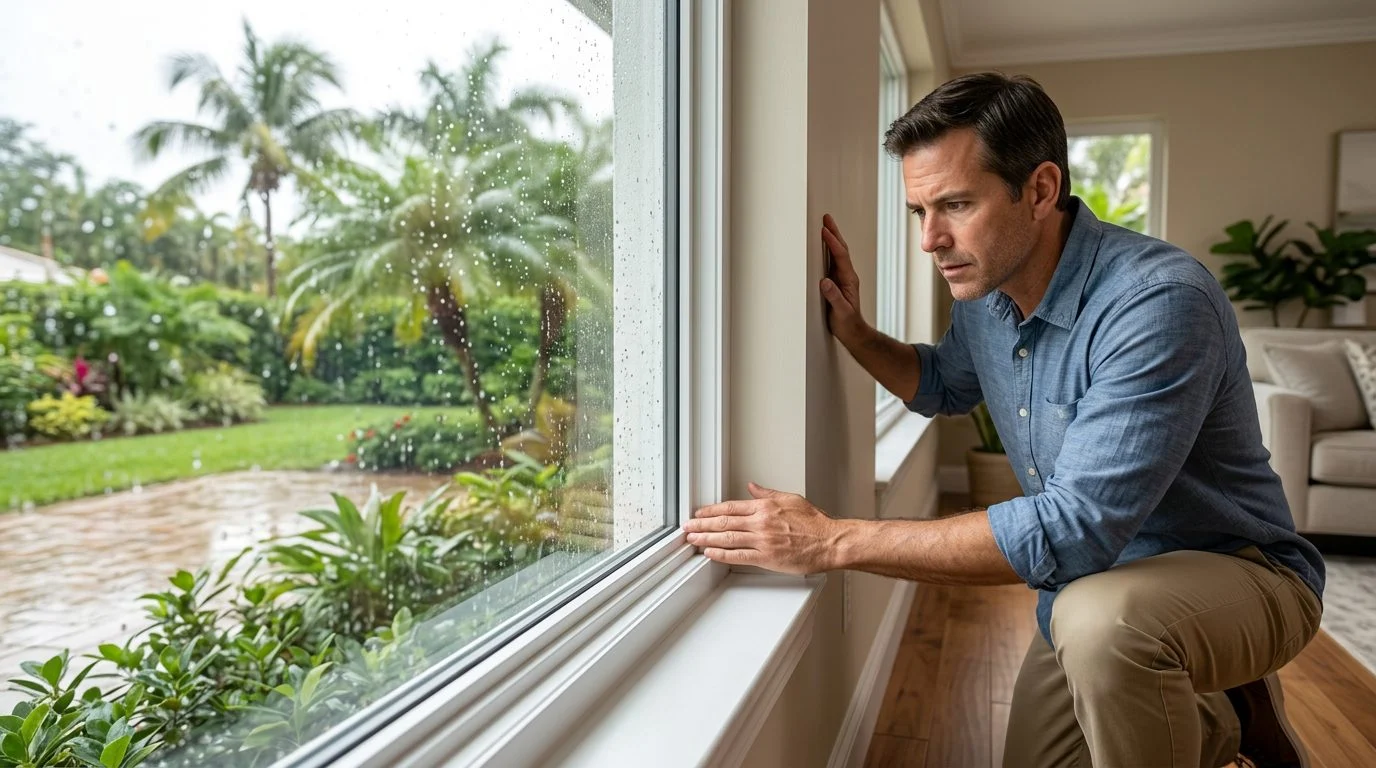
Impact Windows | South Florida
Impact-Resistant PVC Window Profiles Built for South Florida Homes
Stronger frames, clearer views, and a window system designed for the storms and sun our region gets. Start with a free first consultation.
By Jonathan Rodriguez · Published October 22, 2026
Which types of PVC window profiles are the most impact-resistant? No single profile is the most impact-resistant on its own. Impact performance comes from the whole assembly: the frame, the impact glass, the anchoring, and the approval for that exact product.
What PVC (uPVC) Window Profiles Are and Who They Suit
A PVC window profile is the extruded frame and sash that holds the glass. uPVC stands for unplasticized polyvinyl chloride, a rigid plastic used for frames.
Homeowners in hurricane-prone South Florida often look at PVC for two reasons. It can be part of an impact system, and it doesn’t need painting the way wood does. It also resists moisture well.
Still, the frame is only one piece. Two windows with the same frame can perform very differently if the glass, fasteners, or approval differ. The real question is the whole system.
If you're weighing storm protection for a sliding door or large window in Kendall or Miami, we can help you figure out which PVC profile fits your opening. Talk it through with our team — the first consultation is free, confidential, and carries no obligation.
The Main Profile Types and How They Compare
Profiles differ in chamber design, internal reinforcement, depth, and corner construction. Each choice affects which glass fits and how the frame handles load.
- Single-chamber frames have one main hollow cavity in the wall.
- Multi-chamber frames split the wall into several cavities. More chambers don’t prove impact strength on their own.
- Reinforced frames include a metal insert that stiffens the profile. Check the manufacturer’s documents to confirm what a specific frame includes.
- Depth and sightline matter because deeper frames often take larger, heavier glass. Confirm the depth against the approved glass.
| Feature | What it means | What to check |
|---|---|---|
| Chamber design | Number of hollow cavities in the frame wall | Approval covers this exact design |
| Reinforcement | Internal metal insert | Listed in product documents |
| Glass fit | Size and weight limits for the glass | Matches the approved glass |
| Upkeep | Cleaning and hardware care | Manufacturer’s care guide |
What Actually Makes a Profile Hold Up Under Impact
Impact protection works when the glass, frame, anchors, and hardware act as one system. A strong frame can still fail if the glass pulls free or the fasteners loosen.
- Laminated impact glass bonds two or more glass layers to a plastic interlayer. After a strike, the layers are designed to hold fragments together.
- Glass stops and gaskets hold the glass in the frame. They must match the approved assembly.
- Anchoring fastens the frame through to the structural opening. The fastener number and spacing come from the approved method, not a guess.
- Hardware keeps the sash locked and engaged under pressure.
- Sealants and weatherstripping keep water out once the unit is under load.
How Impact Performance Is Tested and Approved in Miami-Dade
Under Fla. Stat. § 553.842, a product may not be advertised, sold, offered, provided, distributed, or marketed as hurricane, windstorm, or impact protection from wind-borne debris unless it is approved under that section or Fla. Stat. § 553.8425, and anyone who does so without approval is subject to the Florida Deceptive and Unfair Trade Practices Act. Windows and exterior doors are among the product categories the statute lists.
For local product approval, products must show compliance with the structural windload requirements of the Florida Building Code through methods such as a certification mark, listing, or label from a commission-approved certification agency, or a test report from a commission-approved testing laboratory. Under Fla. Stat. § 553.8425(4), products demonstrating compliance must be manufactured under a quality assurance program audited by an approved quality assurance entity.
Approval has limits. Approval stays valid until the product changes and loses performance, the code requires more performance, or the approval is suspended or revoked. Changes to the code do not void the approval of products previously installed in existing buildings if such products met building code requirements at the time the product was installed.
Miami-Dade County publishes windows and doors guidance. Ask for the approval that matches your exact size, configuration, and glass.
Some impact windows carry AAMA Gold Label certification.
Honest Tradeoffs of PVC Profiles
PVC has real limits, and you should weigh them before you choose.
- Frame bulk. Thicker PVC frames can cover more of the opening than slim aluminum frames, which means less visible glass.
- Color and finish. Options are narrower than some aluminum systems and vary by manufacturer.
- Expansion. PVC expands and contracts more with heat than aluminum does. Installers must leave the right tolerances.
- Weight. Impact glass plus a reinforced frame adds load. The opening and hardware must handle it.
What to Expect: From Consultation to Installation
The process runs in five steps, from your first conversation to a finished installation.
- Consultation. We review your openings, your goals, and the condition of your home.
- Measurement. We measure each opening and check the wall and frame condition.
- Recommendation and quote. We match the profile and glass to each opening and its approval, then send a written quote.
- Manufacturing and scheduling. The approved assembly is built to your measured sizes.
- Installation. Installers anchor and seal each unit, then check that it operates correctly.
Installing or replacing exterior impact windows generally requires a permit, according to City of Opa-locka permit guidance. The building official makes the final call on your project.
Not sure what your next step is?
Talk it through with our team — the first consultation is free, confidential, and carries no obligation.
Why Homeowners Work with ASP Superhome
ASP Superhome offers complete home solutions across South Florida. That includes impact windows, impact doors, roof repair and replacement, metal and tile roofing, solar panels, solar battery backup, and kitchen remodeling.
Our team plans windows, doors, and roofing as one home project. That lets us check how the openings and roof fit together before any work starts.
We serve homeowners in Miami, Kendall, Fort Lauderdale, West Palm Beach, Boca Raton, Naples, and Fort Myers.
Frequently Asked Questions
What are the different types of uPVC windows?
The main differences are single-chamber versus multi-chamber frames, and reinforced versus unreinforced designs. Common configurations include fixed, sliding, casement, and single-hung windows.
What are the downsides of uPVC windows?
Frames can be bulkier, color choices are narrower, and PVC expands with heat. Impact glass also adds weight.
What holds uPVC windows in place?
Fasteners pass through the frame into the structural opening, and shims and sealants set the unit. The approved method for your product specifies the anchoring.
How strong are uPVC windows?
Strength comes from the whole tested assembly, not the frame alone. Ask for approval documents that match your exact size, configuration, and glass.

Request Your Quote
If you’re weighing storm protection for a sliding door or large picture window in Kendall or Miami, and you’re unsure which PVC profile fits, we can help you sort it out. Our first consultation is free, confidential, and comes with no obligation. Request your quote on the ASP Superhome contact page.
Why Homeowners Choose Impact-Resistant PVC Profiles
Built to Resist Impact
Impact-resistant windows are designed to hold up against wind-borne debris, helping protect your home and everyone inside during severe weather.
Energy-Conscious Frames
PVC is a durable, low-maintenance frame material that does not need painting, and its insulating properties can help keep indoor spaces comfortable.
Low Upkeep
PVC profiles resist rot, corrosion, and salt air, so they keep their appearance with simple cleaning rather than regular repainting.
Tailored to Your Openings
Frame profiles, configurations, and finishes can be matched to your home's existing openings and architectural style.
Ask About Heat Expansion Before You Choose
PVC expands and contracts with temperature changes, which is especially relevant in South Florida's heat. A proper installation accounts for this movement, so ask how your frames will be sized and secured.
What to Expect With Your Window Project
1. Free First Consultation
Share your goals and your home's details. The first consultation is confidential and comes with no obligation to continue.
2. Measurement and Review
We review your openings, discuss frame profiles and configurations, and explain your options in plain terms.
3. Clear Quote
You receive a written quote so you can compare options and decide on your own timeline.
4. Professional Installation
Our team installs your impact-resistant windows and walks you through care and cleaning afterward.


