


Roof Repair | South Florida
Stop the Leak at the Source: Repairing a Concrete Roof in South Florida
Water stains, dripping ceilings, and cracked tiles need a clear plan. Start with a free first consultation from ASP Superhome.
By Jonathan Rodriguez · Published November 5, 2026
To repair a leaking concrete roof, first find the exact spot where water gets in. Then fix that entry point, whether it’s a cracked tile, worn flashing, or a crack in the deck. Simple repairs can stop some leaks, but they don’t fix every cause. This guide walks through each step for South Florida homes.
What usually causes a leak in a concrete roof?
Most leaks start in the outer layer, not in the concrete itself. Water gets past cracked or displaced tiles. It also gets past worn flashing around chimneys, vents, and skylights, and past sealant that has failed where pipes pass through the roof.
Cracks in the concrete deck are another common source. Water that pools on flat or low-slope sections can soak down over time. Valleys and the edges of tile sections also collect water, so check them early.
Water often runs along the rafters or the deck before it shows up. The stain on your ceiling may sit well away from the actual opening. Florida’s 2026 building code changes broadened the flashing section to cover all roof types and shapes (Florida Building Commission).
A common mistake is sealing the stain instead of the source. Painting or caulking the ceiling hides the water, but the opening stays open.
If you're handling this for a family member or a rental property, you don't have to work out the cause alone. Talk it through with our team — the first consultation is free, confidential, and carries no obligation.
How do I find where the water is getting in?
Start inside, then work up toward the roof. Note where the stains, drips, and damp insulation appear. Also note whether leaks happen during wind-driven rain or only in heavy downpours. Those patterns point to different entry points.
Next, check the roof area above the stain. Look for cracked, displaced, or missing tiles. Look for gaps at flashing and at roof-to-wall joints, which are frequent leak points. Pipes, vents, and chimney bases deserve a close look too.
Another mistake is assuming the spot directly above the stain is the entry point. Water can travel a long way before it drips, so trace the path upward.
A careful check from the ground or from a safe access point can narrow the area. Walking on a wet or cracked roof is risky, so stay off it when you can. Mark the suspected spot and take dated photos. Those photos help when you describe the problem to a roofer or your insurer.
What simple repairs can stop a small leak?
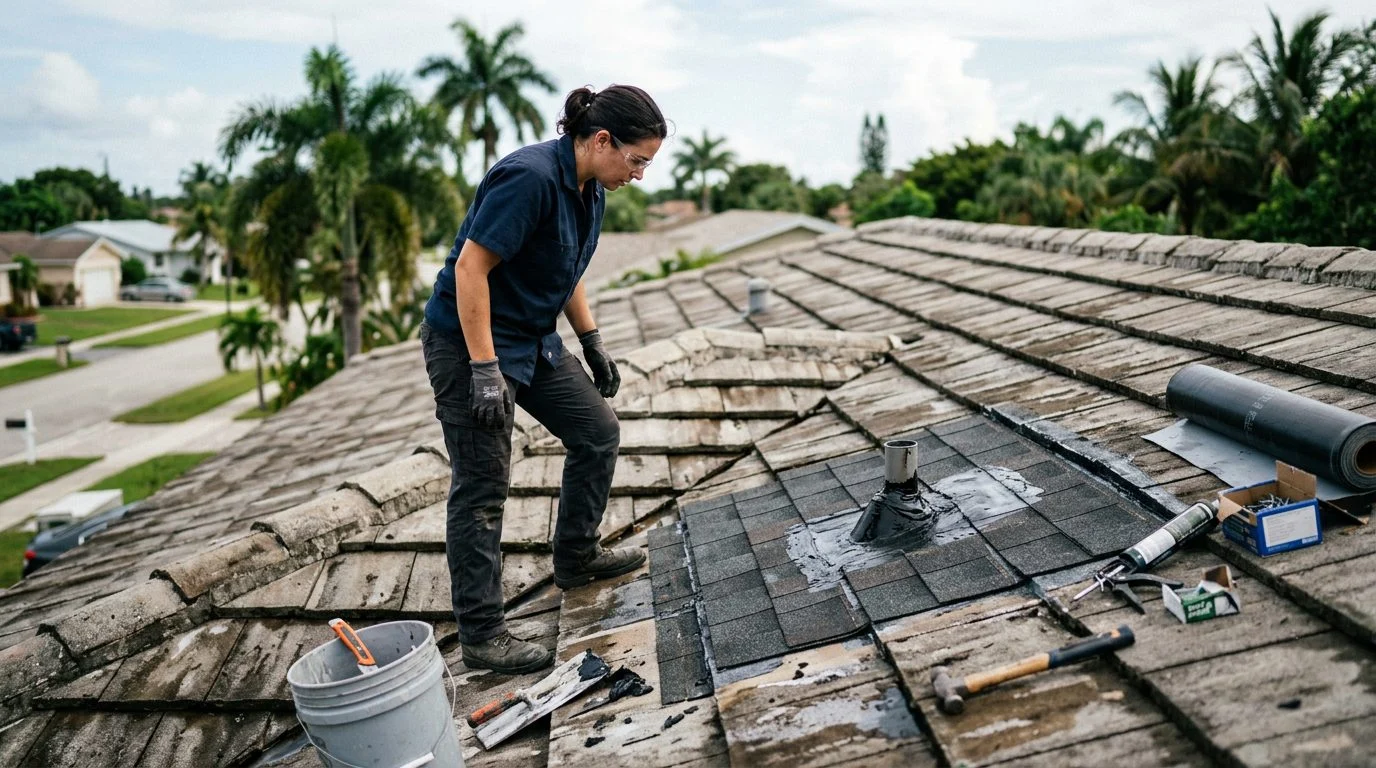
Replacing broken tiles and resealing failed flashing can stop a small leak. These fixes target surface entry points. They are a reasonable first step when the damage is limited.
- Replace cracked or broken tiles, and reset displaced tiles so they overlap correctly.
- Reseal or replace worn flashing and the sealant around vents, pipes, and chimney bases. Use a sealant made for roofing.
- Clear debris from valleys and gutters so water drains instead of backing up under the tiles.
- Keep a dated record of any temporary fix so you can check it after the next storm.
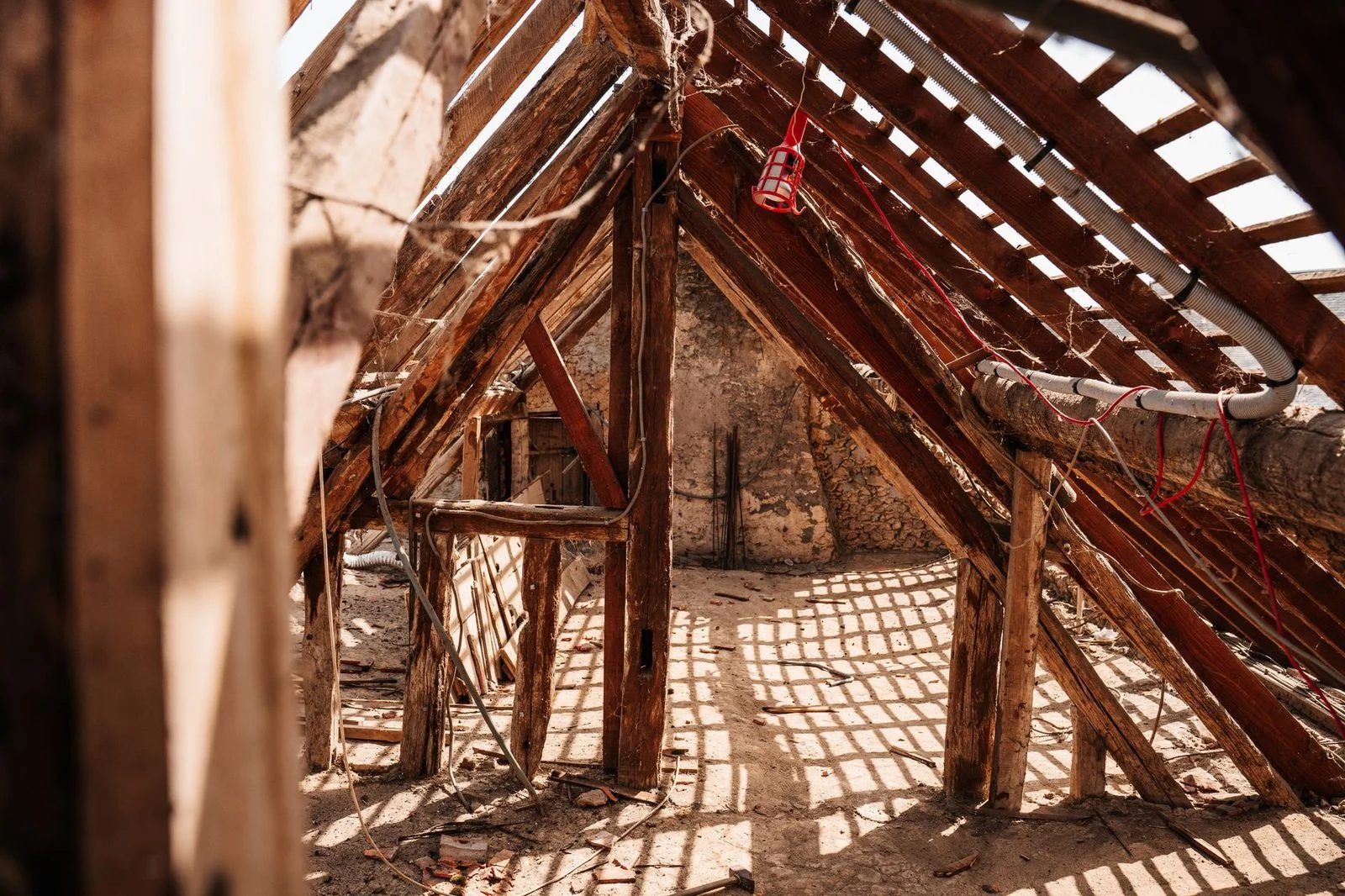
Know the limits of these repairs. They don’t correct a failing underlayment, which is the waterproof layer beneath the tiles. The Tile Roofing Industry Alliance guidance on storm-damaged concrete and clay tile covers inspecting the underlayment. If the underlayment or deck is damaged, water may return after a surface fix.
How do you repair a cracked concrete roof or flat concrete section?
Clean the crack first. Remove loose material and dust so the repair material can bond. Then fill hairline and small cracks with a concrete patching compound or roof-grade crack filler, and smooth the surface.
Roof cement works for small openings. It is not a permanent fix for wide, moving, or structural cracks. Treat it as a short-term patch, and watch the area after the next rain.
Elastomeric and liquid waterproof coatings can seal flat concrete sections. Florida’s 2026 residential code requires roof coatings to follow the manufacturer’s installation instructions and the material standards in its new table (Florida Building Commission). Coatings need a prepared, dry surface and a full cure before rain hits.
Wide, spreading, or repeatedly reopening cracks can signal movement in the structure. That calls for a professional evaluation.
When is a leak a job for a professional roofer?
Call a professional when a leak keeps returning, shows up in several spots, or involves the structure. These signs mean the cause is bigger than a surface patch.
- Water enters in several places, or stains keep coming back after repairs.
- Concrete is cracking, crumbling, or spalling (breaking off in layers), or steel reinforcement is exposed or rusting.
- Ceilings sag, or the decking or rafters feel soft or rotted.
- The roof is old or has had many repairs. Replacement may be a better long-term option than more patching.
- The pitch is steep, the roof is high, or the tiles are wet. Safety is a real reason to bring in help.
Permits matter too. The City of Miami requires permits for residential and commercial roof repair or replacement (City of Miami). Ask about the permit requirement before work starts.
Does homeowners insurance cover a roof leak, and what does a repair cost?
Coverage depends on your policy and on what caused the damage. Timing matters, so report the loss early. Under Fla. Stat. § 627.70132, a property insurance claim is barred unless notice is given within 1 year after the date of loss. A supplemental claim is barred unless notice is given within 18 months.
For hurricanes, the date of loss is the date the hurricane made landfall; for tornadoes, windstorms, severe rain, or other weather-related events, it is the date the National Oceanic and Atmospheric Administration verifies the event.
Keep dated photos, notes, and repair receipts. They help document the condition of the roof.
Cost varies with the extent of damage, the roofing material, and access to the roof. Florida’s Department of Financial Services lists rules for roof-repair contractors, including requirements for repair contracts (Florida Department of Financial Services). Ask for a written scope so you know what the price includes.
Not sure what your next step is?
Talk it through with our team — the first consultation is free, confidential, and carries no obligation.
Ready to have your leaking roof looked at?
A leak that keeps returning is worth a professional look. If you’re handling this for a family member or a rental property, you don’t have to work out the cause alone.
ASP Superhome offers a free first consultation that is confidential and without obligation (Spanish: consulta inicial gratuita, confidencial y sin compromiso).
If you’re ready, request a repair quote and describe where the water shows up.
Quick answers
Does roof cement stop leaks?
Roof cement can seal small openings. It does not permanently fix wide or moving cracks.
Do I need a permit to repair a leaking roof in Miami?
The City of Miami requires permits for residential roof repair and replacement.
How long do I have to report a roof leak to insurance in Florida?
Florida Statute § 627.70132 sets notice deadlines for property insurance claims. The periods differ for initial or reopened claims and for supplemental claims, and they can be tolled for certain servicemembers on combat deployment. Your policy terms also apply, so review them promptly.
Why Start With a Free Consultation
Free first consultation
Review your roof leak with our team at no cost before you decide on any repair.
Confidential
Your questions and property details are handled with privacy.
No obligation to continue
The first consultation is yours to use however you choose, with no pressure to move forward.
Clear options in writing
Repair, partial replacement, or full replacement are explained so you can compare them side by side.
Don't Count on a Patch Alone
Roof cement can seal small openings, but it does not permanently fix wide or moving cracks. If water keeps getting in after a patch, have the roof inspected before the damage spreads to the decking and interior.
Common Causes of Leaks on Concrete and Tile Roofs
Cracked or lifted tiles
Wind, heat, and debris can crack or shift tiles, opening a path for rain to reach the underlayment.
Failed flashing
Flashing around vents, chimneys, skylights, and walls is a frequent source of leaks where water collects.
Cracks in the concrete or mortar
Hairline and wider cracks in the roof surface or bedding mortar let water seep through over time.
Worn underlayment
Once the secondary waterproofing layer breaks down, water can travel under intact tiles and show up far from the original entry point.
Not Sure Where the Water Is Coming From? Let's Take a Look.
Related practice areas
- Roof Repair in South Florida: Fast, Storm-Ready Fixes for Every Roof Type
- Tile Roof Repair Estimate in South Florida: What Gets Priced and Free Estimate Process


