


Metal Roofing · Miami
Metal Roofing in Miami: What It Really Costs and What to Ask Before You Sign
Get a clear picture of pricing, Florida wind and code considerations, and the common mistakes that cost homeowners later.
By Jonathan Rodriguez · Published October 13, 2026
Metal roofing in Miami costs more up front than asphalt shingles, and the final price depends on your roof’s size, panel type, and condition. Florida’s wind rules and salt air also shape what a proper job includes. This guide covers cost, code, and common mistakes so you know what to ask before you sign.
How Much Does a Metal Roof Cost in Miami?
Metal roof cost in Miami depends on the roof’s size, the panel profile, and what’s under the old roofing. Contractors usually price metal roofing by the roof square, which is 100 square feet of roof surface.
Panel profile and gauge (the thickness of the steel) change the price. So do the finish, the roof’s pitch, and whether old layers must be torn off first. Deck condition matters too. Soft or rotted decking must be repaired before new panels go on.
Miami-Dade’s High-Velocity Hurricane Zone (HVHZ) rules can also affect the price. The Florida Building Commission sets the statewide building code. Local building requirements may affect your material options and installation details.
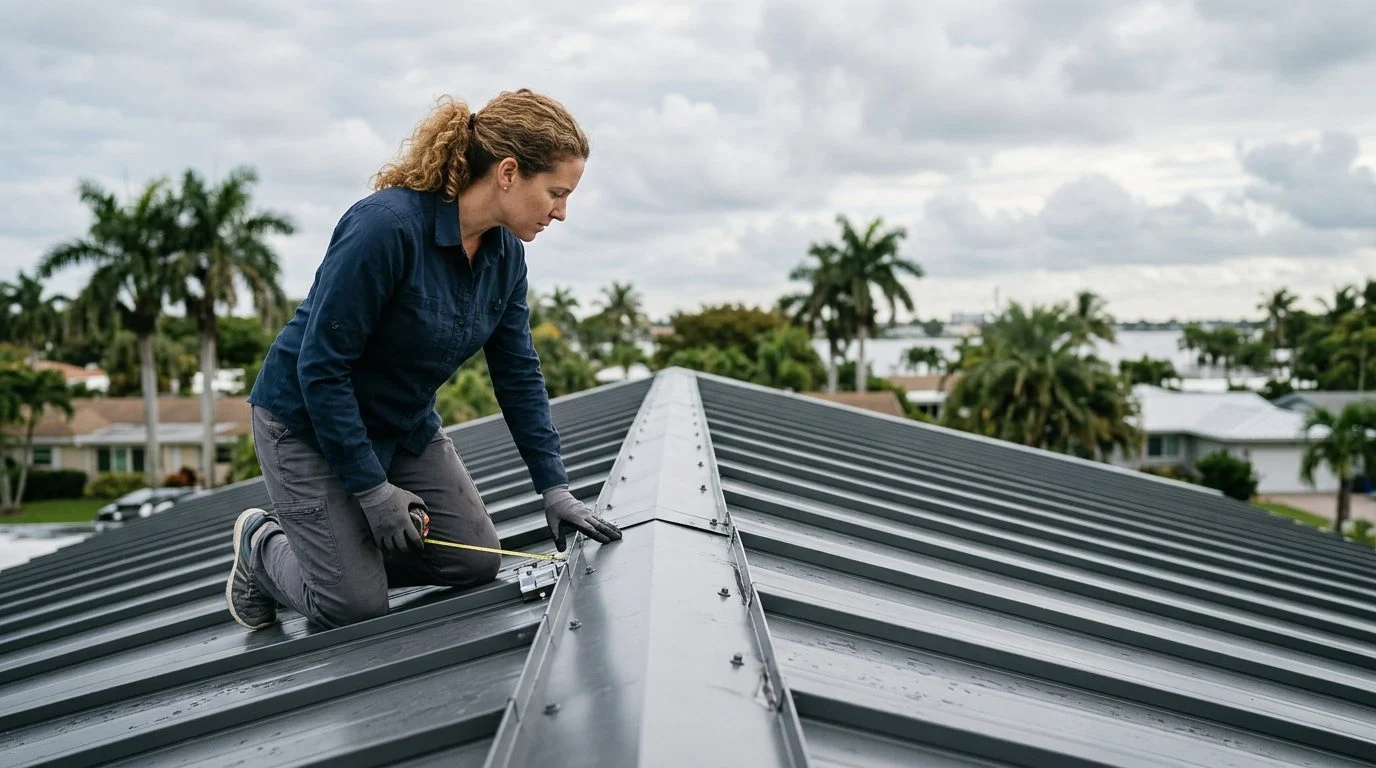
Exact figures come from a measured roof inspection. A number given without measuring your roof is only a rough guess. Our free estimate measures your roof and prices the scope for your specific home.
If your shingle roof is leaking after a storm or wearing out before the next rainy season, we can measure it and put a written quote for your home in your hands. Talk it through with our team — the first consultation is free, confidential, and carries no obligation.
How Much Does a Metal Roof Cost for a 2,000 Sq Ft House?
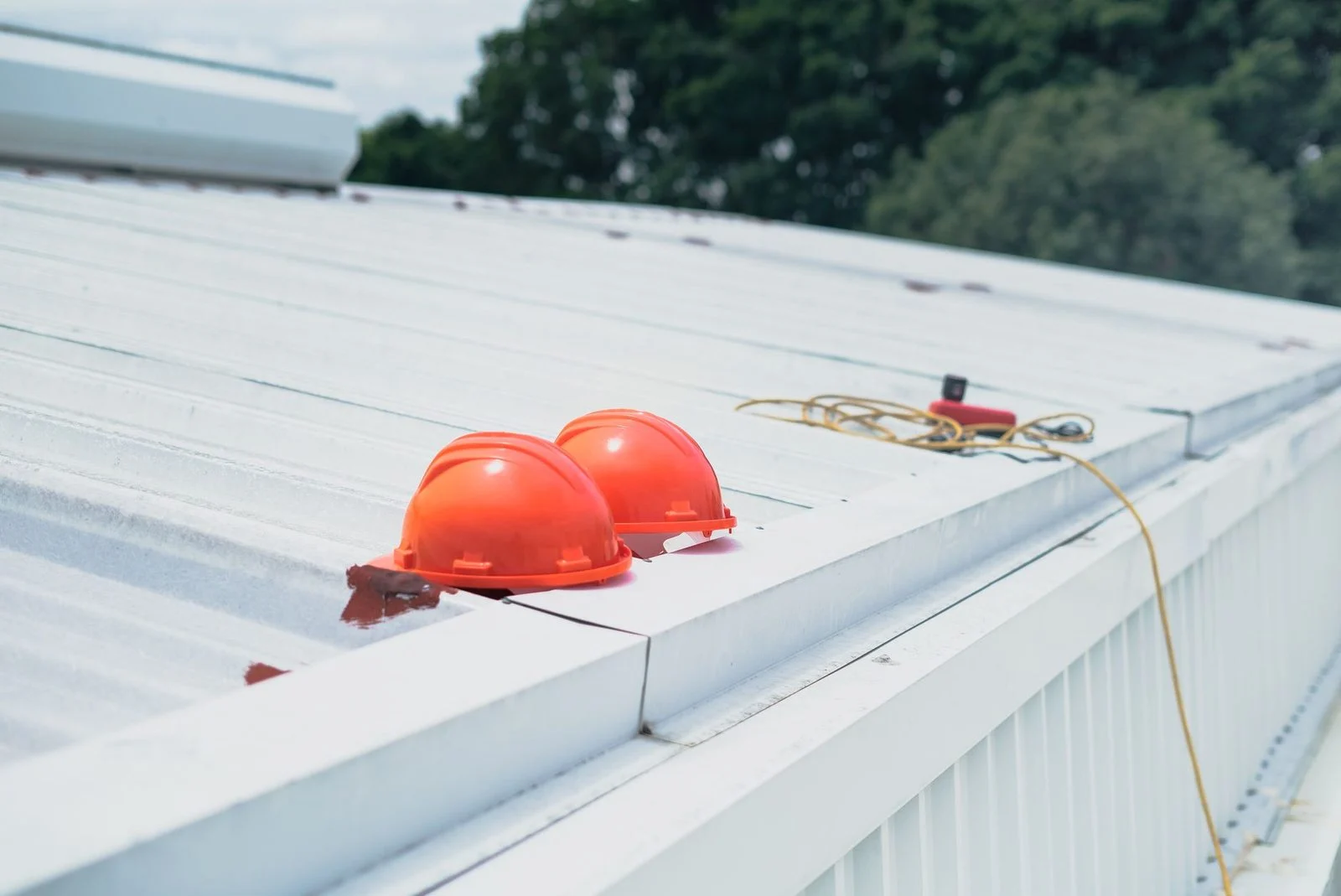
A 2,000 square foot house usually does not have a 2,000 square foot roof. Roof area is measured along the slope and includes overhangs. A steep pitch or wide eaves add surface area, so the roof often measures larger than the floor plan.
Divide the roof area by 100 to get roof squares. Then the total moves based on a few factors:
- Single-story or two-story access, since two-story work needs more labor and equipment.
- The number of valleys, hips, and penetrations like vents and pipes, since each one needs flashing.
- The underlayment you choose.
- How many existing layers come off.
Florida law also affects scope. For site-built single-family homes, Fla. Stat. § 553.844 says a roof replacement must include secondary water barriers and strengthening or correcting roof-decking attachments and fasteners. That means a fair quote may include more than a basic panel swap.
When you book a free estimate with ASP Superhome, ask us to walk you through each item it includes: removing the old roof, the protective layer beneath the new roofing, how the roofing is secured, the seals around edges and penetrations, cleanup and haul-away, and the required building approvals.
Is a Metal Roof a Good Idea in Florida?
Yes, a metal roof can be a good choice for many Florida homes when it’s installed correctly. It sheds heavy South Florida rain quickly. It weighs less than many tile systems, and reflective finishes help with Miami heat.
The tradeoffs are real. Metal costs more than asphalt shingle up front. Rain can sound louder on bare metal, but solid decking and insulation reduce that noise. You also need a qualified installer, because the details decide how the roof performs.
Performance depends on three things: installation quality, the fastening schedule, and product approval. The material alone doesn’t decide it. A well-approved panel installed poorly can still leak. A correct install with the right fasteners gives the roof its best chance to perform as designed.
What Is the Biggest Problem With Metal Roofs?
The most common real-world problem with metal roofs is installation error, not the metal itself. Under-fastened panels, poorly sealed flashing at penetrations, and weak seams cause most leaks. These mistakes often stay hidden until the first hard storm.
Coastal salt air adds a second risk. Salt and humidity speed corrosion when the wrong coating, panel metal, or fasteners are used. Mixing incompatible metals can also cause one metal to corrode the other.
Thermal expansion matters too. Metal grows in the sun and shrinks at night. Clips and fasteners must let panels move. If they’re too rigid, panels can buckle or pull loose. A reputable installer plans for this at the layout stage, not after the panels are on.
Homeowners often choose a quote based on panel price alone. Ask which fasteners, flashing, and coating are included. Those details decide how the roof handles wind and rain.
Miami-Dade HVHZ Code and Product Approval for Metal Roofs
Metal roofing in Miami-Dade’s High-Velocity Hurricane Zone generally must use a product with either a Miami-Dade Notice of Acceptance (NOA) or a Florida Product Approval that specifically covers HVHZ use. A general statewide approval without HVHZ coverage is not enough. The statute also bars marketing a product as hurricane or wind-borne debris protection unless it is approved.
The statute names the Miami-Dade County Building Code Compliance Office Product Control Division as an approved evaluation entity. Miami-Dade roofing products are typically tied to a Notice of Acceptance (NOA). An NOA matches the exact product, profile, and fastening method. A panel approved in one profile isn’t automatically approved in another.
Ask for the NOA number before work starts. Confirm that the approval covers your roof’s pitch and profile. Our written quotes name the product and approval being used.
Check the contractor’s license too. Under Fla. Stat. § 489.128, a contract with an unlicensed contractor can’t be enforced by that contractor. Under Fla. Stat. § 489.1425, residential contracts above $2,500 in labor and materials must include a written recovery fund notice.
Standing Seam vs. Other Metal Roof Profiles on Miami Homes
Standing seam is a popular choice for modern and Mediterranean-style Miami homes. Raised seams lock panels together, and the clean lines look sleek. Concealed fasteners hide the screws entirely.
Exposed-fastener styles cost less up front. Each screw depends on its own seal, so these roofs need more attention to fastening detail. Check that the installer follows the approved method.
Screw-down and corrugated or R-panel profiles are simpler and more traditional. Their exposed ribs suit ranch-style homes, outbuildings, and some commercial-adjacent properties. The ribs give a more utilitarian look than standing seam.
Profile choice affects NOA approval, roof pitch requirements, and how the roof matches the rest of the home. Pick the profile after you confirm the approval covers your roof.
Not sure what your next step is?
Talk it through with our team — the first consultation is free, confidential, and carries no obligation.
Metal Roofing Built for Miami’s Heat, Salt Air, and Storms
Metal roofing built for Miami combines reflective finishes, corrosion-resistant metal, and sealed edges. Each part answers a different local problem.
For heat, reflective pigmented finishes reflect more sun than dark, heat-absorbing colors. Attic ventilation lets trapped hot air escape, which keeps the living space cooler.
For salt and humidity, aluminum-zinc coated steel, often sold as Galvalume, is a common choice for coastal corrosion resistance. Gutters and fasteners must be compatible with the panel metal, or corrosion can start at the connections.
For wind and rain, sealed seams and correctly installed ridge and edge metal do the heavy lifting. Underlayment matters too. Miami’s afternoon downpours test every seam. A secondary water barrier gives backup when water gets past the panels, which is the type of protection the statute calls for during replacement.
Request a Free Metal Roof Estimate for Your Miami Home
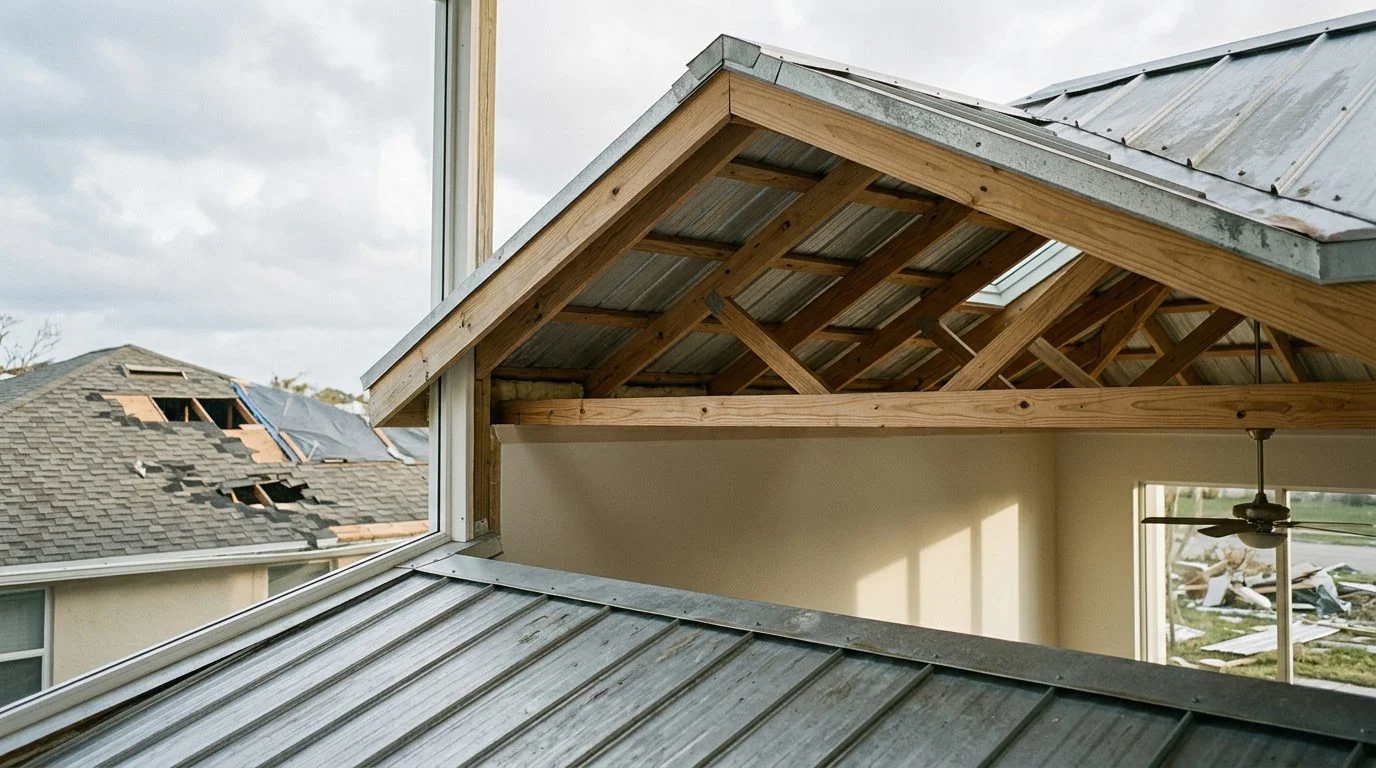
A free estimate gives you a measured roof assessment and a written quote showing scope and price. Homeowners usually reach this point after shingles start to age, a storm loosens flashing, or they want to decide on metal before the next rainy season.
The visit covers a measured roof assessment, a check of the deck and penetrations, and profile and product options matched to the required approval. You’ll receive a written quote that lists tear-off, underlayment, fastening, flashing, and permits.
How much does a metal roof cost in Miami?
Cost depends on roof size, panel type, and deck condition. A measured inspection gives you a figure for your home.
Is a metal roof a good idea in Florida?
It can be, when the roof is installed correctly with approved products and a proper fastening plan.
What is the biggest problem with metal roofs?
Installation error is the most common issue, especially fastening, flashing, and seam sealing.
Do metal roofs need an NOA in Miami-Dade?
When planning a roofing project in Miami-Dade, it helps to review product approval details early.
Send us your roof details through our contact page, and we’ll set up your measured estimate.
Why Homeowners Bring Their Metal Roof Project to ASP Superhome
Written, Itemized Estimates
Your quote spells out the roof size, panel profile, underlayment, fasteners, and removal work so you can compare scope, not just price.
Built for South Florida Conditions
We plan each installation around wind exposure, heavy rain, and salt air common to Miami-Dade and the surrounding coast.
Roofing Alongside Your Other Upgrades
Coordinate metal roofing with impact windows, impact doors, solar panels, or a kitchen remodel under one team.
Straightforward Next Steps
Start with a free estimate and a clear walkthrough of your options, with no pressure to decide on the spot.
Before You Accept Any Metal Roofing Quote
Ask for the panel gauge, finish warranty, fastener type, and the underlayment and flashing details in writing. A low price that leaves these out often means added costs later.
Key Factors That Shape Your Metal Roof Project
Roof Size and Pitch
Pricing starts with roof squares and how steep the roof is, since steeper or more complex roofs take more labor and material.
Panel Profile and Finish
Standing seam, corrugated, and other profiles differ in look, installation time, and cost, and finishes vary in how well they hold up to sun and salt.
Condition of the Existing Roof
Rotted decking, multiple layers of old roofing, or damaged framing can add work before the new metal goes on.
Wind and Coastal Details
Fastening, edge metal, and sealing details matter in a region exposed to strong winds and salt air, so they should be specified clearly.


