


Metal Roof Repair | South Florida
Stop Corrugated Metal Roof Leaks at the Source
Find the entry point, repair it properly, and protect your home from the next storm. ASP Superhome serves Miami, Fort Lauderdale, West Palm Beach, Kendall, Naples, Fort Myers, and Boca Raton.
By Jonathan Rodriguez · Published October 18, 2026
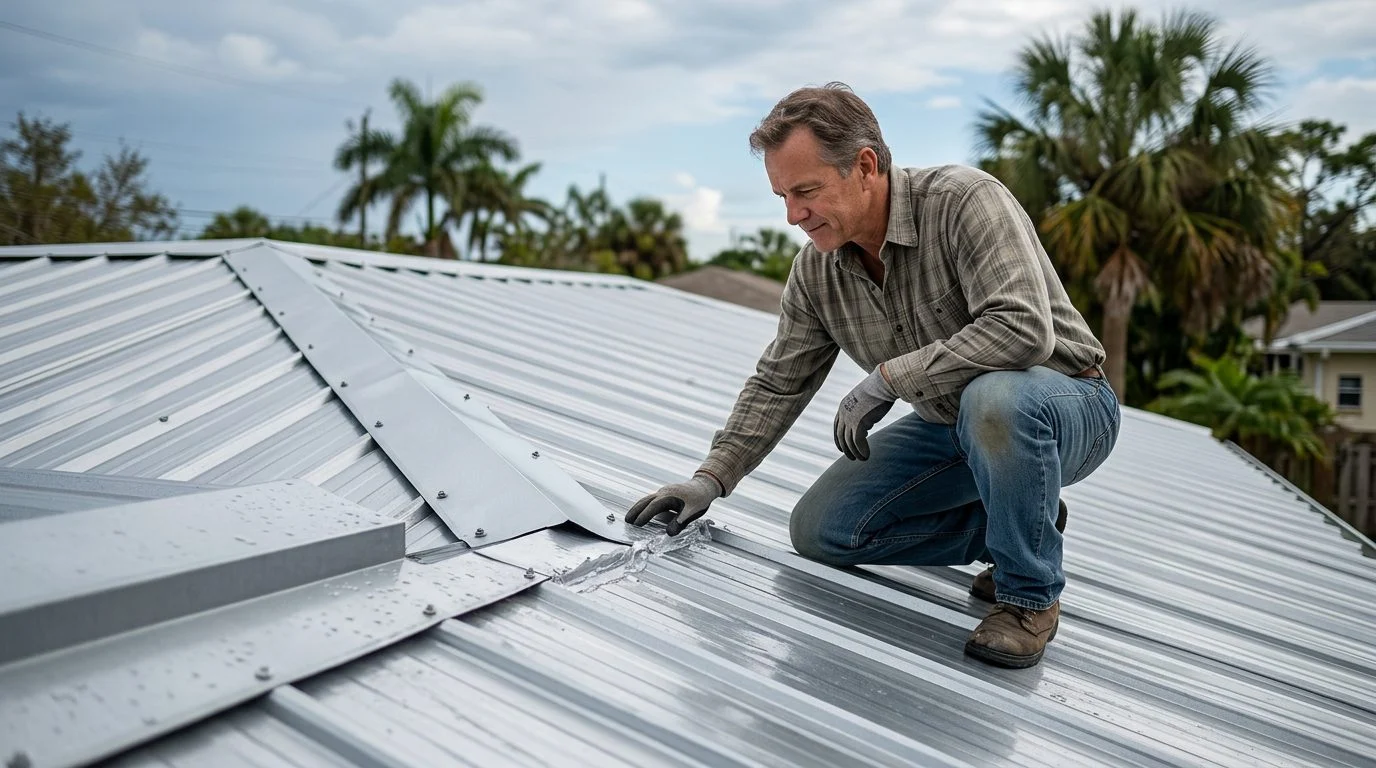
If you’re asking how can I fix leaks on my corrugated metal roof, start by finding the exact spot where water enters. Most leaks trace to a loose or failed screw, a worn washer, a seam, or a flashing joint. Sealant can close small gaps, but it works best as part of a careful inspection.
Leaks are common on South Florida roofs during storm season. Wind-driven rain pushes water into places that stay dry in light rain. If the drip is in a parent’s house, a rental, or a home you don’t live in, you may feel stuck. This guide covers the likely causes, safe steps to find and seal a leak, and the signs that the problem is bigger than a patch.
Why corrugated metal roofs leak in the first place
Corrugated metal roofs usually leak where panels are fastened, overlapped, or broken. Water rarely gets through the open face of a panel. The joints are the weak points.
The most common entry points include:
- Exposed screw heads, especially ones with cracked or dried washers
- Side laps and end laps, where one panel overlaps the next
- Ridge caps and eave edges
- Flashing around chimneys, vents, and skylights
Many leaks come from a fastener or flashing problem, not from failed metal. Those parts are often repairable. After Hurricane Ian, the Insurance Institute for Business & Home Safety assessed metal-roof performance in Southwest Florida. For an overview of metal roofing in this area, see our metal roofing guide for South Florida.
A roof leak can be stressful, especially when it's in a home you don't live in, and our team at ASP Superhome can help you look at it. Talk it through with our team — the first consultation is free, confidential, and carries no obligation.
Find the leak before you seal anything
Find the leak from inside first, then trace it up the roof. Sealing the wrong spot wastes time and can hide the real problem.
Start in the attic or under the ceiling. Look for daylight coming through the roof, dark streaks on the framing, and water tracks. Water often runs along a purlin, which is a horizontal support under the panels, before it drips. The drip inside may sit well away from the actual hole.
Next, test the roof with a hose on a dry day. Have a helper inside watch for drips. Work one section at a time, starting low and moving up. Don’t leave water running on one spot for a long time. Mark each suspect spot with tape or chalk while the roof is dry, so you can find it again.
Why does my roof only leak during heavy rain?
Heavy rain and wind-driven rain push water sideways and up under laps. A gap at a fastener can stay dry in a light drizzle, then leak in a downpour.
A seam or screw that holds in normal conditions can fail once water presses against it. Leaks that appear only after storms often point to loosened screws, lifted panel edges, or flashing that has shifted.
Keep a simple log to narrow the cause. Write down the date, the rain strength, the wind direction, and the time the drip appeared. A pattern, such as leaks only when wind comes from the east, tells you which side of the roof to check first.
How to seal metal roof screws and fasteners
Seal a leaking screw by replacing its failed washer, cleaning the head, and then sealing it. Sealant over a bad washer leaves the failed part in place.
Check whether the screw has backed out, and tighten it gently if it has. Over-tightening can crush the washer and create a new leak path. If the washer is cracked, dried, or missing, replace the screw with one of the matching size and type. Use fasteners made for metal roofing with sealing washers.
Clean the head and the metal around it. Remove rust, grit, and old sealant so the new material can bond. Then cover the head with a compatible sealant or fastener cap, shaped so water runs off. Avoid thick layers that can trap moisture underneath.
Be gentle with the finish. The Metal Construction Association says rooftop work should avoid damaging a metal roof’s finish and integrity, because that damage can lead to corrosion. Touch up scratched coating with a matching product.
What to put on a leaking metal roof: choosing a sealant
Use a polyurethane sealant labeled for metal roofing and outdoor exposure, applied to clean, dry metal. Polyurethane sealant is a common choice for screws, seams, and flashing repairs. Surface prep matters more than the brand name.
Make sure the sealant works with the paint on your panels. Most metal panels arrive with a factory coating. The Metal Construction Association roofing guide explains that finished steel and aluminum panels are typically coated with a two-coat paint system applied through factory coil coating.
Apply in dry weather and within the temperature range on the label. Let the sealant cure fully before the next rain.
Be honest about the limits. A sealant patch is a repair, not a permanent fix. If the same spot leaks again, the cause is probably a fastener, panel, or flashing that needs direct attention.
Sealing laps, ridges, flashing, and penetrations
Laps, ridges, flashing, and penetrations often need hands-on repair. Resealing and refastening usually holds up better than sealant alone.
For side and end laps, lift the upper panel carefully, clean the mating surfaces, and seal the joint according to the panel system’s design. Check ridge caps and eave edges for gaps, lifted caps, or missing closures. Wind can drive rain into these openings.
Flashing around chimneys, vents, skylights, and wall intersections is a common leak point. If flashing is loose, fasten it back down first, then seal the edges. Inspect pipe boots and vent collars for cracks, and replace them when the rubber or gasket has failed.
For more on how residential metal roof systems are built and maintained in Florida, read our residential metal roofing guide.
Not sure what your next step is?
Talk it through with our team — the first consultation is free, confidential, and carries no obligation.
Tools, materials, and safety on a metal roof
Gather a cordless drill with the right driver bit, a stiff wire brush, a scraper, clean rags, a caulk gun, and a chalk line or marker. You’ll also need matching fasteners with sealing washers, sealant made for metal roofing, and touch-up coating for damaged paint.
Metal gets slippery when wet, and panels can flex under weight. Work only on dry days. Use a secured ladder and non-slip footwear. Keep a helper at ground level who knows where you’re working.
Stay clear of power lines, and don’t work in wind or near lightning. A storm-damaged roof can have sharp or loose panels. If a section doesn’t feel solid, stay off it.
When a leak needs a professional assessment
A leak needs a professional look when it spreads to several areas, returns after repairs, or reaches the ceiling or insulation. A sealant patch won’t fix rusted or perforated panels, damaged flashing, or sagging purlins.
Florida’s rules also shape the decision. Metal roofing is a roofing product subject to the state’s product-approval system, as the Palm Beach County product approval page explains.
If a repair grows into a roof replacement on a site-built single-family home, Fla. Stat. § 553.844 requires secondary water barriers. One of the mitigation measures listed in the statute is strengthening or correcting roof-decking attachments and fasteners during reroofing.
If the leak has you worried about the rest of your roof, you don’t have to sort it out alone. Contact ASP Superhome to request a free, confidential first consultation, with no obligation to continue, so the roof’s condition can be looked at directly: ASP Superhome contact page.
Frequently asked questions
How can I fix leaks on my corrugated metal roof?
Find the exact entry point from inside first. Then repair that spot, usually by replacing a failed washer, resealing a joint, or refastening loose flashing.
Where do metal roofs usually leak?
Most leaks start at fasteners, side and end laps, ridges, eave edges, and flashing around vents and chimneys.
Can a leaking metal roof be fixed without replacing it?
Some leaks come from one screw, seam, or flashing joint, and those spots can be repaired. Leaks in several areas may need a closer look.
Is sealant enough to stop a leak?
Sealant can close small gaps. It is a repair, not a permanent fix.
How We Approach Metal Roof Leaks
We Start Inside
Water often travels along purlins and decking before it drips. We trace the path from the ceiling to find the true entry point.
We Fix the Cause
Our team targets the failed washer, loose fastener, open seam, or damaged flashing rather than covering the symptom.
Built for South Florida Weather
Heavy rain, wind-driven storms, and intense sun all stress metal roofs. Repairs are planned with that climate in mind.
Clear Options Before Work Begins
We explain what is failing, what repair is needed, and when full replacement may make more sense.
Common Leak Sources on Corrugated Metal Roofs
Fasteners and Washers
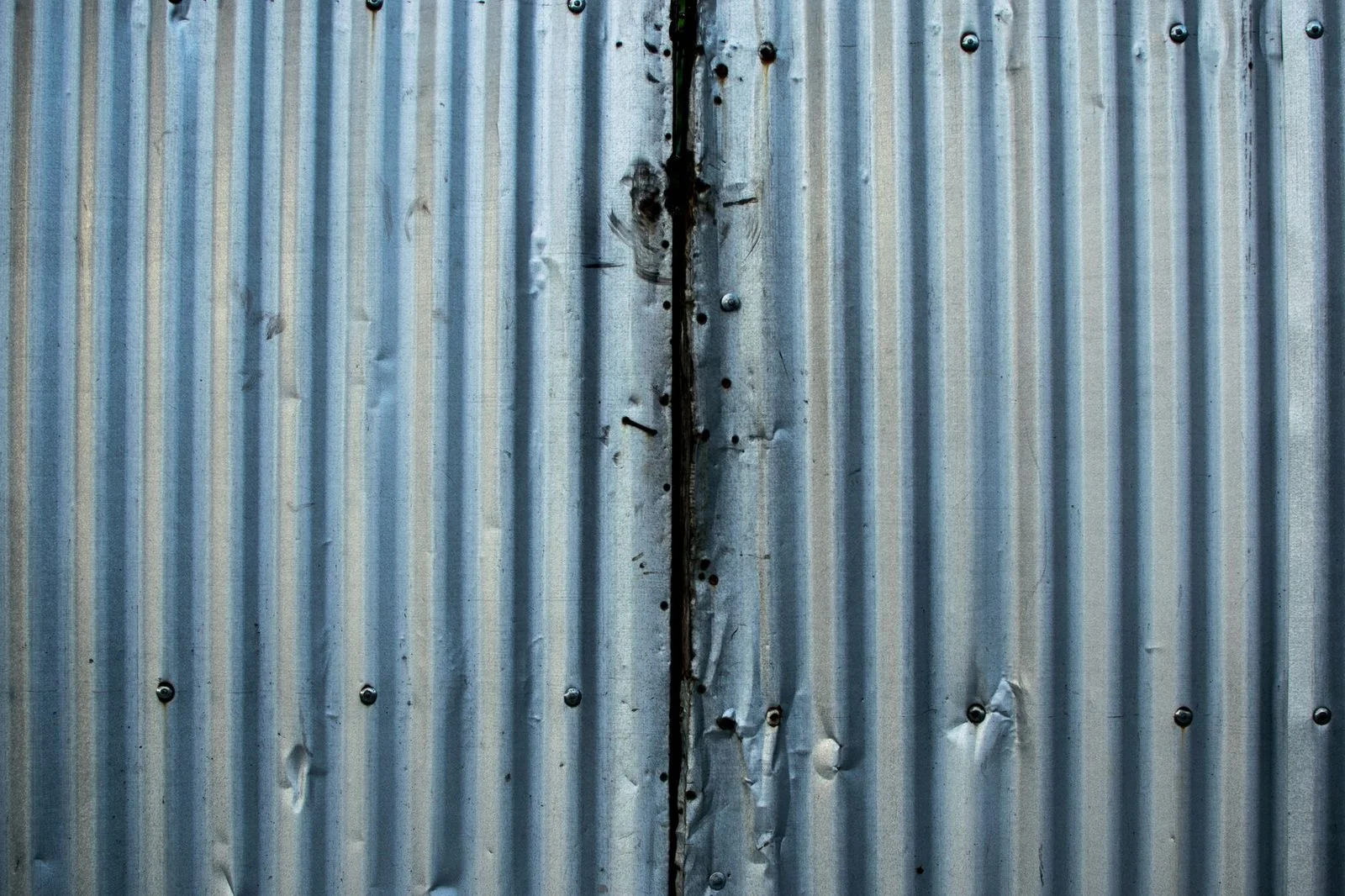
Rubber washers can dry out and crack under the South Florida sun, letting water seep past the screw head.
Seams and Laps
Side laps, end laps, and ridge seams can open or separate over time as the metal expands and contracts.
Flashing and Penetrations
Vents, chimneys, skylights, and wall transitions are frequent leak points when sealant fails or flashing lifts.
Eave and Edge Areas
Water driven by wind can work its way under edge trim and into the roof structure, especially during heavy storms.
Don't Ignore a Small Drip
Water that gets under a metal roof can rot decking, damage insulation, and stain ceilings long before the leak is visible. Acting on early signs is usually simpler and less costly than waiting.


