


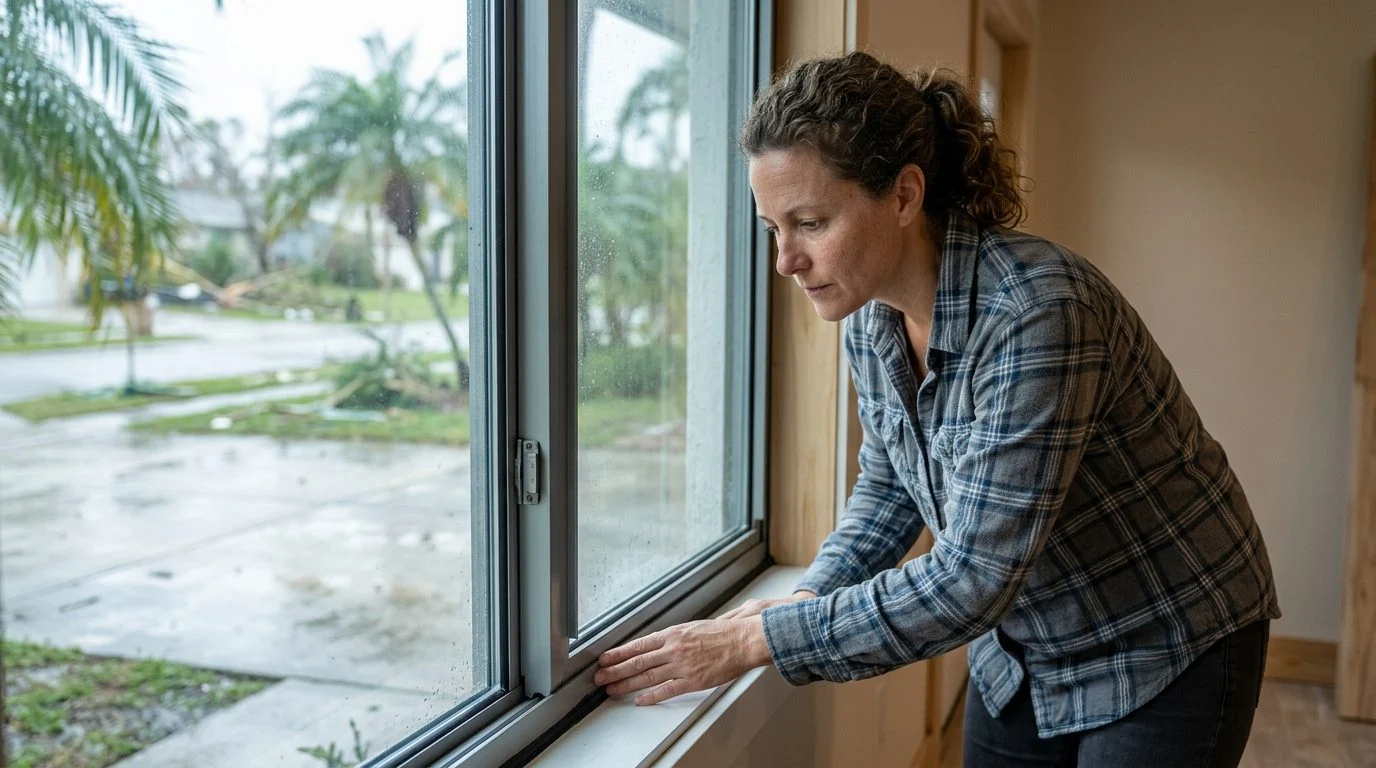
Hurricane Mitigation | South Florida Homeowners
Understanding the My Safe Florida Home Program
A plain-language guide to what the program is, what it can help with, and how the steps usually go. Start with a free first consultation: confidential and with no obligation to continue.
By Jonathan Rodriguez · Published October 31, 2026
Who May Qualify for the My Safe Florida Home Program?
This article covers the My Safe Florida Home program. It helps Florida homeowners pay for hurricane mitigation work, such as stronger windows, doors, and roof connections. Here is what it is, what it can cover, and how the steps usually go.
If you're looking into this for a parent, a relative, or a home you help manage, our team can talk through whether impact windows or doors fit that house. Talk it through with our team — the first consultation is free, confidential, and carries no obligation.
Which Homes and Owners the Program Covers
The My Safe Florida Home Program is a state program run within the Department of Financial Services. Fla. Stat. § 215.5586 sets out its rules. The program offers hurricane mitigation inspections and grants for improvements on eligible homes.
The money aims at one goal: making a home more resistant to hurricane damage. It is not meant for general remodeling. The statute says the program does not create an entitlement for property owners. It also says the program depends on annual legislative appropriations. So the funds available can change from year to year.
If you’re new to this topic, start with our impact windows guide. It explains the basics of these products before you look at grant rules.
What the grant can pay for
Under Fla. Stat. § 215.5586, funding is subject to appropriations, and inspections and grants are provided for eligible homes. Opening protection is a key category.
Impact windows and impact doors protect those openings. Their job is to keep wind and flying debris from entering the home during a storm. That is why they fit the program’s focus.
Roof work can also count. Grants pay for improvements recommended by the initial inspection that increase a home’s resistance to hurricane damage; separately, Fla. Stat. § 553.844 lists strengthening roof-decking attachments and fasteners during reroofing as a mitigation technique for site-built, single-family homes built before the Florida Building Code. It also lists improving roof-to-wall connections. Fla. Stat. § 553.844 says roof-to-wall connections are not required unless evaluation and installation of connections at gable ends or all corners can be completed for 15 percent of the cost of roof replacement.
Product claims matter too. Fla. Stat. § 553.842 bars marketing a product as hurricane or wind-borne debris protection unless it has the required statewide approval. Exterior doors, roofing, skylights, and windows are among the covered categories. For Miami projects, see our Miami impact windows guide and Miami impact doors guide.
Who generally qualifies
The program is aimed at owners of eligible Florida homes, and the program sets the eligibility rules. Eligibility is not a matter of income alone.
Whether a specific home and owner qualify depends on the facts of the property, who owns it, and the work planned. A licensed inspector’s findings and the program’s rules decide that. Your facts can differ from another family’s.
An inspection is a required early step. Licensed inspectors perform initial inspections of eligible homes. Keep every inspection report, because later steps depend on it.
How the process generally works
The usual path has a clear order. First, a licensed inspector completes the initial inspection. That report lists the improvements that could help the home.
Next, the application names the contractor you plan to use, along with that contractor’s state license number. Before work starts, ask for a written estimate that lists each product and the approval status.
After a grant is approved, you must finish the work and request a final inspection within 18 months, or the application is deemed abandoned and the grant money goes back to the department. The program also runs a quality assurance process that includes reinspection.
Insurance is a separate track. Homeowners often use an official mitigation form, which an insurance agent can submit. The Florida Office of Insurance Regulation describes this process. For more detail, read our insurance discount guide.
Common questions
Does the grant cover impact windows?
Impact windows can qualify when an initial inspection recommends them as an opening improvement.
Talk with our team about your home and your next step
Many people look into this for a parent, a relative, or a home they inherited. Others start after a storm or an insurance notice. You don’t have to make every decision today.
Our team can talk through whether impact windows or impact doors suit the home you’re thinking about. The first consultation is free, confidential, and comes with no obligation to continue. When you’re ready, reach out through our contact page to book an estimate.
How ASP Superhome Can Help
Impact-rated windows and doors
Stronger openings are a core focus of hurricane mitigation planning, and we can walk you through impact options for your home.
Clear next steps
We explain what to expect from an inspection and what documentation may be useful, so you know where your project stands.
Straightforward answers
Ask our team how program requirements may apply to your home before you commit to anything.
Support from our team
Our team coordinates the roofing, window, and door work that mitigation projects often involve.
Check Before You Commit
Program rules, funding availability, and eligibility can change. Do not assume your home qualifies or plan a project around grant money until the details are confirmed for your property.
Common Mitigation Projects
Impact windows
Impact-rated windows are often reviewed during inspections as part of opening protection for hurricane-prone homes.
Impact doors
Entry and sliding doors are key openings. Impact-rated options can be part of a broader mitigation plan.
Roof connections
Stronger connections between the roof and walls help the structure hold together in high winds.
Roof repair and replacement
Roof condition is central to mitigation. Our team can assess your roof and discuss repair or replacement options.


