


Impact Doors | South Florida
How Can You Tell If a Door Is Impact Rated?
Learn what to look for on the label, the glass, and the frame, and why a quick check matters before you buy or replace a door in South Florida.
By Jonathan Rodriguez · Published October 24, 2026
How Can You Tell If a Door Is Impact Rated?
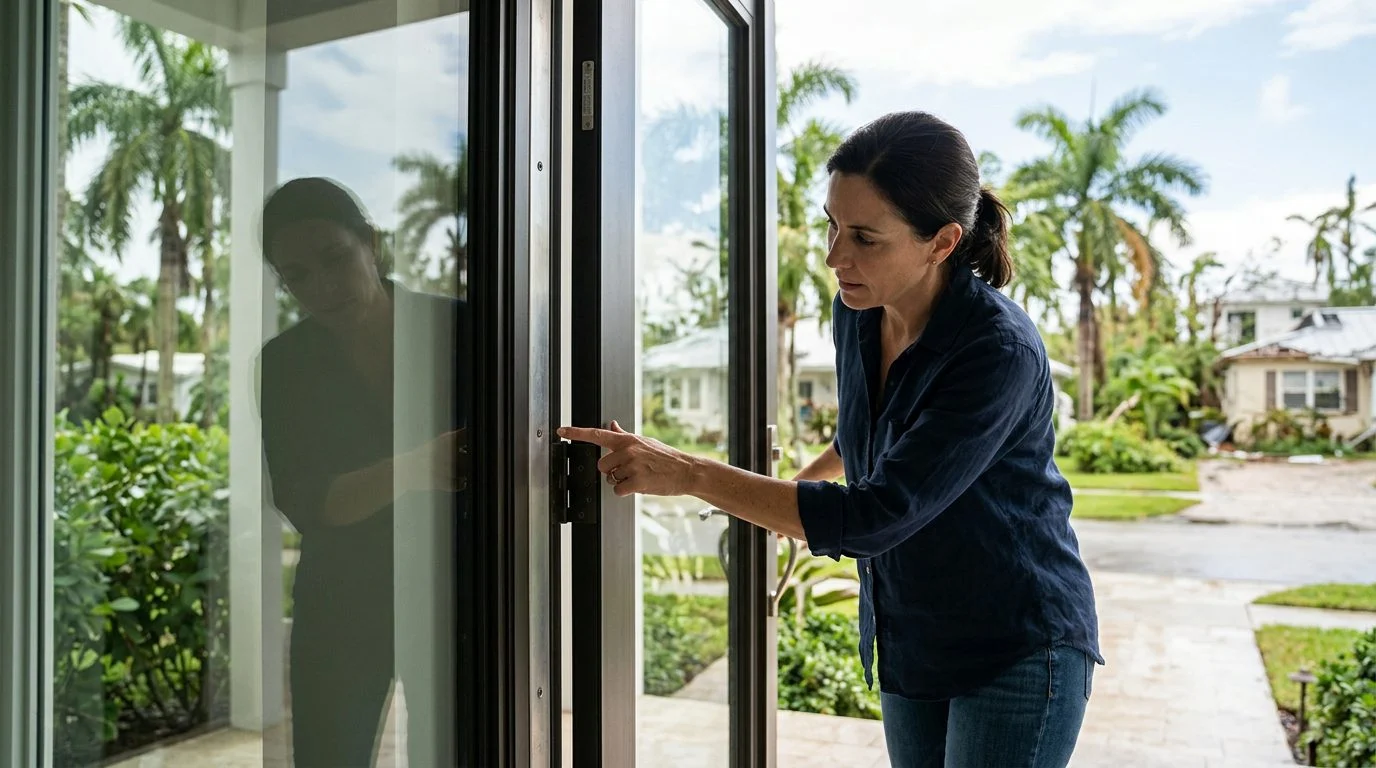
You can usually tell by checking the door itself. Look for a permanent label, a product approval number, and glass markings that match that label. If you’re asking how can you tell if a door is impact rated, this checklist covers each step in the order you can see it.
If you inherited a door, a tenant asked about one, or a quote now includes one and you still can't confirm its rating, our team is glad to talk it through with you. Talk it through with our team — the first consultation is free, confidential, and carries no obligation.
What makes a door impact rated?
An impact rated door is tested as a complete product, not just its glass. The test checks how the door handles wind-borne debris and repeated pressure changes.
Florida law limits how these products can be sold. A product may not be advertised or marketed as impact protection from wind-borne debris unless it has approval under the state’s product approval rules. Fla. Stat. § 553.842 names the Florida Deceptive and Unfair Trade Practices Act as one consequence for marketing a product without that approval.
Impact glass is laminated. That means two layers of glass bonded to a plastic layer called an interlayer. When the glass cracks, the interlayer holds the pieces together.
A door can look like impact glass and still lack a rating. The rating belongs to the tested product, not to how the door looks.
The quick answer: look for the permanent label and approval number
Start with the permanent label. Impact rated doors usually carry one on the frame, the sash, or the door edge. A typical label lists the manufacturer, the product series, and an approval or product number.
In South Florida, the approval may come from Miami-Dade County. The county’s product approval guidance says exterior doors used to protect the building envelope may go through Miami-Dade product approval, based on testing and technical documentation.
See Fla. Admin. Code R. 61G20-3.005. Under Florida rules, products specifically addressed in the Code through performance criteria and standard test methods, which cannot be approved through the plan review and inspection process, must demonstrate compliance with the Code through one of the listed methods, such as a certification mark, test report, or evaluation report. See Fla. Admin. Code R. 61G20-3.005. See Fla. Admin. Code R. 61G20-3.005.
A missing label, a label with no approval number, or a label you can’t read makes the rating hard to confirm. In that case, the door alone doesn’t settle the question.
Read the glass: laminated layers and etched markings
Start with the glass edge. Impact glass often shows a faint line or tint between two panes. That line is usually the interlayer.
Next, check the corners for an etched or stamped mark. Many impact glass panels carry a small identifying mark that should match the manufacturer’s product documentation. Not every panel has one, so treat the mark as one clue.
Laminated glass can crack but stay in place. That’s why it’s used for debris protection. The opening stays covered after the impact.
Read the glass marks alongside the frame label. A mark on the glass alone doesn’t tell you which complete door was tested.
Confirm the exact product matches its approval listing
A rating applies to a specific product. That includes the frame style, glass thickness, size range, and hardware. Florida’s rules tie an approval to the product and its approved limits of use. See Fla. Stat. § 553.8425.
Compare the label’s series name, model, and approval number against the approval record for that product. See Fla. Admin. Code R. 61G20-3.013.
Changes matter. A different glass package, a swapped lock, or a different frame can mean the door no longer matches its rating.
Revisions keep the same Florida Product Approval number and add a revision number such as R1 or R2. See Fla. Admin. Code R. 61G20-3.012. Doors may also have been replaced over the years, so the label is only the starting point.
Check the frame, sash, and hardware
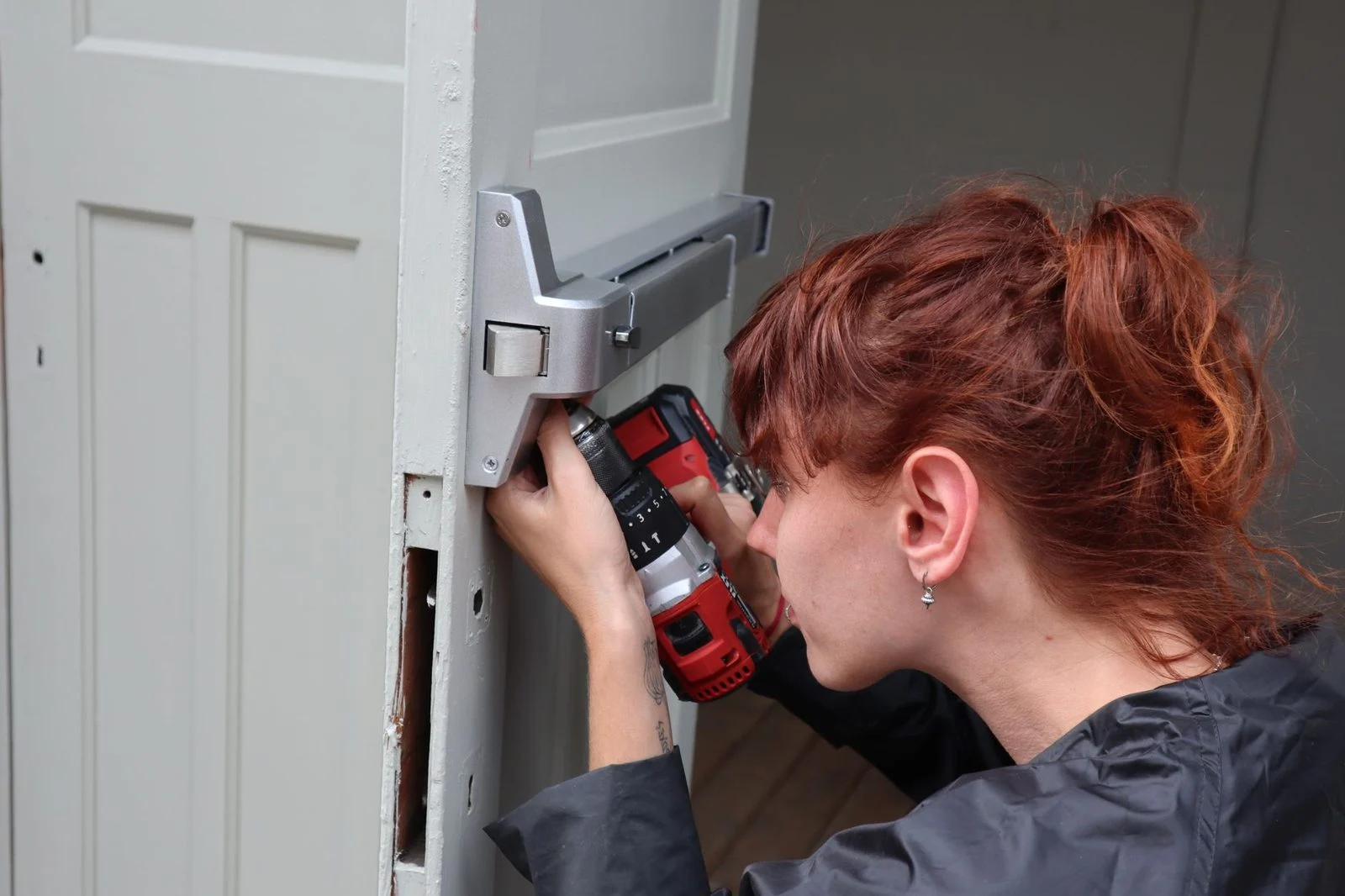
An impact door works as a system. The frame, its anchoring into the wall, multi-point locking, and heavy hinges all play a part in how the door performs.
Warning signs include a thin single-point lock, a light frame, and glass that isn’t laminated. These signs don’t prove a door is untested, but they’re reasons to look closer.
Ask whether the rating covers the whole door as installed. An approved door set into an unapproved frame is not the same assembly.
Installation matters too. Where this exemption applies, a copy of the manufacturer’s instructions is submitted with the permit application in a printed or digital format. See Fla. Stat. § 553.73. The Fla. Stat. § 553.73 directs the Florida Building Commission to modify the code so that sealed drawings from a design professional are not required for replacing windows, doors, or garage doors in an existing one-family or two-family dwelling or townhouse, when all of these conditions are met: the replacements are installed according to the manufacturer’s instructions for the appropriate wind zone; they meet the design pressure requirements in the most recent version of the Florida Building Code, Residential; a copy of the manufacturer’s instructions is submitted with the permit application in a printed or digital format; and they are the same size and are installed in the same opening as the existing windows, doors, or garage doors.
Not sure what your next step is?
Talk it through with our team — the first consultation is free, confidential, and carries no obligation.

Why it matters in South Florida, and where to start
Impact ratings matter in South Florida because state law controls how these products are marketed and documented. Local guidance also points to permits for many impact products. The Opa-locka permit guidance states that installing or replacing exterior impact windows in Florida generally requires a permit.
Many people check a door for reasons they didn’t choose. They may have inherited a home, a tenant may have asked, or a quote may include an impact door. Storm season can make the question urgent.
Can I confirm a door’s rating without a label?
Sometimes the glass marks and frame details give clues. A missing or unreadable label makes the rating hard to confirm, so start there.
Does a laminated door always mean it’s impact rated?
No. Laminated glass is one part of an impact product. The approval number and the tested product configuration still decide the rating.
If you’ve read the label and glass and still can’t confirm the rating, our team can talk it through with you. Your first consultation is free, confidential, and carries no obligation to continue. Contact ASP Superhome.
Why Talk With ASP Superhome
Free first consultation
Start with a free first consultation to review your home and your door options.
Confidential
Your information and questions are handled confidentially.
No obligation
There is no obligation to continue after the first consultation.
Complete home solutions
Impact doors and windows are part of a wider set of services for South Florida homes, including roofing, solar, and kitchen remodeling.
Key Tip: Don't Rely on the Glass Alone
A missing or unreadable label makes a door's rating hard to confirm. Laminated glass is only one part of an impact product, so check the label and product details together before you decide.
What to Check on an Impact Door
Look for the label
Find the product label and note the approval information printed on it. Start here, because the label is the clearest place to confirm a rating.
Check the glass
Laminated glass is common in impact doors, but it does not settle the question on its own. Look at how the glass fits within the complete door assembly.
Examine the frame and hardware
Frame construction, locks, hinges, and anchoring all affect how a door performs. Confirm these details match the tested product.
Keep your documents
Save product paperwork, installation records, and photos. They make it easier to review your door's details later.


