


Impact Doors | South Florida
Composite or uPVC Front Door: Which Fits Florida?
Compare finish, upkeep, and hurricane-season protection before you choose. Our team can walk you through the options for your home. Free first consultation, confidential and with no obligation to continue.
By Jonathan Rodriguez · Published October 23, 2026
If you’re asking which is better, composite or uPVC front door, the short answer is that neither wins every time. Start with the impact rating. In South Florida, a front door can face wind-borne debris during a storm, so if a door is advertised, sold, or marketed as impact protection from wind-borne debris, it should be approved for that use before you compare materials.
This guide compares the two materials on the factors that matter here: humidity, salt air, sun, insulation, security, upkeep, and look. It also lists the questions to ask any door seller. For an overview of impact door options, see our impact doors guide.
The short answer: it depends on the door’s rating and your home’s exposure
Composite and uPVC are both common front door materials. Either one can work well at a South Florida address, but only if the exact product is approved for impact protection. Once that’s settled, material decides how the door handles moisture, sun, and daily wear at your entry.
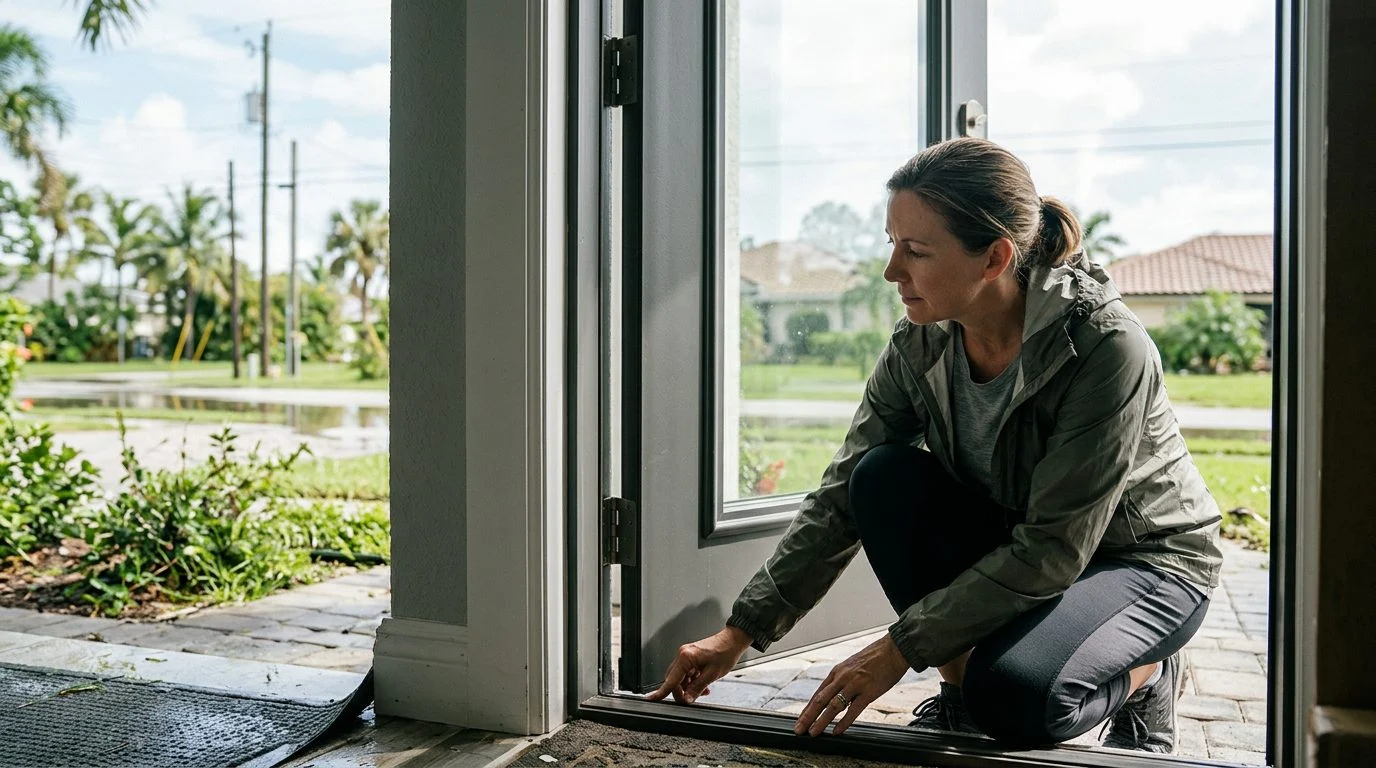
Most people start this search after a storm, when a door no longer closes tightly, or while helping a family member plan a renovation. The steps below will help you sort out what matters first. Work from the rating down to the finish, and you’ll avoid choosing a pretty door that isn’t rated for the wind.
If a storm-damaged or worn entry door is on your mind, we can talk through your home's exposure and your goals with you. Talk it through with our team — the first consultation is free, confidential, and carries no obligation.
Why impact rating comes before material choice in Florida
Florida law limits how a door can be sold as storm protection. Fla. Stat. § 553.842 sets this rule. It also says that marketing a door this way without approval can fall under the Florida Deceptive and Unfair Trade Practices Act.
Approval is documented. Under Fla. Stat. § 553.842, statewide approval is achieved through one of the methods it lists. For products for which the code establishes standardized testing or comparative or rational analysis methods, these include a certification mark or listing of an approved certification agency, which may be used only for products for which the code designates standardized testing, or a product evaluation report from an approved product evaluation entity.
The Legislature has also recognized the value of building code protections. Fla. Stat. § 553.844 says the code has reduced property damage in buildings built under its requirements. Ask for the approval number and test records for any front door, whether it’s composite, uPVC, wood, or steel. Material and rating are separate questions. A good material with no approval still isn’t the right choice for a storm-exposed opening.
What a composite front door is and how it behaves in South Florida
A composite front door is built from layered materials. Usually there’s a core wrapped in a fiberglass or similar skin. Manufacturers make these layers to resist warping and moisture, which is why composites are often considered for coastal entries.
Humidity and salt air are the main tests. Homes in Fort Lauderdale, Boca Raton, and Naples often sit near water and moist breezes. A composite skin is made to resist moisture, but the finish still does much of the protecting. Ask the maker how the finish is applied and what it’s designed to resist.
Sun and heat matter on west- and south-facing entries, which take the most direct light. Dark colors and rich finishes absorb more heat and can fade over time. Composite doors also come in many wood-grain textures and colors. That gives you a wood-like look without the upkeep of stained wood. Get the warranty terms in writing, since they vary by product.
What a uPVC front door is and how it behaves in South Florida
uPVC stands for unplasticized polyvinyl chloride. It’s a rigid plastic used for doors and windows in many countries, including the UK and much of Europe. Its main draws are moisture resistance and low upkeep.
Rain, humidity, and salt air don’t make uPVC rot, and it doesn’t rust like steel. That’s one reason it’s considered for coastal projects. The material itself is only part of the picture, though. Not every uPVC door is impact-rated. Confirm the Florida approval for the exact product, color, and size before you buy.
Heat is the trade-off to watch. Darker colors absorb more solar heat than lighter ones. Lighter finishes and reflective options can help keep the surface cooler. Actual surface temperatures vary by product and color, so ask the seller to show you the finish you’re considering.
Side-by-side: durability, maintenance, insulation, security, and look
Neither material wins every row. Compare them on the factors that matter at your address.
| Factor | Composite | uPVC |
|---|---|---|
| Impact protection | Only with a Florida approval for the exact product | Only with a Florida approval for the exact product |
| Humidity and salt air | Skin made to resist moisture; finish quality matters | Resists moisture and rot; does not rust |
| Sun and heat | Dark finishes absorb more heat | Dark colors absorb more heat; lighter finishes help |
| Maintenance | Periodic cleaning, hardware checks, finish care | Periodic cleaning and hardware checks |
| Insulation | Set by frame, glazing, and seals | Set by frame, glazing, and seals |
| Look | Wood-grain textures and colors | Range of colors and finishes |
Maintenance is similar for both. Clean the surface, check hinges and locks, and follow the maker’s finish instructions. Insulation depends on the frame design, the glass, and the weatherstripping more than on the material name. Security depends on lock hardware, frame reinforcement, and the impact rating. Appearance is personal. Ask to see samples in your home’s natural light.
Questions to ask about any front door before you decide
Get the approval, the reinforcement details, and the warranty in writing before you choose a material. Those three answers tell you more than the material name does.
- Is there a Florida product approval for this exact door? Ask for the approval number.
- How are the frame, glass, and hardware reinforced?
- How does the door attach to the wall structure, and what does the installer check?
- What finish and color warranty applies, and what does it cover?
- What routine maintenance does the maker specify for this finish?
Replacing an exterior door often needs a building permit. The local building department makes that call.
Which is better, composite or uPVC front door?
Neither material is better in every case. Confirm the Florida impact approval first, then compare finish, upkeep, and look.
Do front doors in South Florida need an impact rating?
A door advertised, sold, or marketed as impact protection from wind-borne debris must be approved under Florida law, either by state approval under § 553.842 or local product approval under § 553.8425. Ask for that approval before you buy.
Are uPVC doors impact resistant?
Some uPVC doors are, but only specific products with a Florida approval. Check the exact product, color, and size.
Do composite front doors hold up in humid, coastal climates?
Composite skins are made to resist moisture. Finish quality matters most in salt air, so ask the maker about the finish system.
Not sure what your next step is?
Talk it through with our team — the first consultation is free, confidential, and carries no obligation.
How the choice connects to the rest of your home project
A front door is often replaced alongside impact windows or a sliding glass door. Planning those openings together helps you match colors and finishes and keeps the schedule easier to manage. Ask your installer how the work will be sequenced.
For pricing context on another opening, read the impact sliding glass door cost guide. For coastal exposure, see the East Coast impact doors overview. For local context, the Fort Lauderdale hurricane impact doors page covers that area.
Talk through your front door options with ASP Superhome
Maybe your entry door took damage in a storm, or it no longer closes tightly. Maybe someone else is planning the project and you’re helping research it. You don’t have to sort out ratings, approvals, and materials alone.
Share your address, the door’s current condition, and your goals with the ASP Superhome team. Our first consultation is free, confidential, and carries no obligation to continue. Request your free estimate when you’re ready to talk.
Three questions to ask about any front door
Is it impact-rated?
A door marketed as impact protection from wind-borne debris should carry the required Florida approval. Ask to see the documentation before you compare styles.
How does it handle humidity and salt air?
South Florida homes face heavy humidity, rain, and coastal air. Consider how each material holds its finish and frame over time.
What upkeep will you accept?
Think about cleaning, repainting, and touch-ups. Some finishes need less attention than others, which affects long-term ownership.
Does it match your home?
Your front door is a focal point. Compare colors, glass options, and hardware to find a look that suits your architecture.
How our team can help
Impact-approval check
We help you confirm the approval details that matter for your door before you decide.
Side-by-side options
We explain how composite and uPVC doors differ in finish, upkeep, and appearance for your home.
South Florida focus
We work with homeowners across Miami, Fort Lauderdale, West Palm Beach, Kendall, Naples, Fort Myers, and Boca Raton.
Confidential first consultation
Your free first consultation is confidential and comes with no obligation to continue.
Check the impact approval first
Before you compare colors or finishes, confirm that any door sold as impact protection carries the approval it needs. A door that looks right but lacks proper approval may not meet your protection goals.


