


Impact Doors | South Florida
Why Does Your Sliding Door Stick, Rattle, or Let in Air?
Common sliding door problems in South Florida homes, what usually causes them, and how ASP Superhome can help you decide on next steps.
By Jonathan Rodriguez · Published October 23, 2026
What is the common problem with sliding doors? In most homes, the door sticks, drags, or jumps off its track. The cause is usually worn or dirty rollers and track. In South Florida, there is a second concern too: standard glass can break in a storm.
The short answer: sliding doors most often fail at the track and rollers
The most common sliding door problem is a door that is hard to open, hard to close, or won’t stay on track. Usually, worn or dirty rollers and a grimy track are the cause.
A sliding door carries its weight on small rollers that ride inside a track. Any wear or debris in that system shows up as sticking, grinding, or a door that pops out of line.
The problem usually builds slowly. Many owners push a little harder each week without thinking about it. That slow change is why it’s easy to miss until the door finally resists.
If a sliding door in your home is sticking, leaking, or looks unsafe, and you're not sure what comes next, we're glad to talk it through with you. Talk it through with our team — the first consultation is free, confidential, and carries no obligation.
Signs the track, rollers, or seals are failing
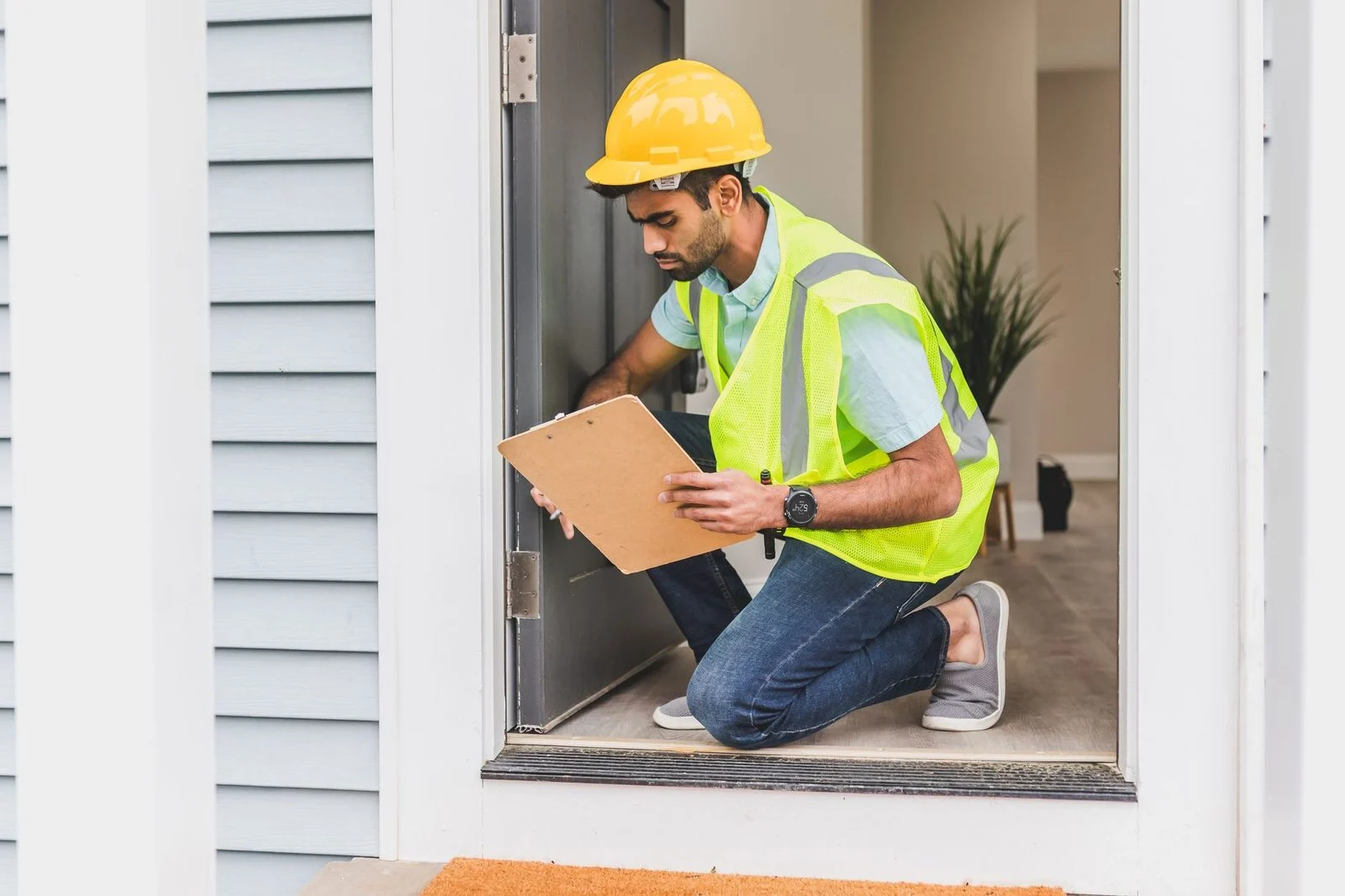
You can often spot a failing track or roller by how the door moves and sounds. Watch for these signs:
- The door sticks or drags, or it needs a lift or a hard push to move.
- You hear grinding, squeaking, or popping from the track area.
- The door tilts or sits out of line with the frame, leaving gaps at the top or bottom.
- Drafts, dust, insects, or water along the sill during rain point to worn weatherstripping (the rubber seal around the door).
- Fogging or moisture appears between the panes of glass. That usually signals a failed seal in the glass unit, which is a different problem from a worn track.
Catching these signs early keeps a small repair from becoming a larger one.
Why the track and rollers wear out
Track and roller wear comes from grit, daily use, and weather. Each factor adds up over time.
- Sand and grit in the track act like sandpaper on the rollers.
- Daily opening and closing wears the rollers and the track surface. On lift-and-slide designs, the moving hardware wears too.
- Humidity, salt air, and strong sun can speed up wear on metal parts and seals.
- A small misalignment left alone strains the frame and the glass. The small problem then grows.
Cleaning the track and checking the rollers is a simple first look. It also shows whether the problem is the hardware or something larger.
The storm problem: standard sliding glass doors are vulnerable
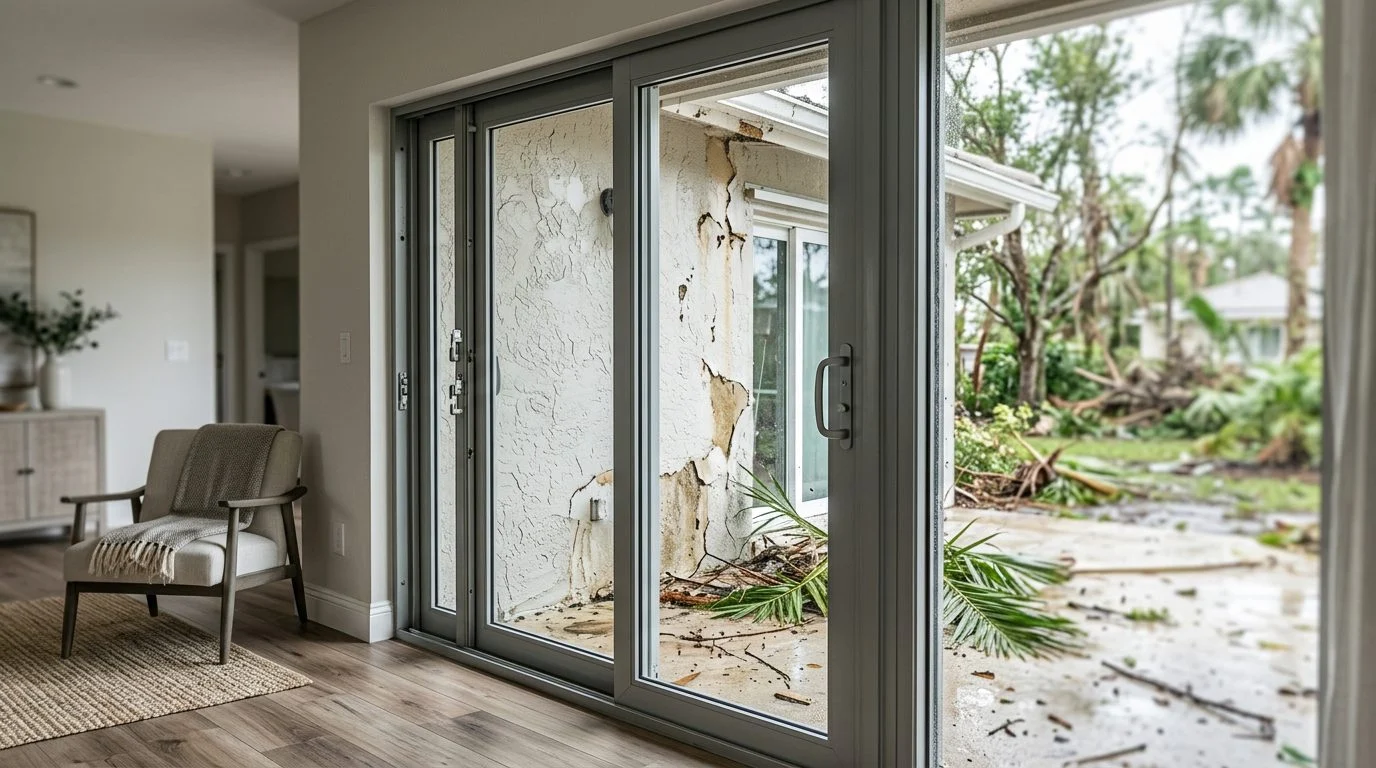
Standard sliding glass doors can break when wind-borne debris (flying objects carried by storm winds) hits them. That lets wind and rain into the home.
Florida law limits how storm products can be sold. Under the local product approval provisions of Fla. Stat. § 553.8425, products or systems of construction must demonstrate compliance with the structural windload requirements of the Florida Building Code through one of the following methods; the advertising prohibition itself is in s. 553.842(5). That approval rule covers, among other categories, exterior doors and windows: panel walls, exterior doors, roofing, skylights, windows, shutters, impact protective systems, and structural components. Ask our team for a product’s approval details when you review marketing claims.
Local guidance also points to options. Pinellas County’s hurricane guidance says approved storm shutters, particularly permanent accordion shutters, are one protection option for large openings such as sliding glass doors (Pinellas County hurricane guidance). Miami-Dade County’s hurricane guidance covers approved shutters and plywood, and it also explains the capabilities and cost factors of impact-resistant glass.
Impact-rated sliding doors use laminated glass and reinforced frames built to resist debris impacts. Many owners treat storm protection as a second problem, alongside track wear. ASP Superhome offers impact doors and impact windows, so a sliding door can be planned with the rest of the home’s openings.
What to do next, and what affects the choice
Start by writing down what you see and when it began. Notes make the next conversation faster and clearer.
- Record each symptom and how long it has been present.
- Take photos of the track, the gap at the sill, and any cracks or fogging in the glass.
- Note the door’s make, its age, and whether it’s a standard slider or a lift-and-slide unit. These details shape the options.
- Plan for permits early. The City of Opa-locka’s permit guidance states that installing or replacing exterior impact windows generally requires a permit, subject to the building official’s determination.
For a broader look at impact door types and how they fit a South Florida home, read the impact doors guide.
Talk with ASP Superhome about your sliding door
If a sliding door is sticking, leaking, or unsafe, the next step is a conversation with ASP Superhome. You may be handling this for a parent, a tenant, or a property you manage. You may not be ready to repair or replace anything yet, and that is fine.
Bring your notes and photos. We can review the symptoms you recorded and explain the options for your home. Book a free estimate or request a quote. The first consultation is free, confidential, and carries no obligation to continue (consulta inicial gratuita, confidencial y sin compromiso).
Frequently asked questions
Why does my sliding glass door stick?
Dirt, grit, or worn rollers in the track are the most common cause. Start by checking and cleaning the track.
Do impact sliding glass doors need a permit?
The City of Opa-locka says installing or replacing exterior impact windows generally requires a permit. Permit requirements can vary by city and county, so our team can help you understand what applies to your project.
Is a standard sliding door safe in a hurricane?
Standard glass can break from wind-borne debris. Products sold as impact protection must be approved under Florida law.
How ASP Superhome Can Help
Inspection and Diagnosis
We look at the track, rollers, frame, seals, and glass to identify what is actually causing the problem.
Impact-Rated Options
If your sliding door needs replacing, we can review impact door options designed for South Florida's wind and storm conditions.
Clear Written Estimates
Our team explains the repair or replacement options in plain language so you can compare them with confidence.
Responsive Local Team
Our team serves homeowners across Miami, Fort Lauderdale, West Palm Beach, Kendall, Naples, Fort Myers, and Boca Raton.
Free First Consultation
Your first consultation is free, confidential, and carries no obligation to continue. Bring your questions about a sticking, drafty, or damaged sliding door and we will talk through your options.
Common Sliding Door Problems
Sticking or Hard to Slide
Dirt, grit, debris, or worn rollers in the track are the most frequent causes. Keeping the track clean may help, but persistent sticking can point to roller or frame wear.
Drafts and Air Leaks
Worn weatherstripping, cracked seals, or a shifted frame can let air and moisture in. Drafts also raise energy costs and comfort concerns in hot, humid months.
Rattling or Loose Panels
Loose hardware, worn rollers, or a panel that has shifted in its track can cause rattling and uneven movement that worsens over time.
Storm Vulnerability
Older or standard sliding doors may not hold up well against high winds and flying debris. Impact-rated doors are built to address these South Florida risks.


