


Kitchen Remodeling | South Florida
Tile or Vinyl Plank for Your South Florida Kitchen?
Compare moisture resistance, comfort underfoot, durability, and upkeep, then talk with ASP Superhome about the right floor for your home.
By Jonathan Rodriguez · Published October 15, 2026
The best kitchen flooring Florida homes can use depends on the home. Still, porcelain tile and waterproof vinyl plank are where most South Florida kitchens start. Heat, humidity, and frequent wet cleaning all wear on a kitchen floor. This guide explains what each option handles well, where it falls short, and what a project includes.
Why South Florida Kitchens Need a Different Kind of Floor
Kitchen floors in South Florida face heat, humidity, and water at the same time. Many homes here sit on concrete slabs, so moisture can rise from below. Add spills near the sink and a dishwasher that runs every night, and the floor rarely gets a dry break.
Tile became a common choice in Florida homes for practical reasons. It doesn’t soak up moisture the way wood does, and it stays cool underfoot in warm weather.
When you compare the best kitchen flooring Florida options, use five tests:
- Moisture tolerance: Does it handle spills and standing water without swelling?
- Dimensional stability: Does it keep its size and shape as humidity shifts?
- Slip resistance: Is it safe when wet?
- Cleanability: Do seams trap grime, or does the surface wipe clean?
- Durability: Does it hold up to rolling appliances and chair legs?
The right floor also depends on the subfloor, the slab condition, and the kitchen layout. A site visit answers those questions in a way a general guide can’t. Remodels can also bring ventilation work. The Miami-Dade 2023 mechanical code summary covers kitchen exhaust and hood requirements, so check those early.
Not sure what your next step is?
Talk it through with our team — the first consultation is free, confidential, and carries no obligation.
The Best Flooring Options for a Florida Kitchen
Porcelain tile and waterproof vinyl plank fit most South Florida kitchens. Other materials suit narrower cases.
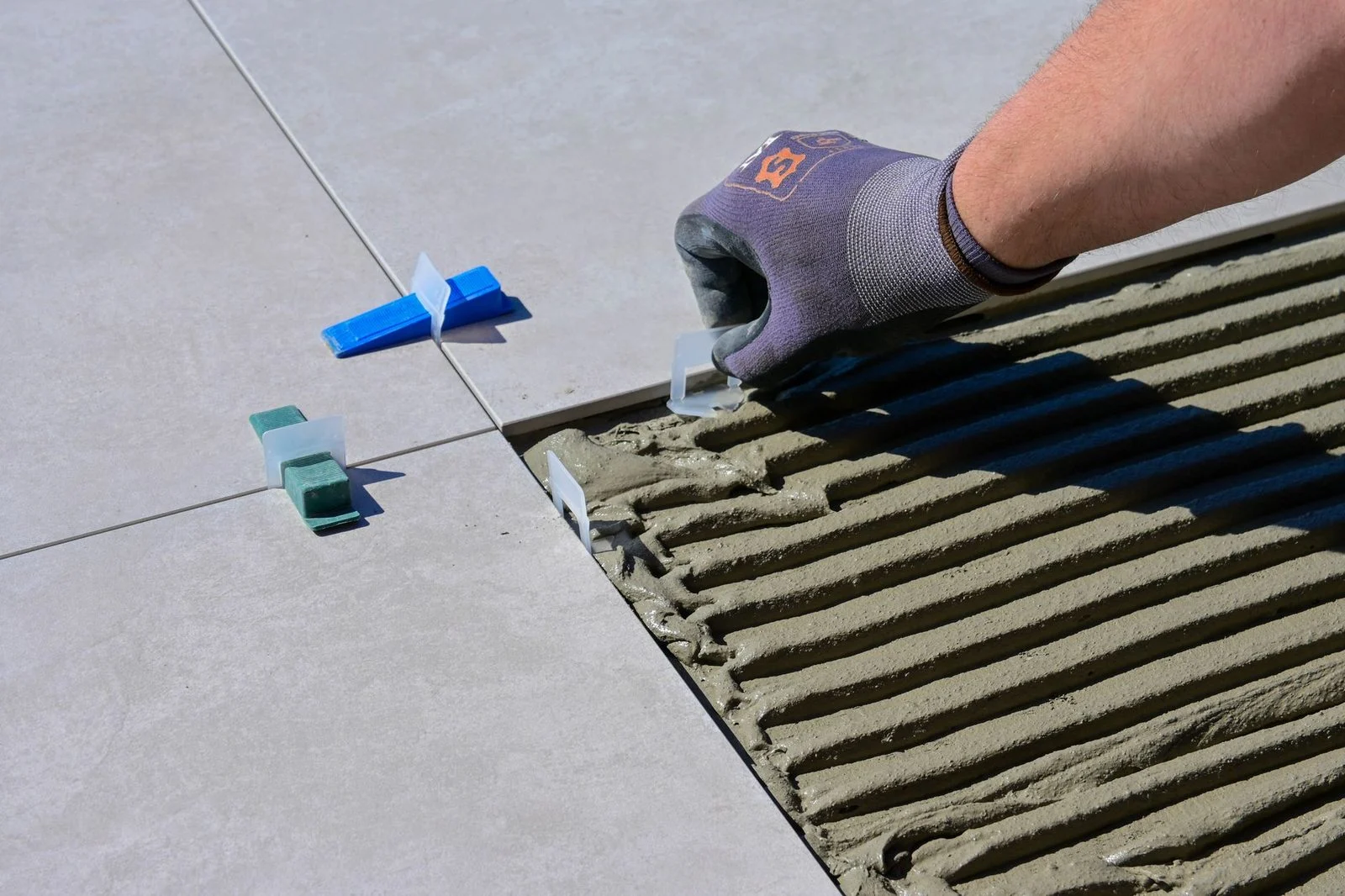
- Porcelain tile: Water-resistant and hard-wearing. Large tiles mean fewer grout lines to clean. Grout needs sealing, and it can stain if you skip that step.
- Ceramic tile: A lighter-duty tile. It can work in kitchens with light foot traffic, but porcelain usually holds up better under heavy daily use.
- Luxury vinyl plank (LVP) and SPC rigid core: Waterproof cores with realistic wood-look finishes. SPC stands for stone-plastic composite. It feels softer and quieter underfoot than tile.
- Waterproof laminate: Can fit kitchens with light water exposure. Standard laminate doesn’t belong near a sink or dishwasher, where water can swell its edges.
- Engineered hardwood: A cautious choice here. Real wood responds to humidity and standing water, so it’s a risky match for wet zones.
Match each material to how your kitchen really gets used. Don’t pick one winner for every home.
Porcelain Tile vs. Vinyl Plank: How to Decide
Porcelain tile is harder and handles standing water well. Vinyl plank gives a little more under your feet and runs quieter.
Compare the two on these points:
- Water exposure: Seams, edges, and grout lines decide how water gets in, so check them closely.
- Comfort: Vinyl gives more cushion for long cooking sessions. Tile is firmer.
- Noise: Tile can echo in an open kitchen. Vinyl plank is quieter.
- Repairs: Damaged pieces can often be replaced in either material. Matching a discontinued product is the hard part.
- Impact: A dropped pan can chip tile. Heavy objects can dent vinyl.
- Look: Both now mimic wood or stone. Compare samples under your own kitchen lights.
For vinyl, check the wear layer (the clear top layer that protects the print), the core type (SPC or WPC, a wood-plastic composite), the total thickness, and the locking system. For porcelain, check the PEI rating for abrasion, a slip-resistance rating for kitchens, and tile size against grout lines. Ask your installer for the manufacturer’s rating sheet instead of trusting a label.
Uneven subfloors affect both materials, and rigid products can still need leveling first. Cost depends on measurements, prep, and scope, so this guide doesn’t list prices. A written quote gives real numbers for your kitchen.
What a Kitchen Flooring Project Includes
A kitchen flooring project covers pre-work checks, old floor removal, surface prep, installation, and finishing. Here’s what to expect:
- Pre-work: Moisture and slab checks, measuring, and confirming cabinet and appliance clearances.
- Removal: Taking out the existing floor and hauling away the debris.
- Prep: Leveling, plus an underlayment or moisture barrier where the product needs one.
- Installation: Layout planning, transitions to adjoining rooms, threshold and trim, and toe-kick finishing.
- Coordination: Setting the floor at the right stage alongside cabinets, plumbing, and electrical work.
- After install: Cleaning guidance, grout sealing for tile, and expansion gaps for vinyl plank.
Florida contracts also carry required notices. A direct contract over $2,500 for improvements to a dwelling of up to four units needs a construction lien notice. Under Fla. Stat. § 713.015, the notice must appear either on the first page of the contract or on a separate page signed and dated by the owner. Most residential repair agreements also need a written statement about the recovery fund. The exception is when all labor and materials total $2,500 or less (Fla. Stat. § 489.1425).
How the Process Works, Step by Step
You start with a free first consultation, then move through measuring, a written quote, material selection, scheduling, and installation.
- Free first consultation: We talk through your kitchen, your goals, and your budget range.
- On-site measurement: Our team measures the room and checks the subfloor and any moisture concerns.
- Written quote: The quote lists the recommended material, the scope, and prep work as separate lines.
- Material selection: You review samples in your home’s lighting before you decide.
- Scheduling: We plan protection for adjacent rooms and the order of work with the rest of the remodel.
- Installation and walkthrough: The crew installs the floor, then reviews the finished work with you.
Timelines vary with kitchen size, material lead times, and whether other trades are involved. Ask for a timeline with your quote rather than assuming one. Permit rules also vary. The Florida Building Commission permit draft notes that local code amendments and permitting systems can differ, so confirm the local process for your project.
Why Homeowners Choose ASP Superhome for Kitchen Remodeling
ASP Superhome offers complete home solutions across South Florida, including kitchen remodeling alongside impact windows, impact doors, metal and tile roofing, roof repair, solar panels, and solar battery backup.
When a kitchen floor is part of a bigger project, such as a roof or window replacement, our team can plan the work in one sequence. That makes the schedule easier to follow for you and for the trades involved.
We work with homeowners in Miami, Fort Lauderdale, West Palm Beach, Kendall, Naples, Fort Myers, and Boca Raton. Your first consultation is free, confidential, and carries no obligation to continue.
Not sure what your next step is?
Talk it through with our team — the first consultation is free, confidential, and carries no obligation.
Frequently Asked Questions About Kitchen Flooring in Florida
Most kitchen flooring questions come down to water, subfloor condition, and how the kitchen gets used.
Why do Florida homes have tile floors?
Tile resists moisture and stays cool in heat. That fits many Florida kitchens.
Is laminate a good fit for a kitchen?
Standard laminate struggles with standing water. Waterproof laminate can fit kitchens with light water exposure if the seams stay dry.
Can I install new flooring over the old floor?
Sometimes. The old floor must be flat, firmly attached, and not so high that it causes transition problems. A site visit decides.
Is porcelain tile too cold or hard for a kitchen?
It can feel cold and hard. Area rugs at key spots add comfort, but they don’t change the tile itself.
How do I keep vinyl plank from warping near the sink?
Wipe up spills fast, keep seams sealed, and leave expansion gaps at walls. Act quickly on any leak.
Does kitchen flooring need a permit in Florida?
It depends on the jurisdiction and the scope of work. Confirm local requirements before work starts.
Does flooring go in before or after cabinets?
The order depends on the kitchen. Our team sets the floor at the stage that fits the cabinet, plumbing, and electrical work.
If your kitchen floor is cracked, water-damaged, or worn out, and you’re ready to choose a material, book your free estimate or request a quote. We’ll review your floor, layout, and timeline, then put a written plan in front of you.
What to Weigh When Choosing Kitchen Flooring
Moisture Resistance
Kitchens see spills, leaks, and humidity. Tile is naturally water-resistant, while vinyl plank performs well when its seams and edges stay dry.
Comfort Underfoot
Tile stays cool in Florida heat but can be hard on feet and dropped dishes. Vinyl plank offers more cushion and a softer feel when you stand at the counter.
Durability and Upkeep
Tile lasts for years with grout care. Vinyl plank is low-maintenance and easy to clean, though its surface can scratch or dent over time.
Look and Style
Tile offers a wide range of looks, from natural stone to modern finishes. Vinyl plank can mimic wood and stone closely at a lower visual cost.
Watch for Standing Water
Standard laminate and some vinyl products can swell or buckle when water sits on them. Before choosing a floor, consider how your kitchen handles spills near the sink, dishwasher, and refrigerator.
How the Process Works
1. Free First Consultation
Start with a confidential, no-obligation consultation to discuss your kitchen, your goals, and your questions.
2. Review Your Space
We look at your kitchen layout, existing subfloor, moisture exposure, and how you use the room every day.
3. Compare Your Options
We walk you through tile and vinyl plank options so you can weigh cost, comfort, and style for your home.
4. Request Your Quote
When you are ready, request a quote for your kitchen remodeling project from ASP Superhome.


